
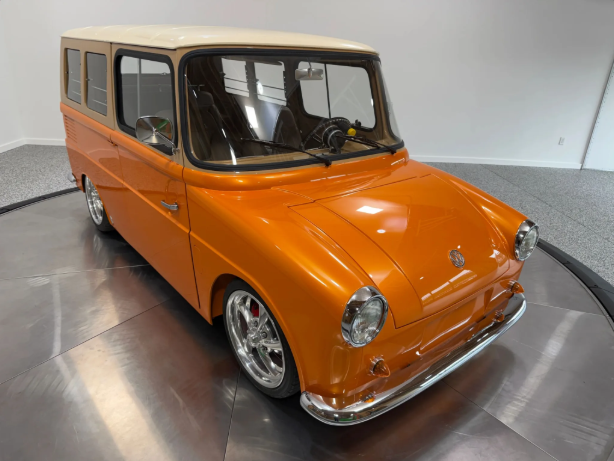
I love it when I come across a truly unique, rare vehicle to cover here on Classic Cars Online US, and this 1972 Volkswagen Fridolin is a great example!
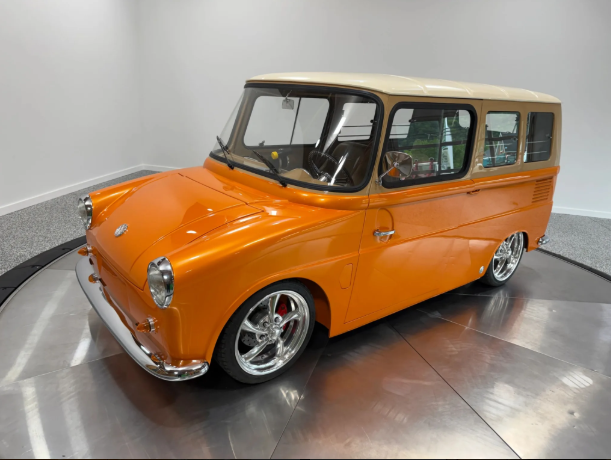
At first glance, the bright orange Volkswagen pictured here might look like an unusual vintage delivery van. Look a little closer, though, and there is considerably more to this compact vehicle than meets the eye.
This is a 1972 Volkswagen Type 147 Fridolin, one of the rarest and most unusual Volkswagen models ever produced. Originally designed to help the German postal service deliver mail and service roadside mailboxes, the Fridolin was built for practicality rather than style.
This particular example has taken a very different path.
Finished in mocha, pearlescent orange and off-white, it has been extensively modified with a larger air-cooled engine, custom suspension, upgraded brakes and a thoroughly customized interior. It is currently offered for sale through MAXmotive’s U-Stock collection and is listed on eBay with a $172,500 Buy It Now price.
What Is a Volkswagen Fridolin?
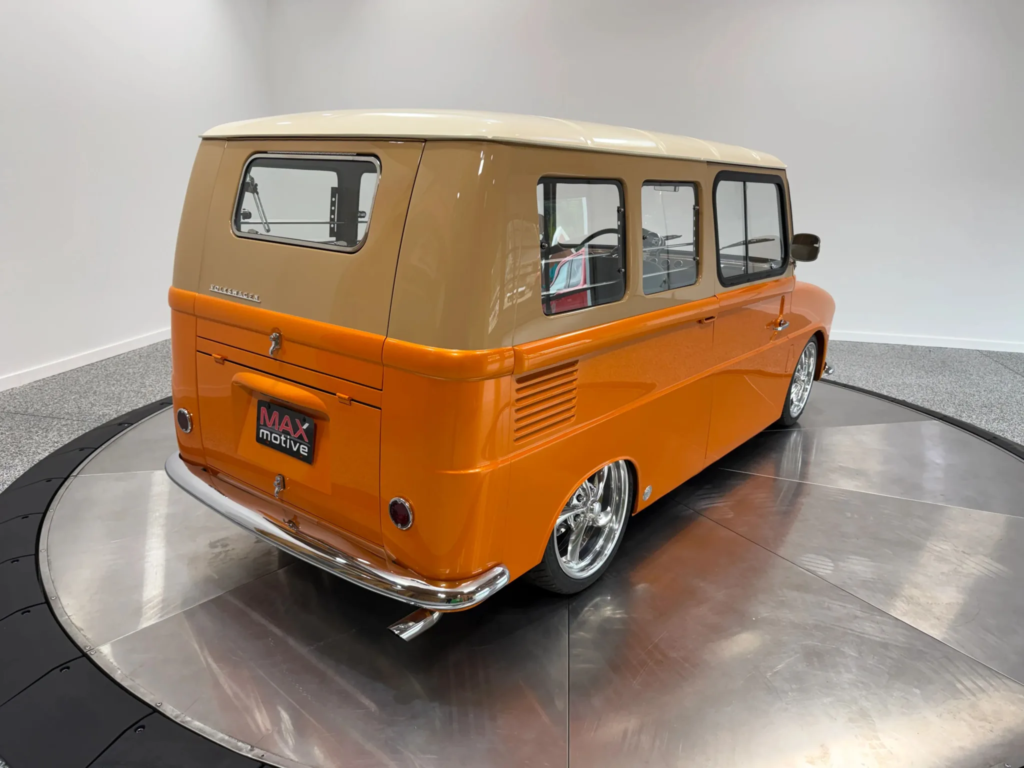
Officially known as the Volkswagen Type 147 Kleinlieferwagen, the Fridolin was a small panel van developed around the specific needs of the German Federal Post Office.
The German postal service needed a vehicle that could carry more than a Volkswagen Beetle but was smaller and easier to maneuver than the Volkswagen Transporter. Volkswagen began working on the project in the early 1960s, with Westfalia ultimately building the bodies and assembling the vehicles.
The result was an unusual little van with a distinctive boxy body, low loading height and two sliding side doors. Those sliding doors were particularly useful for postal workers operating in busy urban areas because they allowed workers to get in and out without swinging a conventional door into traffic.
Production began in 1964 and continued through 1974. The Museum Foundation Post and Telecommunications records 6,139 Type 147s built, with approximately 85% delivered to the Deutsche Bundespost. The Swiss postal service also purchased 1,201 examples in a modified configuration.
That limited production is a big part of the Fridolin’s appeal today.
A Volkswagen Built From Other Volkswagens
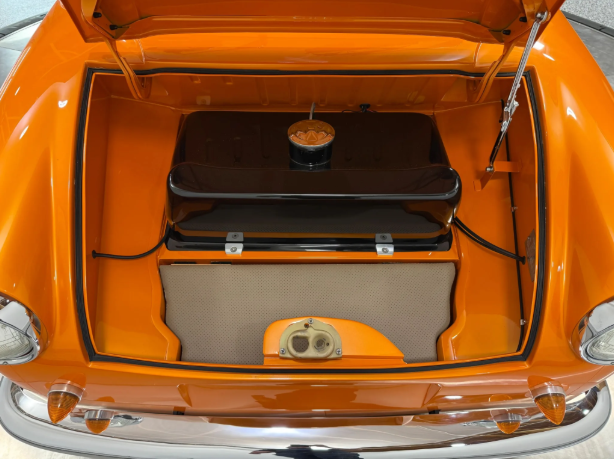
One of the most interesting things about the Fridolin is that Volkswagen did not create every component from scratch.
Instead, the company combined parts from several existing Volkswagen models to create the purpose-built delivery van.
The engine, transmission and axles were derived from the Beetle. The floor assembly was based on the Karmann Ghia Type 14, which helped provide the low loading height. The headlights came from the Type 3, while rear body components were supplied by the Transporter plant. Westfalia built the distinctive body at its facility in Wiedenbrück.
It was an excellent example of using existing components to create something specialized without the expense of developing an entirely new vehicle from the ground up.
And it worked.
The Fridolin became a useful workhorse for the German postal service, remaining in service for years in mail collection and telecommunications-related duties.
What Makes This Fridolin Different?
The Fridolin featured here is a long way from the utilitarian postal vans that once spent their days carrying mail.
Among its standout features are:
- 2,332cc air-cooled flat-four engine
- Dual Weber 44 IDF carburetors
- Rancho four-speed manual transaxle
- Porsche-style cooling fan and serpentine belt system
- Airkewld four-wheel adjustable suspension
- Wilwood calipers and cross-drilled rotors
- 17- and 18-inch Billet Specialties wheels
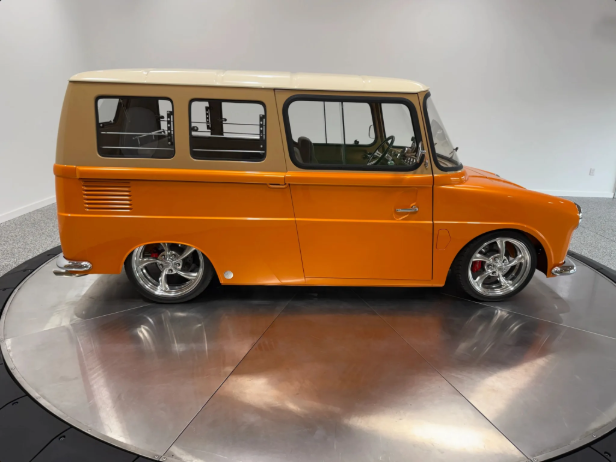
- Custom mocha, pearlescent orange and off-white finish
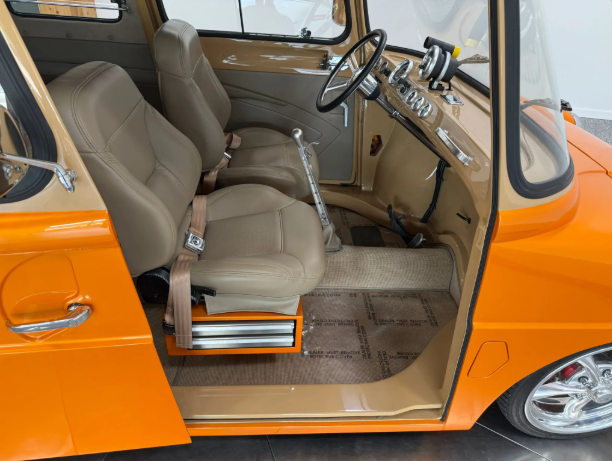
- Parchment upholstery with bucket seats and rear bench
- Custom seat bases with integrated toolbox drawers
The result is less postal workhorse and more custom cruiser.
From Postal Workhorse to Custom Classic
The exterior makes the transformation especially obvious.
The orange and off-white paint gives the compact Volkswagen a presence that the original work vehicles never needed. Chrome bumpers, polished wheels and the lowered stance further emphasize its custom-car personality.
According to the listing, the body was media blasted and received rust repairs before being refinished. The car also features custom pop-out side windows and other modifications that give it a very different character from a stock Type 147.
It is an interesting contrast. The original Fridolin was designed around a very specific question: How do you build a small, efficient vehicle that makes a postal worker’s job easier?
This one asks a completely different question: What happens when you take one of those rare little work vans and turn it into a custom classic?
Modern Upgrades Beneath the Classic Shape
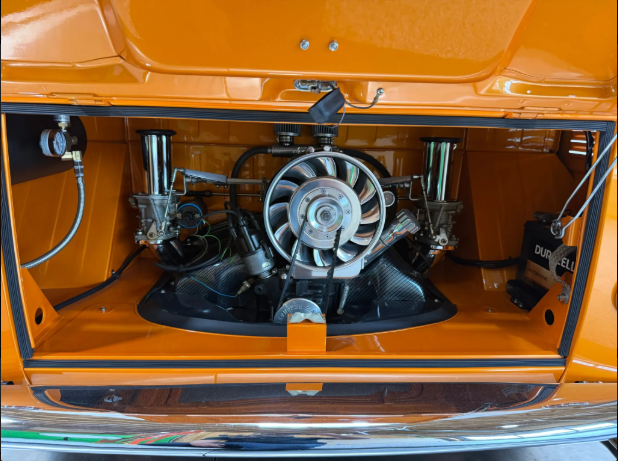
The modifications aren’t limited to appearance.
The 2,332cc air-cooled flat-four is a substantial departure from the original Fridolin powertrain. The engine uses dual Weber 44 IDF carburetors along with a Porsche-style cooling fan and serpentine belt system.
The engine is paired with a Rancho four-speed manual transaxle, while an A-1 Sidewinder exhaust system and J-tubes add to the mechanical changes.
The suspension and braking systems have also been upgraded. Airkewld adjustable suspension gives the Fridolin its low stance, while Wilwood calipers and cross-drilled rotors provide a significant change from the hardware that would have been found on the original delivery van.
Inside, the transformation continues.
The cabin features parchment upholstery, tan square-weave carpeting, bucket seats and a rear bench. Custom seat bases incorporate toolbox drawers, while AutoMeter instrumentation adds another modern touch.
In other words, this isn’t a museum-style restoration intended to replicate a Bundespost work vehicle. It is a highly customized interpretation of an extremely rare Volkswagen.
A Rare Volkswagen With a Very Different Personality
The rarity of the Fridolin is what makes a vehicle like this interesting in the first place.
Only a few thousand were built, and relatively few survived. Rust and years of hard commercial use took their toll on many of these vehicles.
That makes surviving examples unusual even when they remain close to their original specifications. A heavily modified example like this one takes the idea in another direction, combining the appeal of a rare European commercial vehicle with the culture of the custom air-cooled Volkswagen scene.
For collectors, that combination may be precisely the attraction.
This 1972 Fridolin Is for Sale
If you want to see yourself behind the wheel of a Fridolin, the 1972 Type 147 featured here is currently being offered through MAXmotive’s collection and is listed on eBay.
The listing shows a $172,500 Buy It Now price, making this a very different proposition from the typical vintage Volkswagen that might show up at a local cruise night.
The vehicle is located in Cheswick, Pennsylvania, and the listing provides additional details about the car’s equipment, condition and history.
As with any highly modified vintage vehicle, prospective buyers should look closely at the documentation and discuss the restoration and modification work with the seller before purchasing. The asking price represents what the seller is seeking for this particular custom example, not a universal value for Volkswagen Fridolins.
A Very Different Kind of Volkswagen
The Type 147 was created because the German postal service needed something that a Beetle couldn’t provide and a Transporter didn’t quite fit.
More than half a century later, this particular Fridolin has become something entirely different: a rare piece of Volkswagen history transformed into a colorful, highly modified cruiser.
And that may be the most interesting thing about the Fridolin.
It was never designed to be glamorous. It was designed to do a job.
Today, surviving examples can do something else entirely: turn heads.
The 1972 Volkswagen Type 147 Fridolin is currently offered through MAXmotive’s collection and listed on eBay. View the eBay listing.