
Meet the Waltham-Orient Model B R
The Waltham-Orient Model B R is a small, light, no-nonsense little car from the early days of motoring. Built by the Waltham Manufacturing Co. of Waltham, Massachusetts, this 4 horsepower runabout sold for just $400. In 1907, that put a real motorcar within reach of folks who wanted something simpler than the big, expensive touring cars.
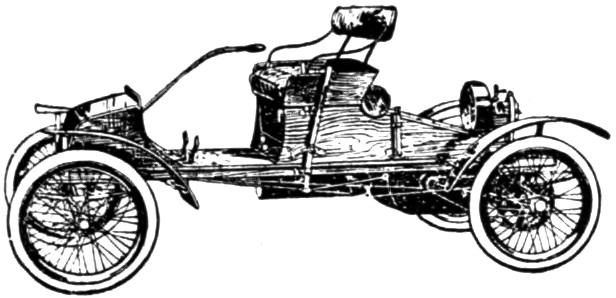
It seats two, weighs only 600 pounds, and runs on a single air-cooled cylinder. If you have ever wondered what the very beginning of the American car story felt like, this one is a great place to start.
A Look at the Design
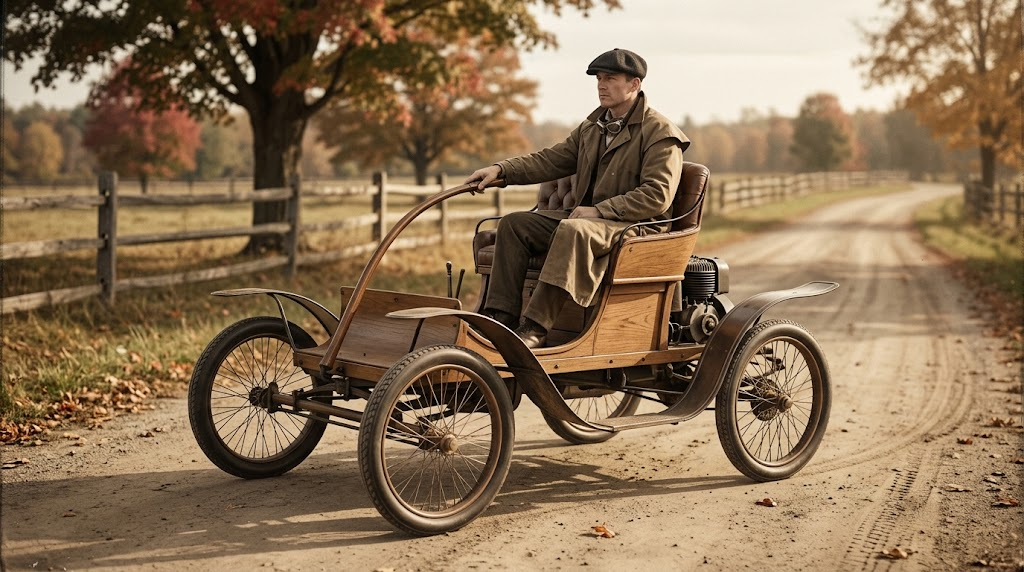
The first thing you notice in the picture is how much it still looks like a carriage that lost its horse. The frame is made of wood, and the whole car sits low and open, with nothing between you and the road but a seat and a pair of springs. Big wire-spoke wheels carry it along, and they look almost like bicycle wheels grown up. That makes sense, since the engine is mounted in the rear and the car is wrapped around the idea of keeping things light.
Notice the long, curved tiller that sweeps up from the front. There is no steering wheel here. You steer by pushing and pulling that bar, much like steering a boat. The seat is perched up high on a simple frame with a cushioned back, so you ride above the mechanical bits instead of tucked inside the car. Fenders curve over the wheels to keep mud off your knees, and that is about as much weather protection as you get.
Everything about the layout says the same thing: keep it simple, keep it light, keep it affordable.
Waltham-Orient Model B R Specs
- Price: $400
- Body: Runabout
- Seats: 2 persons
- Weight: 600 pounds
- Wheel-base: 80 inches
- Tread: 42 inches
- Tires, front: 26 × 2½ in.
- Tires, rear: 26 × 2½ in.
- Steering: Tiller
- Brakes: On rear hubs
- Springs: Elliptical front and rear
- Frame: Wood
- Bore: 3¼ in.
- Stroke: 4¼ in.
- Cylinders: One, in back
- Valve arrangement: Automatic inlet, mechanical exhaust
- Motor suspension: Rear, on side members of frame
- Cooling: Air
- Ignition: Jump spark
- Current supply: Dry battery
- Carbureter: Orient
- Lubrication: Oil pump
- Motor control: Throttle and spark
- Clutch: Friction
- Change gear: Friction
- Speeds: 5 forward, 2 reverse
- Change-gear control: Side lever
- Drive: Friction drive
Good to know: Buyers who wanted more power could order a 2 cylinder motor for $50 extra.
What It Would Have Felt Like to Drive
Picture yourself climbing up onto that seat, one hand on the tiller. You are sitting very close to the ground, with the wind in your face and the road right under your wheels. There is no windshield and no roof, so you feel everything: the smell of oil and hot metal, the bugs, the dust, and the bumps.
Behind you, a single cylinder starts thumping. A one-cylinder engine does not purr. It chugs, and you feel each firing stroke through the frame and the seat. With only 600 pounds to move, though, even 4 horsepower gets you going at a lively pace for 1907.
The friction drive is where things get interesting. Instead of the toothed gears that later cars used, a friction drive passes power by pressing surfaces against each other. You move the side lever to change speeds, and the car glides from one to the next rather than clunking. With 5 speeds forward and 2 in reverse, the Waltham-Orient gave the driver plenty of choices.
Stopping is another story. The brakes work only on the rear hubs, so you plan ahead and slow down early. Steering with a tiller also takes a gentle hand, because small movements add up fast. You would have been busy, too, managing both the throttle and the spark with your free hand.
Compare that with the Success Auto-Buggy Model 3 we covered earlier.
Both cars shared the same 4 H.P. rating and the same back-to-basics spirit.
The Success was a bargain at $250, though, while the Waltham-Orient cost $150 more. For that extra money you got the multi-speed friction drive, which gave you finer control over how the car pulled and climbed. If you also read about the Albany Run-a-bout Model 2 [link to Albany Run-a-bout article], you will spot the family resemblance: light weight, open seating, and engines that asked a lot of their drivers but gave back a real thrill.
What Makes It a Runabout?
The word “runabout” tells you exactly what this car was for. A runabout is a small, light, open car built for one or two people to zip around town and the countryside. The name came from the horse-drawn world, where a runabout buggy was a light carriage for quick trips. When cars arrived, the name carried over.
Here is what sets a runabout apart:
- Two seats only. There is no back seat and no extra passenger room.
- Open body. Most had no roof or doors, just a seat, some fenders, and a dash.
- Light weight. With the Waltham-Orient at only 600 pounds, one person could almost push it.
- Low price. Runabouts were the entry-level cars of their day.
- Everyday use. They were meant for errands, short trips, and getting to work, not long, grand tours.
Compare it with a touring car, which was larger, carried four or five passengers, and often had a folding top and a bigger engine. The runabout was the opposite: small, simple, and personal.
The Waltham-Orient Today
The Waltham-Orient Model B R reminds us that early motoring was not all big, fancy machines. For many families, a car like this was the first one they ever owned. It was cheap, light, and different from anything that came before it.
Test Your Waltham-Orient Knowledge With a Free Printable Crossword
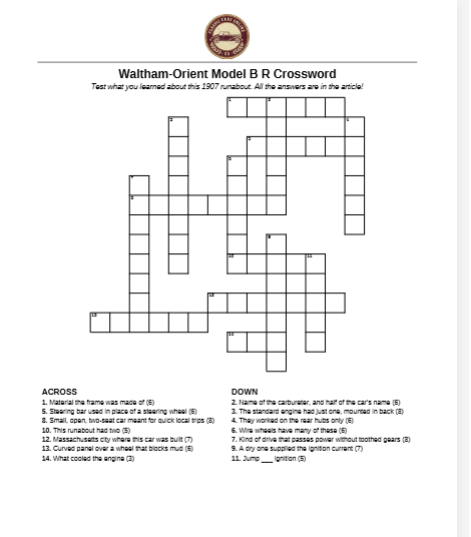
Think you’ve got the Waltham-Orient Model B R figured out? Put your knowledge to the test with our free printable crossword puzzle. It features 14 clues about this 1907 runabout, from its tiller steering and friction drive to the town where it was built. Every answer can be found in the article above, so read closely and grab a pencil.
Click the link below to download and print your copy. Stuck on a clue? Send us a note through our contact page and we’ll be happy to share the answer key.
Next time you are looking at an old photo like this one, take a moment to imagine the bumpy road, the thumping engine, and the driver leaning on that long tiller.