
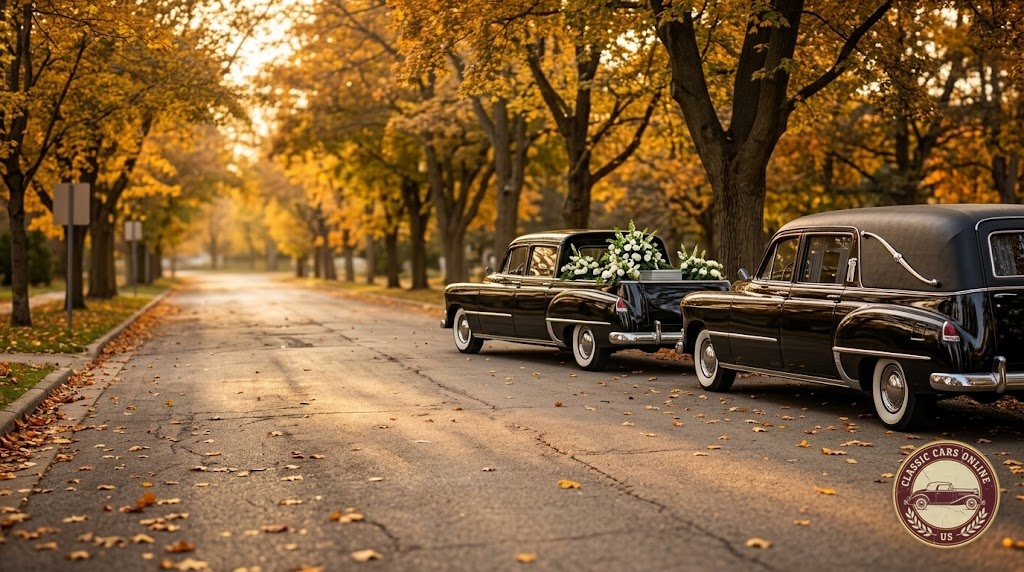
Hearses are some of the most well-built and least-understood vehicles on the road. They were crafted by skilled coachbuilders, often on top-tier luxury car frames, to do one important job with dignity. That is one reason classic car fans are so curious about them.
If you enjoyed our Halloween article about dressing up your classic car, this companion piece goes deeper into the real history behind an iconic type of haunting car, the funeral coach. We’ll keep it respectful and focus on the craftsmanship and the stories.
Where the Word “Hearse” Comes From
The word “hearse” comes from the French word herse, which means “harrow.” A harrow is a farm tool used to level soil. It seems like an odd link, but it makes sense. Long ago, coffins were topped with a spiked metal frame that held a cloth covering or candles. The spikes looked like a harrow, and over time the name moved from the frame to the vehicle that carried it. The spelling slowly changed to “hearse.”
From Hand Carts to Horse-Drawn Coaches
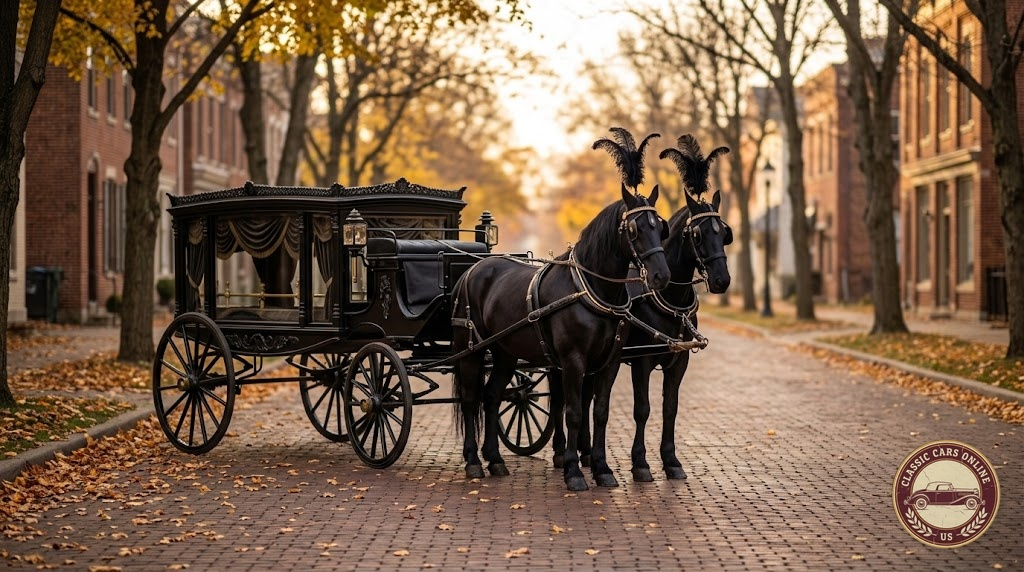
Before wheels were common, funerals used a bier, which is a simple frame that mourners carried by hand. As designs became fancier and heavier, wheels were added. By the 1600s, horse-drawn hearses became popular, and they stayed the standard for more than 300 years.
Horses could pull much more weight, so builders created carved wooden coaches with heavy drapes and rich decoration. These designs were often reserved for wealthy families.
The First Motorized Hearses
Mass-produced motor hearses were available by 1909, but people were slow to switch. One early motor funeral used a horse-drawn hearse body set on a bus frame, and it cost nearly four times as much as the horse-drawn version. Over time, engines got cheaper, and funeral directors saw another benefit. A motor hearse was faster, so they could handle more funerals in a day.
By the 1920s, motor hearses had taken over. Styles changed with the times, moving from ornate Victorian coaches to Art Deco shapes in the 1930s, then to limousine-style cars, and finally to the padded-roof landau style that is still common today.
Why Cadillac Became the Name Behind the Hearse
Most hearses were not built by one company. A car maker supplied the chassis, which is the frame, engine, and running gear. Then a coachbuilder created the special body on top.
Cadillac made its first funeral car chassis in 1916. In 1931, it started building a separate commercial chassis just for professional vehicles. Well-known coachbuilders like Superior Coach, Miller-Meteor, Eureka, and Sayers & Scovill built hearses on these frames.
Miller-Meteor, based in Bellefontaine, Ohio, became one of the most famous names in the business. At one point, its professional vehicles reportedly held more than half of the U.S. market.
What Is a Flower Car?
A flower car is a long funeral vehicle with an open or partly open back. It carries the many flower arrangements sent for a funeral. Sometimes it carries a casket covered in flowers. Flower cars are built to look like a hearse’s matching partner, so they often share the same body lines and trim.
They were also a costly extra. Many funeral homes could not justify a full-size flower car, so some builders made cheaper versions by converting a coupe, a car with a shorter body.
What Is a Combination Coach?
A combination coach is a vehicle that could work as a hearse or an ambulance. Rural towns often could not afford to keep two special vehicles, so one coach did both jobs. The famous Ghostbusters car, Ecto-1, started life as a 1959 Cadillac Miller-Meteor combination coach.
Unique Facts About Hearses
Here are a few details that surprise many people:
- Not always black. Hearses can come in many colors, and some families request unusual designs.
- Different looks around the world. In the U.S., the back area is usually closed in with no windows or covered windows. In Europe, hearses often have large clear glass sides. In Japan, some are decorated to look like temples.
- Many names. Hearses are also called funeral coaches. Their professional-car cousins include flower cars and combination coaches.
- Chassis from luxury brands. U.S. hearses have long been built on Cadillac, Lincoln, and Packard chassis, with newer ones also built by Mercedes.
- Hearses on two wheels. Motorcycle hearses with a sidecar carry the casket and are popular for biker funerals.
- Horses are still used. Some funeral homes can still arrange a horse-drawn hearse, and many of these carriages are over 100 years old.
Why Some Collectors Love Classic Funeral Coaches
Some people collect old hearses and flower cars because they admire the craftsmanship. These vehicles were built with care, and each one is a snapshot of its era’s design. Groups like the Professional Car Society bring together owners who want to preserve funeral and medical vehicles in historically correct form.
If you want something interactive to do, our Halloween article has a free printable; and, to see classic cars for sale, you can browse the latest listings at the Classic Cars Online US: Classic Cars for Sale Facebook group.
Sources
- Laurel Hill Cemetery, Transporting the Dead: A History of Hearses and Other Funerary Conveyances
- American Funeral Cars and Ambulances Since 1900 (Please note this one is an affiliate link: As an Amazon Associate I earn from qualifying purchases.)
- Jalopnik, Cadillac’s Long History of Building Funeral Cars
- Roupp Funeral Home, The History of Funeral Cars in America
- Funeral Guide, Funeral Hearses, Carriages and Cars
- GBFans, 1959 Cadillac Miller-Meteor Combo