
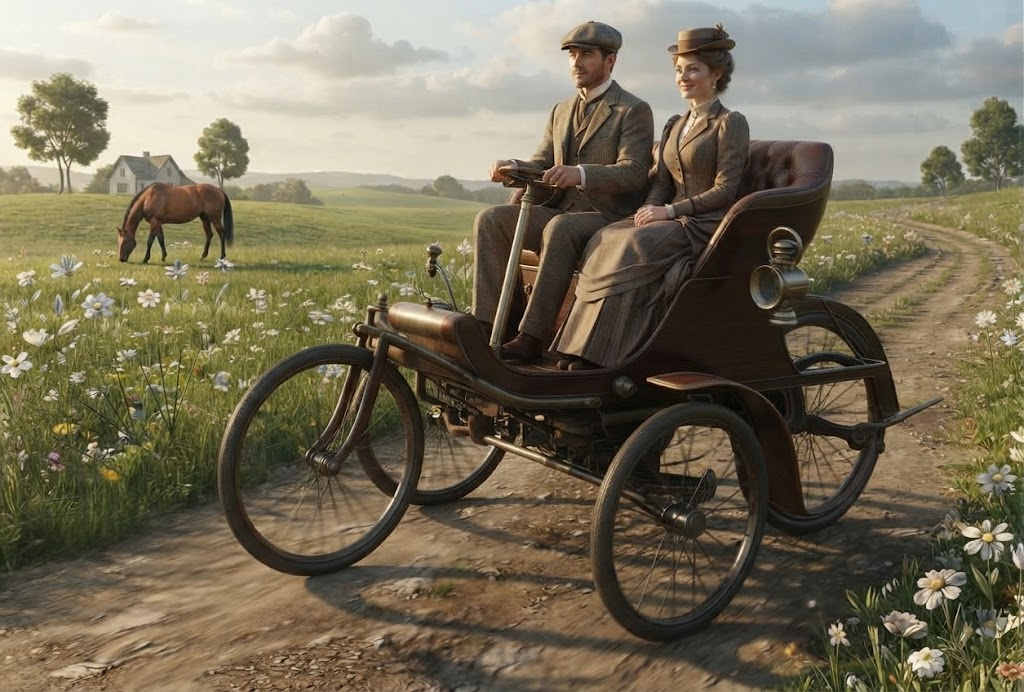
In 1907, a small automobile did not need a powerful engine or a large body to promise an exciting new kind of transportation. The Autocycle Runabout, built by the Vandegrift Automobile Co. of Philadelphia, Pennsylvania, offered two-person seating, a 6-horsepower engine and a listed top speed of 45 mph. Its price was $400.
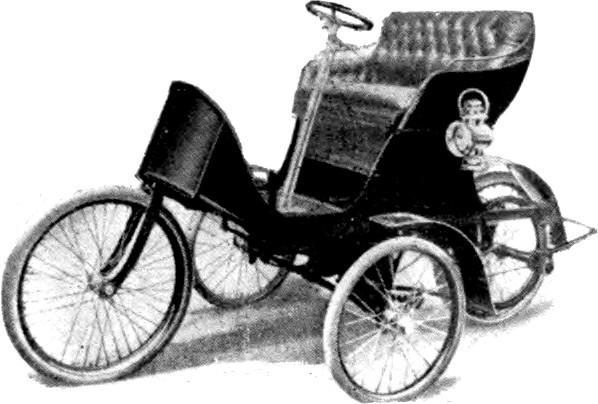
Weighing just 400 pounds, the Autocycle was a distinctive entry in the early American automobile market. Its compact design and unusual mechanical layout reflected a time when manufacturers were still experimenting with different ways to build a practical, lightweight motor vehicle.
1907 Vandegrift Autocycle Runabout Specifications
The following specifications come from the 1907 Illustrated Directory of the Specifications of All Domestic and Foreign Motor-cars and Motor Business Wagons, published by MoToR magazine.
- Manufacturer: Vandegrift Automobile Co.
- Location: Philadelphia, Pennsylvania
- Model: Autocycle Runabout
- Price: $400
- Engine: Two-cylinder, 6-horsepower gasoline engine
- Cylinder bore: 3¼ inches
- Piston stroke: 3 inches
- Cooling system: Air-cooled
- Ignition: Jump spark
- Electrical supply: Dry cells
- Carburetor: Float-feed
- Lubrication: Sight feed
- Transmission: Friction type
- Drive: Belt
- Listed top speed: Up to 45 mph
- Seating capacity: Two people
- Weight: 400 pounds
- Steering: Steering wheel
- Frame: Steel channels
- Rear suspension: Double quarter-elliptic springs
- Front and rear tires: 28 × 2½ inches
- Side tires: 24 × 2 inches
The original directory identifies the body as a single, undivided seat, suggesting a compact layout intended to accommodate two occupants without a conventional divided seating arrangement.
A Lightweight Runabout With an Unusual Design
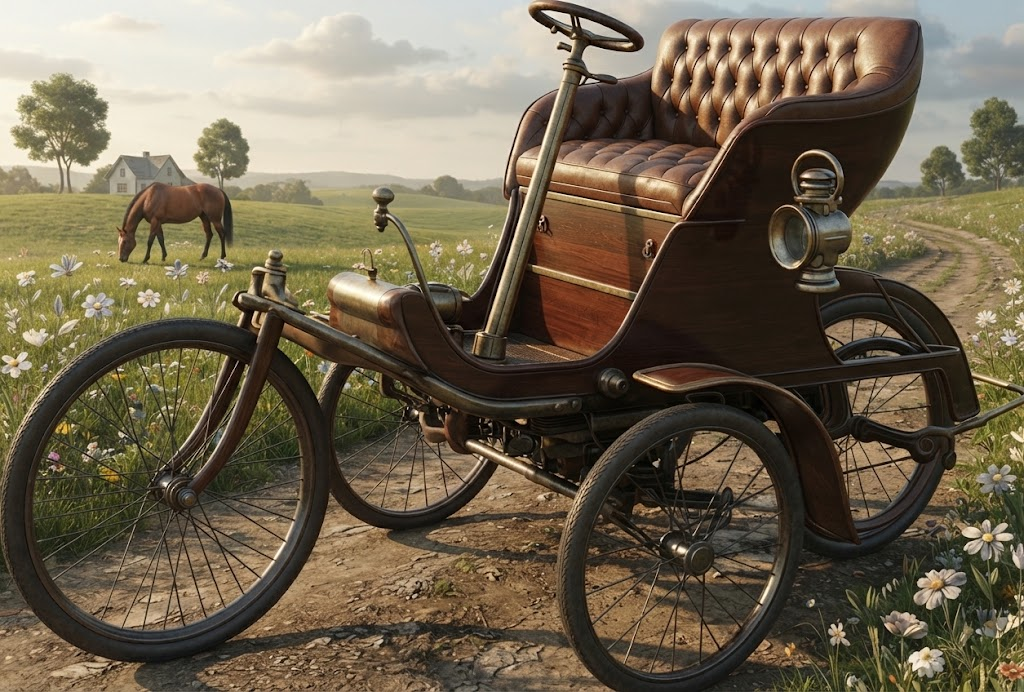
At 400 pounds, the Autocycle was exceptionally light compared with many early automobiles. Its steel-channel frame provided the basic supporting structure, while its small, air-cooled engine avoided the added components required by a liquid-cooling system.
The two-cylinder engine had a 3¼-inch bore and a 3-inch stroke. Fuel was delivered through a float-feed carburetor, while a jump-spark ignition system used dry cells to supply electrical current. The sight-feed lubrication system allowed the flow of oil to be observed.
One of the Autocycle’s most distinctive features was its belt drive and friction-type speed-changing mechanism. Rather than using the conventional geared transmission found in many later automobiles, it relied on friction to transmit power and alter the drive ratio.
The vehicle also had an unusual wheel arrangement. Historical descriptions identify a single front wheel for steering, a single rear driving wheel and two smaller side wheels for balance. This layout helped distinguish the Autocycle from the four-wheel runabouts that would become more familiar to motorists.
The Free Library of Philadelphia preserves an Autocycle photograph in its automobile reference collection, providing an additional historical resource for readers interested in the vehicle’s appearance.
What Would the 1907 Autocycle Have Been Like to Drive?
The 1907 directory lists a top speed of up to 45 mph, an ambitious figure for such a lightweight machine. However, this is a published specification, not a verified result from an independent road test.
The Autocycle’s 6-horsepower engine and 400-pound weight suggest a very different experience from driving a modern car. With little vehicle mass to move, the engine had relatively little weight to propel. Actual acceleration and hill-climbing ability would still have depended on factors such as the road surface, gradient, passenger weight and mechanical condition.
The belt drive and friction transmission would also have made the driving experience different from that of a modern automobile. Power delivery and speed control depended on mechanical systems that were less familiar and generally less sophisticated than today’s transmissions.
Its air-cooled engine eliminated the need for a radiator and associated cooling equipment. That simplified the mechanical layout, although it did not eliminate the need to manage engine temperature and lubrication.
The small wheels and unusual arrangement would likely have made road conditions an important consideration. Dirt roads, ruts, mud and uneven surfaces presented challenges for early motorists, and the Autocycle’s actual stability and ride quality cannot be established from the specifications alone.
Without a surviving road test or a driveable example to evaluate, these are informed observations based on the vehicle’s design rather than claims about its documented driving performance.
What Did the Autocycle Cost in 1907?
The Autocycle Runabout carried a listed price of $400. That figure placed it among the relatively inexpensive small automobiles of its era, although it would still have represented a substantial purchase for many households.
Its low weight, modest engine output and compact layout reflected an approach to automobile design that emphasized simplicity and reduced size. Small runabouts offered an alternative to larger, heavier vehicles, particularly for buyers interested in personal transportation rather than carrying a full family or substantial cargo.
The Smithsonian’s historical overview of early automobiles explains how cars gradually moved beyond the realm of wealthy enthusiasts as manufacturers developed vehicles for a broader range of buyers. Small, relatively affordable automobiles formed part of that transition.
The Autocycle was one example of the many designs competing for attention during this period. Its price and specifications reveal what the manufacturer listed for prospective buyers, but they do not establish how many cars were sold or how reliable the model proved to be in everyday use.
A Short-Lived Chapter in Early Automotive History
The Vandegrift Automobile Co. was based in Philadelphia, a city with a broader history of experimentation in early motor vehicles. The Autocycle’s unusual layout and compact construction illustrate how far automobile design still had to go before a more standardized form emerged.
Historical marque records place Autocycle production around 1906–1907. The model therefore belongs to an early stage of American motoring, when manufacturers were trying different combinations of engines, transmissions, drive systems and wheel arrangements.
Although the Autocycle did not become a familiar name in the automobile market, its surviving specifications offer a useful glimpse into that period of experimentation. A 6-horsepower engine, a belt drive, a 400-pound weight and a listed 45-mph top speed made it a distinctive entry in the 1907 automotive landscape.
Today, the Autocycle Runabout is a reminder that the early automobile industry was not built around a single design. Before the conventional car took shape, manufacturers explored a wide range of ideas about what a motor vehicle could be.
Free Download: Design Your Own License Plate!
Want a fun way to bring the 1907 Autocycle Runabout to life? Download our free printable license plate and make it your own. Color in the bold letters, then use the open space in the middle to draw a picture, write your name, or invent a one-of-a-kind plate. It’s a great activity for kids of all ages, and grown-up car lovers are welcome to join in too. Print as many copies as you like for rainy days, classrooms, car shows, or family gatherings.