
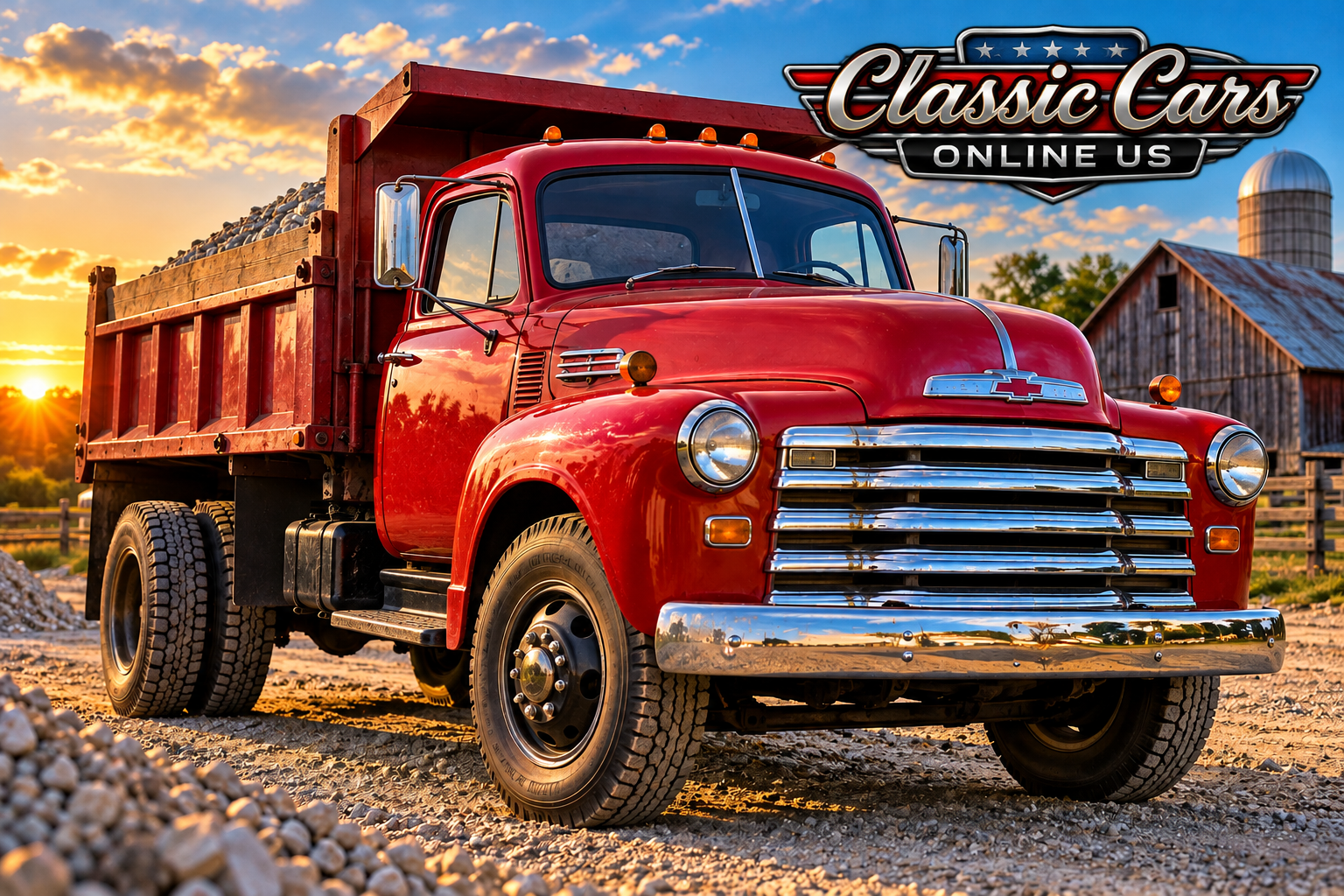
From farms and construction sites to busy city streets and remote highways, working trucks have helped build communities, move essential goods and keep everyday life running for generations. Their history is a story of changing technology, hard work and the people who depend on these remarkable machines.
For automotive enthusiasts, vintage trucks offer a glimpse into the past. For younger generations, they offer an opportunity to discover how engineering and ingenuity have shaped the world around them.
And sometimes, a love of trucks begins with a simple childhood memory.
Before Trucks Ruled the Roads
Before motorized trucks became common, people relied on horse-drawn wagons, carts, railroads and waterways to transport goods. Moving heavy materials over long distances could be slow and difficult, especially where roads were rough or poorly maintained.
The arrival of motorized trucks changed what businesses and communities could accomplish.
German engineer Gottlieb Daimler built an early internal-combustion-powered truck in 1896. In the United States, early truck designs evolved alongside automobiles, as businesses and manufacturers explored new ways to carry heavier loads.
Some of the earliest pickups were practical conversions of passenger cars. Owners adapted vehicles with cargo beds so they could haul tools, supplies and agricultural products.
By the early 20th century, manufacturers were developing vehicles specifically for commercial work. Trucks soon became an increasingly important part of farming, construction, delivery services and transportation.
The Smithsonian Magazine’s history of the pickup truck explores how these practical machines evolved from humble haulers into some of the most recognizable vehicles on the road.
How Working Trucks Helped Build Modern Communities
As truck technology improved, these vehicles took on an expanding range of jobs. Stronger engines, improved transmissions and better chassis designs helped manufacturers build trucks for increasingly demanding tasks.
Road improvements also made a difference. In the United States, the growth of the Interstate Highway System helped expand long-distance trucking and made it easier to move goods between cities and regions.
The Federal Highway Administration’s freight transportation resources provide further context on the role of trucks in the nation’s transportation network.
Working trucks have served communities in countless ways, including:
- Agriculture: Carrying crops, livestock supplies, feed and equipment between farms, markets and processing facilities.
- Construction: Hauling lumber, gravel, concrete, tools and heavy materials to building sites.
- Emergency services: Bringing firefighters, rescue crews and essential equipment where they are needed.
- Delivery and transportation: Moving food, household goods, industrial supplies and other products to businesses and families.
- Public works: Supporting road maintenance, sanitation, utility repairs and other services that keep communities operating.
Each type of truck reflects the job it was designed to do. A dump truck needs a different setup from a tow truck, just as a fire engine must meet different demands from a delivery vehicle.
These differences are part of what makes working trucks so interesting to explore.
Working Trucks Around the World
Although truck designs vary by country, climate and industry, the basic purpose remains familiar: moving people, equipment and materials where they need to go.
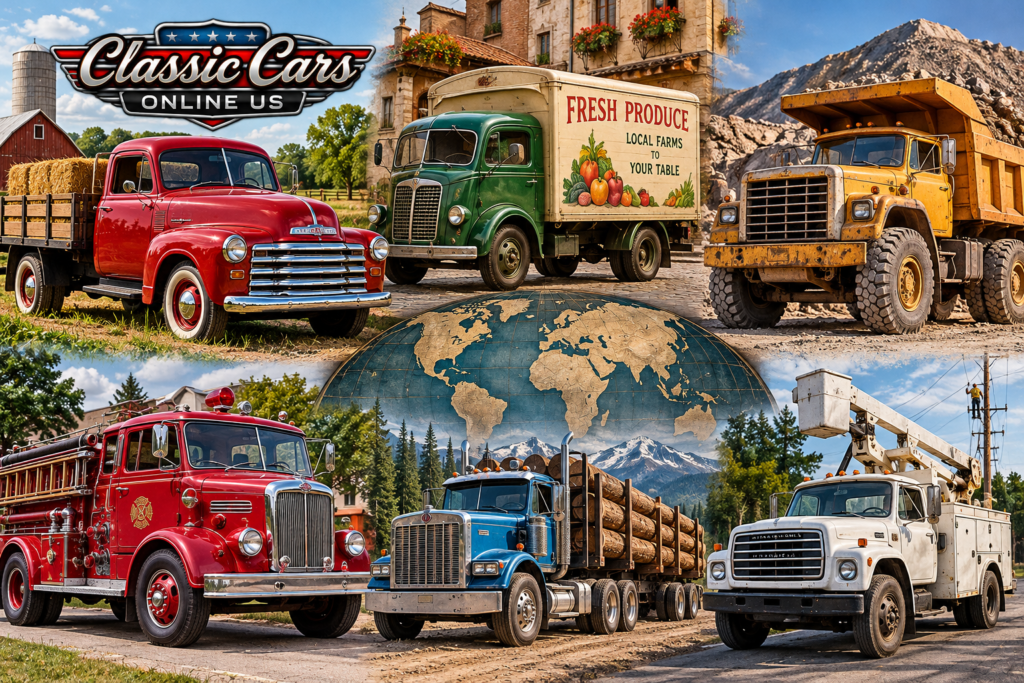
In agricultural regions, trucks help transport harvests and supplies. In cities, delivery vehicles keep shops and businesses stocked. In mining and construction, heavy-duty trucks move materials across demanding terrain.
Some vehicles are designed for narrow streets and crowded neighborhoods. Others are built for rugged landscapes, long distances or extremely heavy loads.
Local needs influence the size, shape and capabilities of these machines. Regulations, available technology and the types of work being performed also affect their design.
Looking at working trucks from around the world reminds us that automotive history isn’t limited to sports cars, luxury vehicles or high-performance machines. The vehicles built to perform everyday jobs have their own stories of innovation and achievement.
And many of those stories are still unfolding.
The Technology Behind the Trucks
Part of the appeal of a vintage truck is seeing how its design reflects the technology of its time.
Older working vehicles often featured straightforward mechanical systems, distinctive body shapes and practical interiors. Many were built with durability and ease of maintenance in mind.
Over the decades, improvements in engines, braking systems, steering, tires and transmissions helped trucks become more capable and easier to operate.
Modern work trucks may also incorporate electronic controls, advanced safety features, improved emissions systems and sophisticated drivetrain technology.
Yet the fundamental engineering challenge remains much the same: build a vehicle that can perform a specific job reliably, often under difficult conditions.
For young automotive enthusiasts, trucks offer an accessible introduction to engineering concepts. Their different shapes and functions raise questions about weight, balance, traction, lifting mechanisms and how engines turn fuel or electricity into motion.
A closer look at a dump truck, for example, can lead to a discussion about hydraulics. A tow truck can introduce the ideas of leverage and load distribution. A fire engine can open a conversation about the specialized equipment needed to respond to emergencies.
Sometimes, curiosity about a vehicle becomes the beginning of a lifelong interest in how things work.
The Trucks We Remember
Automotive history isn’t found only in museums, books and old photographs. It’s also part of family history.
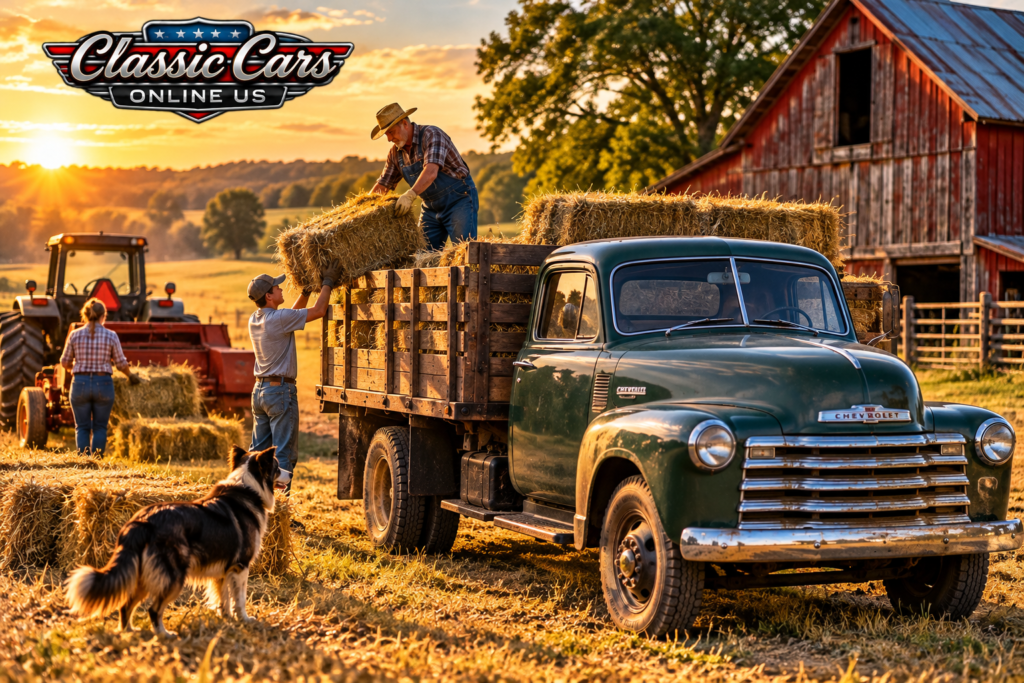
Perhaps you remember a pickup parked beside your grandparents’ barn. Maybe a family friend drove a delivery truck, or you watched construction crews operate heavy equipment while a new road or building took shape.
For some people, the memories are tied to a particular vehicle. For others, they’re connected to the people who drove, repaired or depended on those machines.
Vintage trucks can bring those experiences back to life. Their familiar shapes, distinctive grilles and practical designs may remind us of a different era, when a work truck was often an indispensable part of a person’s livelihood.
Sharing those memories gives younger generations a chance to see old vehicles in a new light.
A grandparent might explain how a truck was used on a family farm. A parent might describe a construction project they watched as a child. Someone who worked as a mechanic might explain how engines and other components have changed over the years.
These conversations don’t need to be formal history lessons. A question about an old truck can be enough to start a story.
And that story may be remembered long after the conversation ends.
Passing a Love of Trucks to the Next Generation
Not every child will grow up to become a mechanic, engineer, driver or automotive collector. But introducing children to vehicles and their history can encourage curiosity, creativity and an appreciation for the technology that surrounds them.
There are plenty of simple ways to explore the subject together:
- Visit a classic truck show, transportation museum or local vehicle display.
- Look through old family photographs and talk about the vehicles people used.
- Point out different types of work trucks and discuss the jobs they perform.
- Explore how truck designs have changed across generations.
- Read about historic vehicles and the industries they helped support.
- Enjoy a hands-on activity that encourages children to look closely at truck shapes and details.
The goal isn’t to teach every mechanical detail at once. It’s to make the subject interesting and approachable.
Children often learn through questions, observation and play. Giving them opportunities to explore vehicles in their own way can help turn a passing interest into something more meaningful.
For families who enjoy creative activities, a coloring book can be another way to bring working truck history to the table.
Celebrating Working Trucks Through Creativity
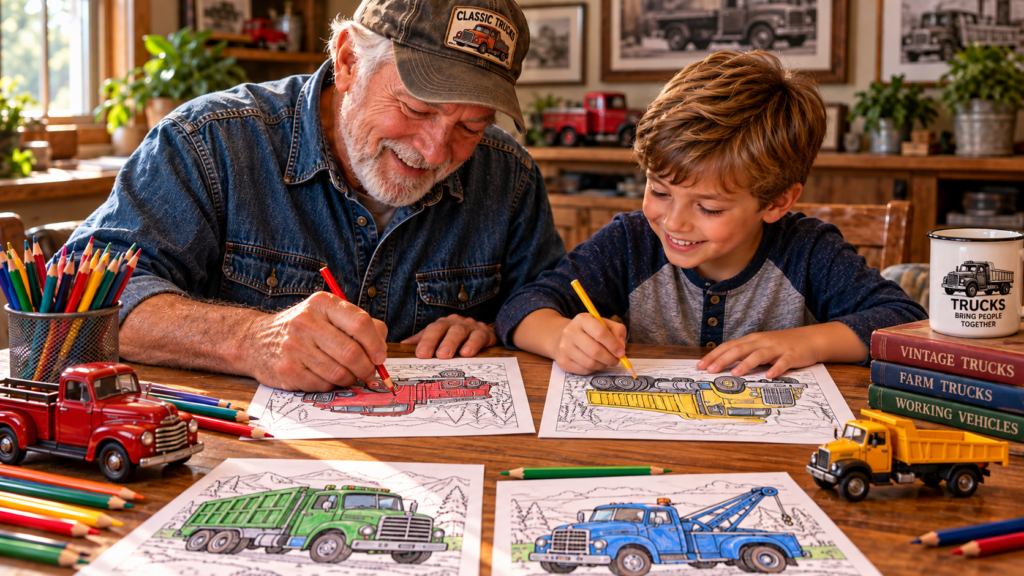
One of the pleasures of coloring is that it allows people to slow down and focus on the details. The shape of a cab, the arrangement of the wheels, the design of a grille and the equipment mounted on a truck all become things to notice.
Children can choose realistic colors or invent their own designs. They can imagine where a truck might work, what it might carry or what its next job could be.
Adults can join in, too. A parent or grandparent might recognize a familiar style of truck and share a memory about a similar vehicle. A child might ask why one truck has more wheels than another or why a particular vehicle has specialized equipment.
The activity becomes more than filling a page with color. It becomes an opportunity to talk, imagine and discover something together.
For families who enjoy classic vehicles, these small moments can help keep automotive history alive in a new generation.
Introducing Working Trucks From Around the World: A Coloring Book
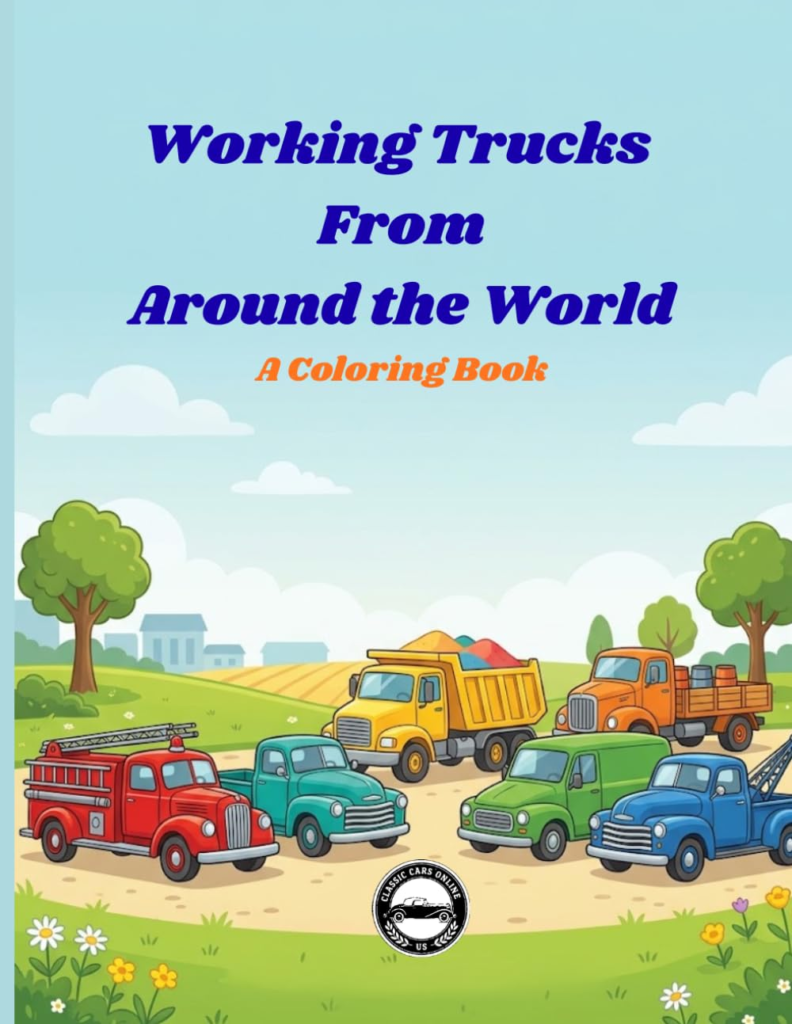
At Classic Cars Online US, we appreciate the history, engineering and character behind classic vehicles. That appreciation inspired my first working truck coloring book, Working Trucks From Around the World: A Coloring Book.
Created for adults and kids who enjoy vintage vehicles, the book features 50 truck illustrations celebrating the hardworking machines that have helped build, haul, rescue and deliver across the globe.
From vintage pickups and rugged dump trucks to tow trucks, fire engines and delivery vehicles, the illustrations offer a variety of working trucks to explore.
There’s also a doodle page after every picture. Readers can use that extra space to sketch their own truck, experiment with a custom paint job or create an entirely new scene.
The book offers a creative activity for truck enthusiasts of different ages and skill levels. It can also provide a starting point for conversations about the vehicles themselves and the jobs they were designed to perform.
Imagine a grandparent and grandchild sitting together with colored pencils, talking about an old pickup or comparing the trucks they remember with the vehicles a child sees today. Those moments offer a simple way to share an interest across generations.
Whether you’re looking for a birthday or holiday gift, a quiet activity for a rainy afternoon or a new way to introduce a young enthusiast to working vehicles, this coloring book brings creativity and automotive appreciation together.
Ready to explore working trucks? Discover Working Trucks From Around the World: A Coloring Book on Amazon.
VIEW THE COLORING BOOK ON AMAZON
Make It a Creative Family Activity
Be sure to pick up some colored pencils* or crayons* (*Amazon Associate) to bring your favorite working trucks to life. Whether you prefer traditional truck colors or want to create your own custom designs, a selection of art supplies can turn coloring time into a fun, creative experience for the whole family.
*As an Amazon Associate, I earn from qualifying purchases.
Keeping Automotive History Moving Forward
Working trucks deserve a place in the automotive history conversation. They helped transform agriculture, construction, commerce and transportation, and they continue to perform jobs that communities depend on every day.
Their stories are about more than horsepower, payload capacity or mechanical design. They’re also about the people who built them, maintained them and relied on them to make a living.
Preserving an appreciation for these vehicles means sharing their stories, exploring their engineering and encouraging younger generations to ask questions about the machines that helped shape our world.
Sometimes that appreciation begins at a car show or in a museum. Sometimes it starts with an old family photograph or a story told around the dinner table.
And sometimes it begins with a few colored pencils, a picture of a classic truck and time spent together.
Because the legacy of working trucks isn’t only found on the road. It’s also found in the memories we share and the curiosity we inspire in the generations that follow.