
Originally published April 9, 2016 | Updated November 1, 2026
A vintage car’s value isn’t just about the make and model. Condition counts for a lot, and the interior is one of the first things a buyer notices. Gorgeous paint can’t make up for a sagging seat or a cracked dash.
That’s why upholstery sits near the center of most restorations. Choosing the right material and pattern is part of bringing a classic back to life. Here’s how custom auto upholstery for classic cars works and what to think about before you commit.
Why Classic Cars Often Need Custom Upholstery
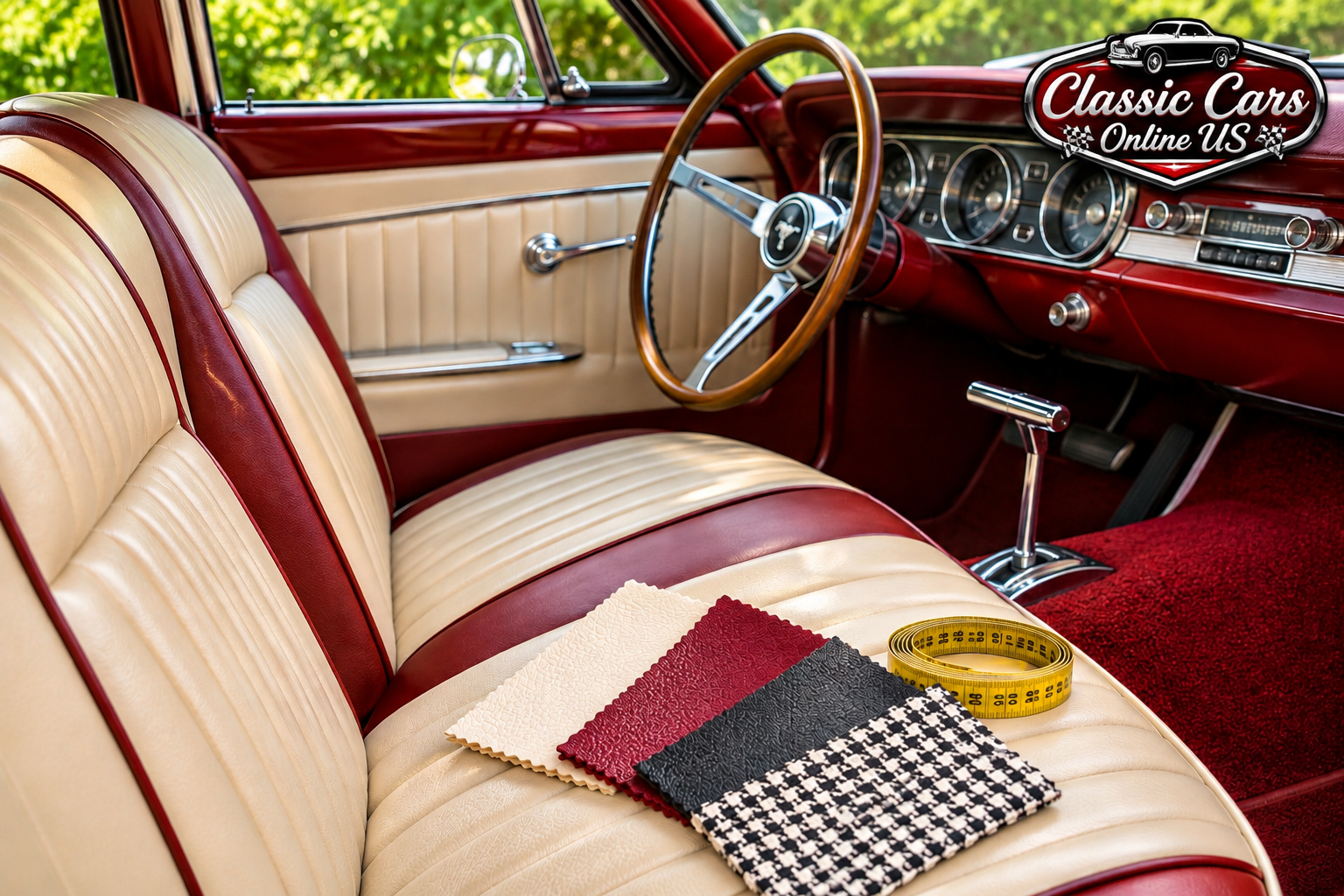
Universal seat covers rarely fit a classic properly. Older cars were built with different dimensions and seat designs, and seat shapes, door panels, and trim pieces vary considerably from one model to another. A skilled automotive upholsterer can build or fit upholstery around your car’s actual dimensions.
Restoration is also a personal hobby, and the interior is where owners show their taste. Custom upholstery shops can handle everything from classic white leather to bold patterns, including animal prints, if that’s your style. The car is yours, and the interior can say so.
A Short History of Car Interiors
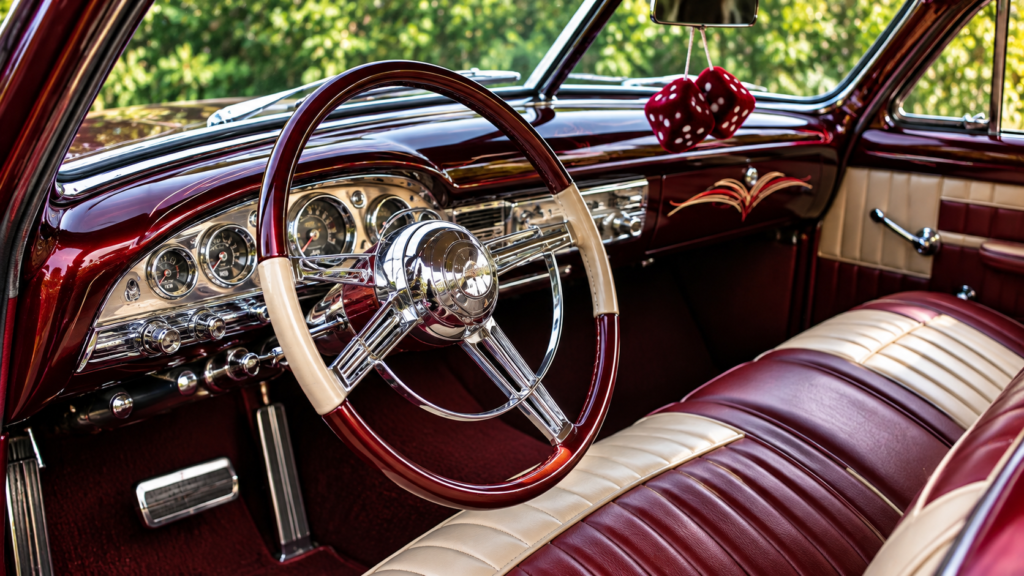
Early automobile interiors borrowed heavily from horse-drawn carriages, and many of the upholstery and trimming skills used in those early vehicles came from the carriage trade. Over the decades, expectations changed. Interiors were once judged mostly on whether they held up. Today, drivers want them to be durable, comfortable, and good-looking all at once.
Three Decisions That Shape Your Interior
Most upholstery projects come down to three choices: material, style, and who does the work.
Choosing Upholstery Materials That Hold Up
A car’s interior takes more abuse than almost any other part. Passengers climb in and out, kids pick at loose threads, and the sun beats through the windows. Cheap materials show wear quickly.
Leather is a popular choice for good reason. Quality automotive leather can be durable and comfortable, and it’s relatively easy to clean. It does require proper care to prevent drying, discoloration, and cracking. Leather can also become hot in summer and cold in winter, so think about your climate and how you’ll use the car.
Other solid options include:
- Vinyl: Tough, affordable, and available in many looks. Modern automotive vinyl comes in a wide range of textures and finishes, with many options designed for better durability and flexibility than older materials.
- Wool and cloth: Traditional choices that suit many older cars. Care requirements vary depending on the fabric, so consider how easily the material can be cleaned and maintained.
- Mohair: A traditional textile associated with early luxury automobiles. Its soft, plush texture appeared in certain vintage interiors and specialty automotive fabrics.
If the car will see regular sun, ask about UV-resistant options. Sunlight is hard on any interior.
Once you’ve invested in a new interior, keeping it clean helps preserve your work. A car carpet and upholstery cleaner kit* with a spray cleaner and brush can be useful for routine cleaning of compatible fabric and carpet surfaces. Always check the manufacturer’s instructions and test the product on an inconspicuous area before using it on your restored interior.
*As an Amazon Associate I earn from qualifying purchases.
Finding Your Style Without Overdoing It
Custom upholstery lets you shape the interior around your personality. The trick is restraint. When an interior has too many patterns, colors, and extras, it can look busy and even feel uncomfortable.
Keep a few questions in mind:
- Will you and your passengers be comfortable on longer drives?
- Will the design be expensive to repair if a section wears out?
- Does it suit the car’s era, or is a deliberate modern twist what you’re after?
A concours-quality restoration may call for factory-correct materials, colors, and patterns. Clubs like the Antique Automobile Club of America, which is dedicated to preserving and enjoying historic vehicles, are a good place to ask what’s right for your model. A weekend cruiser or street rod can afford to be more personal.
Picking the Right Upholstery Shop
For many owners, this is the hardest part. You want quality work at a fair price, and the two don’t always come together easily.
Start by asking to see completed projects, preferably in person rather than just in photos. Check the seams, stitch lines, and how the material wraps around corners. Has the shop worked on your make, model, or a similar vintage vehicle before?
Get written quotes from more than one shop, and ask exactly what’s included. Does the price cover padding, springs, hardware, door panels, and removing and reinstalling the interior? These details can make a substantial difference in the final cost.
Don’t be shy about asking where the budget can stretch and where it shouldn’t. A good trimmer will give you straight answers about options that fit your wallet.
Where Quality Upholstery Pays Off
A beautiful exterior can draw people toward a classic car, but the interior helps complete the restoration. Poorly fitted covers, uneven stitching, and cheap materials can detract from an otherwise impressive vehicle.
Quality materials and skilled workmanship cost more up front, but they can make the car more enjoyable to own and help preserve its appeal. If resale value matters, remember that originality, condition, and the quality of the restoration all play a role. Expensive upholstery work doesn’t automatically translate into a higher selling price.
A Classic Interior You’ll Want to Sit In
The best vintage car interior fits the car and the person driving it. Take your time choosing materials, keep the style comfortable rather than crowded, and find a trimmer whose work you trust. Do that, and your classic will feel just as good on the inside as it looks from the curb.
Join the conversation!
Follow Classic Cars Online US on YouTube for more classic-car features, performance stories, and automotive history.
Join us on Facebook to share your favorite classics, compare notes with other enthusiasts, and keep the conversation going.
There’s always another amazing car worth talking about. We’ll see you at the starting line!
I see your blog is similar to my blog. Do
you allow guest posts? I can write unique and interesting articles for you.
Let me know if you are interested.