
Originally published April 9, 2016|Updated October 28, 2026
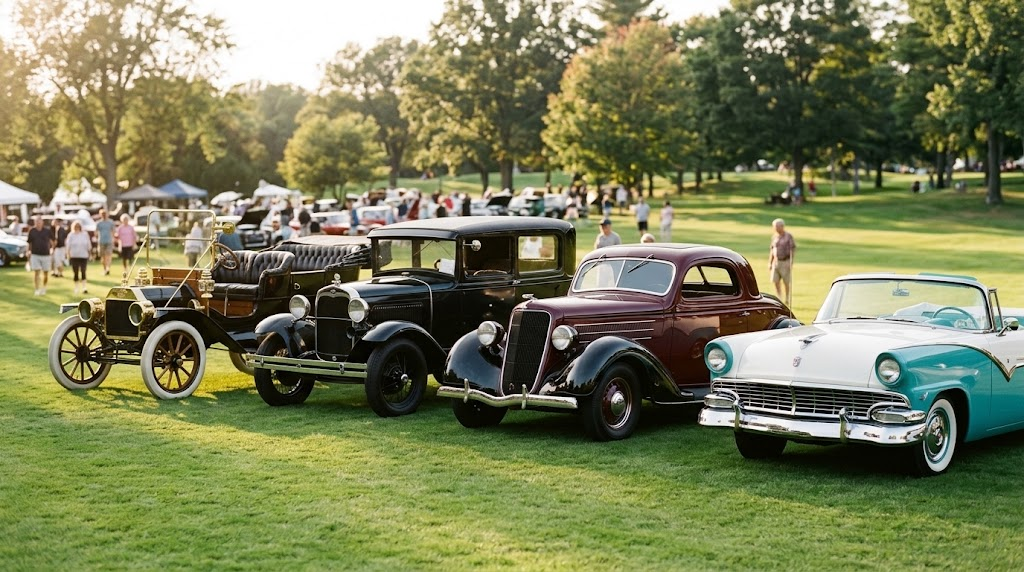
There’s something about an old car or vintage truck that stops people in their tracks. Maybe it’s the shiny chrome, the deep rumble of the engine or the way it looks like nothing on the road today. Whatever the reason, antique cars have a way of pulling people in and keeping them there for life.
Collecting, restoring and showing antique cars is a hobby enjoyed all over the world. Let’s look at why it’s so popular, how old cars are sorted into eras and how you can start your own collection.
Why Do People Love Antique Cars?
Ask ten collectors and you’ll get ten different answers. Still, the same few reasons come up again and again.
- Nostalgia: For many people, an old car brings back a memory. It might be the family car from summer picnics, the car where they had a first date or the dream car they couldn’t afford as a teenager.
- Design: Older cars have style you don’t often see today. Long hoods, bold grilles, shiny trim and rich colors make them stand out in any parking lot.
- Craftsmanship: Many antique cars were built with more hand work and simpler machinery. You can often see how everything fits together.
- Hands-on fun: Old cars are easier to work on than modern ones, so owners can learn and do a lot of the work themselves.
- Community: Car clubs, cruise-ins and shows make it easy to meet people who share your passion.
Famous names have caught the bug too. Jay Leno, longtime host of The Tonight Show, is well known for his huge collection of cars and motorcycles. Actor Steve McQueen was also a lifelong car and motorcycle fan.
A Quick History of the Early Automobile
The story of the car starts long before the gas engine.
Steam came first. A Flemish missionary named Ferdinand Verbiest is credited with building a small steam-powered model vehicle around 1672. In 1769, Frenchman Nicolas-Joseph Cugnot built a steam-powered wagon meant to haul heavy cannons. It’s often called the first self-propelled road vehicle.
Gas power took over later. Karl Benz built his three-wheeled Motorwagen in 1885 and received a patent for it in 1886. It’s widely seen as the first practical gasoline-powered automobile.
Electric cars were around early too. They were popular in the early 1900s, but gas cars won out as roads, fuel stations and engines improved. So when people today talk about electric cars as a new idea, collectors can point out that it’s actually an old one.
The Eras of Antique and Classic Cars
Collectors use era names to describe cars from different periods. The exact dates vary a little depending on who you ask, but these are the most common ones in the U.S.:
- Veteran Era: The earliest cars, from the start of the automobile up to about 1905.
- Brass Era: Roughly 1905 to the end of World War I. Named for the shiny brass lamps and fittings on many cars of the time.
- Vintage Era: About 1919 to 1930. This is a popular period for collectors.
- Pre-War Era: The 1930s up to World War II.
- Post-War Era: From the end of World War II into the 1960s.
- Muscle Car Era: Mostly the 1960s and early 1970s, when American carmakers put big V8 engines in mid-size cars. These aren’t sports cars. They’re their own category, built for straight-line speed.
Because the names overlap, don’t be surprised if two collectors place a car in different eras. It’s part of the fun.
What Counts as an Antique Car?
This one gets tricky, because there’s no single rule. The Antique Automobile Club of America (AACA) treats vehicles 25 years old or older as antiques. Other groups, insurers and states have their own cutoffs, and some use 45 years instead. Progressive’s guide to classic car age explains how definitions can vary.
The same goes for the word “classic.” Many people use it for any older car they love. Before you register or insure a car, check your state’s rules and ask your insurer how they define it.
How to Start Collecting Antique Cars
You don’t need a huge budget or a garage full of cars to get going. These steps help:
- Pick an era or style you love. A clear focus keeps you from buying random cars you’ll regret.
- Learn before you buy. Read, visit shows and talk to owners. Our tips for buying the best classic car are a good place to start.
- Join a club. Clubs often share parts leads, repair tips and event invites.
- Plan for upkeep. Storage, insurance, repairs and parts all add up, so think beyond the purchase price.
- Consider a project. If you like working with your hands, our beginner’s guide to classic car restoration walks you through the basics.
Why the Hobby Keeps Growing
Every generation finds its own favorite old cars. Some people love the elegance of a Brass Era touring car. Others go wild for a Vintage Ford or a muscle car with a big engine. What they share is a sense that these machines are worth saving.
Antique cars are rolling pieces of history. They show how people lived, traveled and dreamed, and that’s why so many of us can’t get enough of them.
Join the conversation!
Follow Classic Cars Online US on YouTube for more classic-car features, performance stories and automotive history.
Join us on Facebook to share your favorite antique and classic cars, compare notes with other enthusiasts and keep the conversation going.
There’s always another amazing car worth talking about. We’ll see you at the starting line!