
Originally published April 9, 2016|Updated October 27, 2026
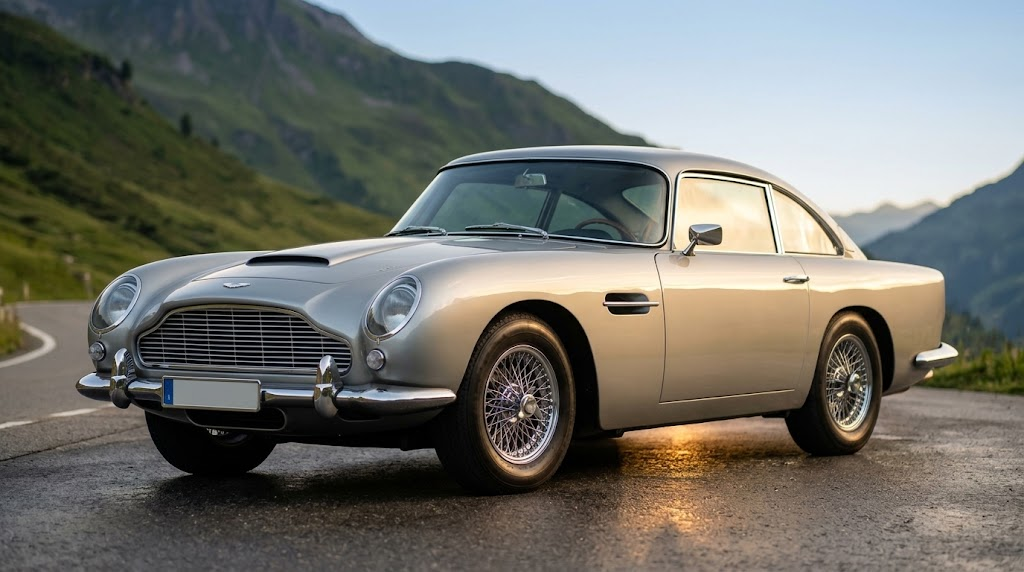
Some cars are famous because they’re fast. Some are famous because they’re beautiful. The 1963 Aston Martin DB5 is famous because it’s both, and because it spent a few minutes on screen with a secret agent.
Today the DB5 is one of the most recognized classic cars on the planet. Here’s where it came from, what made it special and why collectors still chase it.
What Is the Aston Martin DB5?
The DB5 is a luxury grand tourer, which is a car built to cover long distances fast and in comfort. It replaced the popular DB4 and kept the same graceful, hand-built style.
The “DB” stands for David Brown, the businessman who owned Aston Martin and guided the company through its most celebrated years. Production ran from 1963 to 1965, and only about 1,000 cars were built in total.
That small number is a big part of the story. Every DB5 was assembled by hand at the factory in Newport Pagnell, England, and it shows in the details.
1963 Aston Martin DB5 Specs and Features
The DB5 took what worked on the DB4 and made it stronger. Here are the highlights:
- Engine: A 4.0-liter aluminum straight-six, bigger than the DB4’s engine
- Power: About 282 horsepower with the standard setup
- Carburetors: Three SU carburetors on standard cars
- Transmission: A ZF five-speed manual gearbox, with an automatic offered as an option
- Seating: A two-door body with a 2+2 layout, meaning two front seats and two small rear seats
- Comfort touches: Reclining seats and electric windows
- Top speed: Roughly 140 to 145 mph, depending on the source
For the early 1960s, those numbers were seriously impressive. The DB5 could run with the best sports cars of its day while still carrying you in leather-lined comfort.
Rare Versions of the DB5
Not every DB5 is the same, and some versions are far harder to find than others.
The Vantage. Introduced in 1964, the Vantage swapped the standard carburetors for three Weber carburetors. That boosted output to about 314 horsepower. Only around 65 Vantage coupes were built, so they’re highly prized today.
The convertible. Just 123 DB5 convertibles were made. Only a small number were built with the steering wheel on the left, which makes those especially sought after by American collectors. Hagerty’s DB5 valuation page has more on how the model is valued.
The shooting brake. This is the rarest one of all. A shooting brake is a stylish wagon, originally built for hunting trips so owners could carry gear and dogs. The factory built a prototype for David Brown himself, who was an avid hunter. The coachbuilder Harold Radford then converted about a dozen more.
The James Bond Connection
(As an Amazon Associate I earn from qualifying purchases at no additional cost to buyers.)
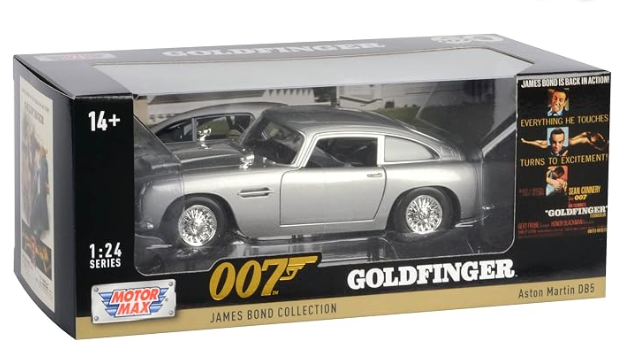
Mention the DB5 to almost anyone and they’ll think of 007.
The car became a movie legend in Goldfinger (1964) with Sean Connery as James Bond. It had gadgets like hidden machine guns, a rotating license plate and an ejector seat. It returned in Thunderball in 1965, and later turned up in GoldenEye, Casino Royale, Skyfall and No Time to Die.
Fun fact: Roger Moore, who played Bond in the 1970s and 80s, drove a DB5 in the comedy The Cannonball Run (1981). He played a character who thinks he’s Roger Moore, and the car was a clever wink to his spy past.
How Much Is a 1963 Aston Martin DB5 Worth?
A DB5 in good condition costs well into six figures, and rare versions cost far more. The Bond connection pushes values even higher.
Two auction sales show how high it has gone in the recent past:
- 2010: A DB5 used in the filming of Goldfinger and Thunderball sold at an RM Auctions sale in London for about $4.6 million.
- 2019: A 1965 DB5 built with working Bond gadgets sold at RM Sotheby’s in Monterey, California, for $6.385 million. It was a record for a DB5 at auction at the time. It was a promotional car from the Thunderball era and never appeared in the films.
Of course, you don’t need a movie car to own a piece of history. A well-kept standard DB5 is still a rare and rewarding classic.
What to Look for If You’re Shopping for a DB5
Buying one takes careful homework. If you’d rather buy a project than a finished car, our beginner’s guide to classic car restoration walks through how to inspect, plan and tackle one. Keep these points in mind:
- Verify the chassis and engine numbers against the factory records
- Check for rust and for signs of past body repairs
- Ask for service history and restoration records
- Confirm whether the car has the original engine or a later swap
- Have an Aston Martin specialist inspect it before you buy
Because of the high prices, a professional inspection is money well spent.
The DB5 Today
The 1963 Aston Martin DB5 mixes engineering, elegance and pop culture in a way few cars ever have. It’s a reminder that great design can last for generations.
Whether you dream of owning one, collect model cars or just love a good Bond movie, the DB5 is a car worth knowing.
Join the conversation!
Follow Classic Cars Online US on YouTube for more classic-car features, performance stories and automotive history.
Join us on Facebook to share your favorite British classics and movie cars, compare notes with other enthusiasts and keep the conversation going.
There’s always another amazing car worth talking about. We’ll see you at the starting line!
The picture above is actually a 1964 Aston Martin DB5 – the only image I could find of a ’63 was a hot wheels car at the end of the article.
Hey there, You have done a fantastic job. I will definitely digg it and
personally recommend to my friends. I am confident they’ll be benefited from this site.