
Originally published April 9, 2016|Updated October 23, 2026
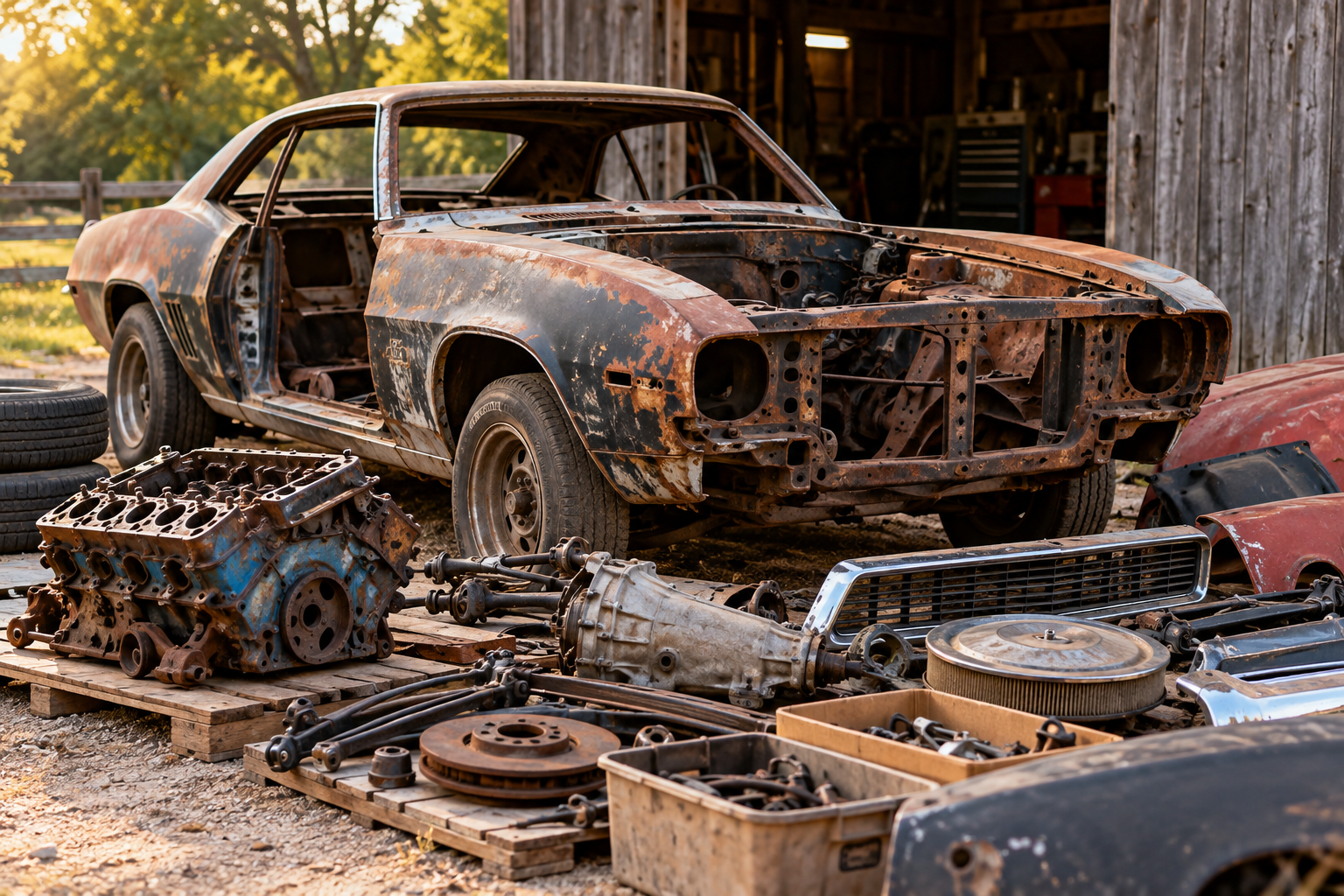
Every car lover has seen one: a classic sitting in a barn or driveway, half-torn-apart and covered in dust. Maybe it’s a muscle car with no engine. Maybe it’s a hot rod with a pile of parts in the trunk. That’s a basket case car, a vehicle that’s so far from running that it’s often sold in pieces.
A basket case can be a great way to get into classic car restoration. It can also drain your wallet and your free time. Whether you’re thinking about buying one, finishing one or finally letting one go, here’s what to know first.
What Is a Basket Case Car?
A basket case is a car that’s incomplete, disassembled or in rough shape. Some are missing a few parts. Others are literally boxes of parts, often with a title and a lot of hope.
They’re popular because they usually cost less up front. But the low price tag rarely tells the whole story.
Thinking About Buying a Basket Case? Check These First
There’s often a reason an owner is ready to move a project along. Sometimes life gets busy. Sometimes the car turns out to be harder or more expensive to restore than expected. A little homework helps you tell the difference.
Look at the Frame and Body First
A solid frame and sound body structure give you a much better starting point, but the cost and extent of the remaining repairs still matter. A car with a straight frame and good body structure is generally a better bet than one with serious rust or structural damage.
If the frame or main body is badly damaged, the project can become expensive quickly. Get a professional opinion if you’re unsure how extensive the repairs might be.
Hunt for Hidden Rust and Cover-Ups
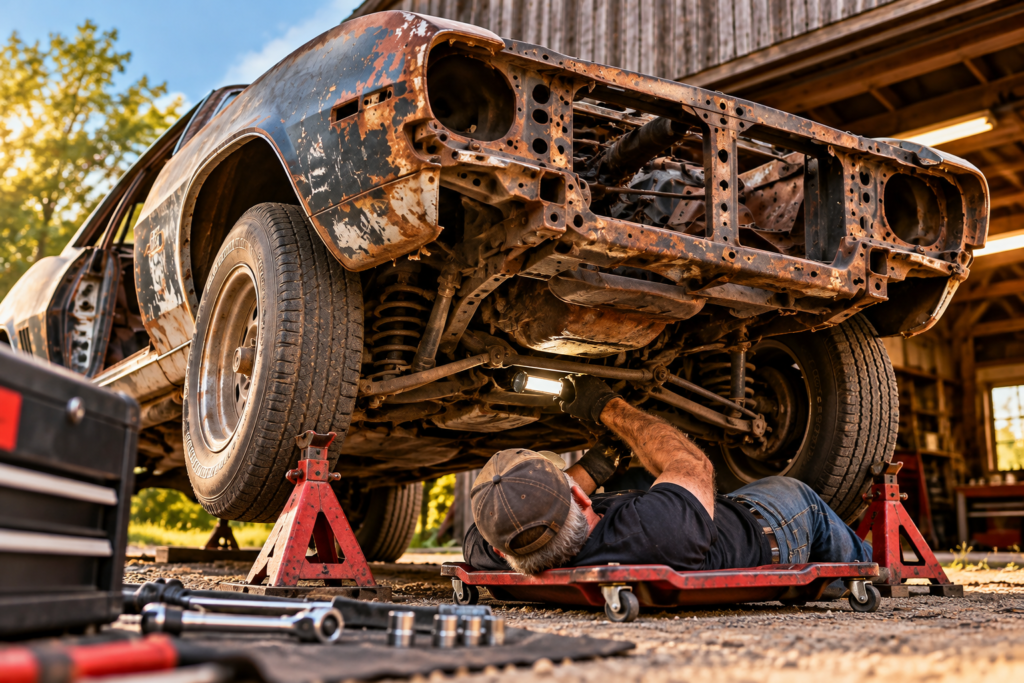
Rust is one of the biggest challenges in a restoration project, so look closely. Some previous owners patch rusty spots with sheet metal, body filler or fresh paint. That isn’t always an attempt to hide a problem, but a repair that covers rust can leave you with more work than you planned.
Here’s a simple checklist to bring with you:
- A flashlight: Check under the car, inside the trunk and along the floor pans.
- A small magnet: On suitable steel panels, a weak or inconsistent attraction may indicate body filler, although the results aren’t conclusive.
- Close attention to seams, corners and lower panels: These are common places to find rust.
- A look at previous repairs: Pay special attention to areas where major body panels or structural components have been replaced.
- Photos of everything: Document the car’s condition so you can compare repair estimates and parts prices later.
- A trusted friend or professional: A fresh set of eyes can catch problems you might overlook when you’re excited about a potential project.
If you’re inspecting a car with finished bodywork, a paint thickness gauge can help identify unusual differences in paint thickness that may point to previous repairs. Results depend on the gauge and panel material, so use it as one inspection tool, not proof of hidden damage.
Put Safety Ahead of Excitement
Be honest about what you’re buying. If the car is missing its brakes, engine or steering components, you already know it can’t be driven. If the owner says it runs, verify that before you trust it.
Never drive a car with questionable brakes or steering. Ask for a clear history, request documentation when available and take your time. A professional inspection can help you identify safety concerns and estimate the work ahead.
How to Find Parts for a Basket Case Car
Parts are where many projects stall. An earlier owner may have quit because the right pieces were hard to find, too expensive or both. Before you buy, figure out how you’ll get what the car needs.
Start by making a list of what’s missing or worn out. Then look at your options:
- Specialty parts suppliers: Many offer online catalogs for specific makes and models.
- Swap meets and car club forums: These can connect you with sellers and enthusiasts who know where to find hard-to-get parts.
- Salvage yards: They can be a source of original parts, although you may need to search multiple locations.
- Reproduction parts: These can be a practical alternative when original pieces are scarce.
- Online marketplaces: Sites such as eBay can help you find used, new-old-stock and reproduction parts.
Before committing to a rare car, research parts availability. AAA’s antique car restoration advice is a useful starting point for understanding the planning involved in restoring an older vehicle.
Rarity matters. A less common car may have fewer replacement parts available, and specialized components can be expensive. Large, heavy items that require freight shipping can add to the bill, too.
Try to get rough prices for the big-ticket items before you commit. It’s much easier to walk away from a car at the start than halfway through.
Already Own a Project? Finishing It Takes a Plan
If you’re picking up a half-finished build, give yourself a head start. Take inventory, sort parts into labeled bins and decide what “finished” means to you. A weekend cruiser doesn’t need the same level of detail as a show-winning restoration.
Breaking the work into small stages can keep you motivated. Brakes, wiring, interior and paint all feel more manageable when you tackle them one at a time.
A detailed classic car restoration manual* can also help you understand the work involved, especially if you’re new to a particular type of repair. For model-specific work, look for a service manual that covers your car’s make, model and year.
Most importantly, set a realistic budget. Leave room for unexpected repairs because disassembled cars can hide problems that aren’t obvious until work begins.
(*As an Amazon Associate, I earn from qualifying purchases.)
When It’s Time to Call It Quits
Selling a project car doesn’t mean you failed. Life changes. Budgets change. Sometimes a car that looked perfect at the start turns out to be a never-ending expense, or you simply stop enjoying it.
If you’re ready to move on, you may be able to recover some of your investment. Here are a few options:
- Reach out to restoration shops: Some shops buy unfinished projects or may know someone looking for one.
- Join local and online car clubs: Another enthusiast might be eager to finish what you started.
- List the car on a marketplace: Include clear photos, an honest description and a detailed inventory of the parts that come with it.
- Gather your paperwork, receipts and photos: Organized records help potential buyers understand what they’ve found and what work remains.
- Be honest about the car’s condition: Disclose missing parts, known damage and unfinished repairs to avoid misunderstandings.
A project that gets a new owner and a new chance is better than one that rusts away in the driveway.
So, Is a Basket Case Car Worth It?
It can be, if you go in with clear eyes. Choose a car with a solid foundation, know where your parts will come from and set a budget with room to spare. Do that, and you’ll give yourself a better chance of bringing a classic back to the road.
And if it’s not for you? That’s okay, too. Every car deserves an owner who’s excited to get it moving.
Join the Conversation!
Follow Classic Cars Online US on YouTube for more classic-car features, performance stories and automotive history.
Join us on Facebook to share your favorite muscle cars, compare notes with other enthusiasts and keep the conversation going.
There’s always another amazing car worth talking about. We’ll see you at the starting line!