
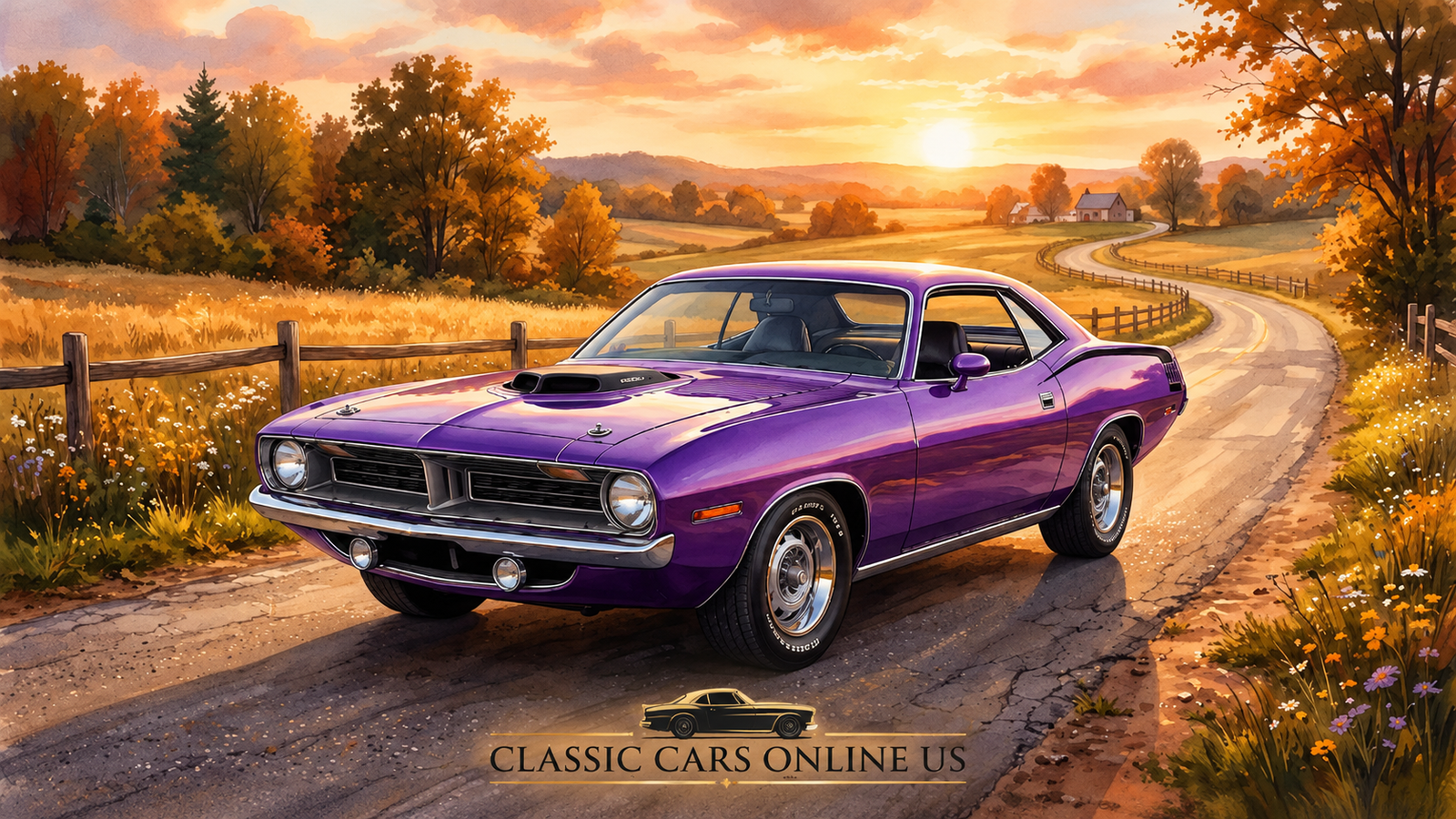
Muscle cars were loud, fast, and not very polite. They ruled American roads in the 1960s and early 1970s, and then they nearly disappeared. Today, collectors pay big money for the best ones.
So, are muscle cars a good investment? Sometimes. A few rare models have climbed far above their original prices. But many everyday muscle cars have gone up slowly, or even slipped lately. For most people, the smartest reason to buy one is the joy of owning it.
New to the topic? Our muscle cars hub is a good place to start exploring models.
This article is for general information only. It is not financial advice.
What Made a Muscle Car a Muscle Car?
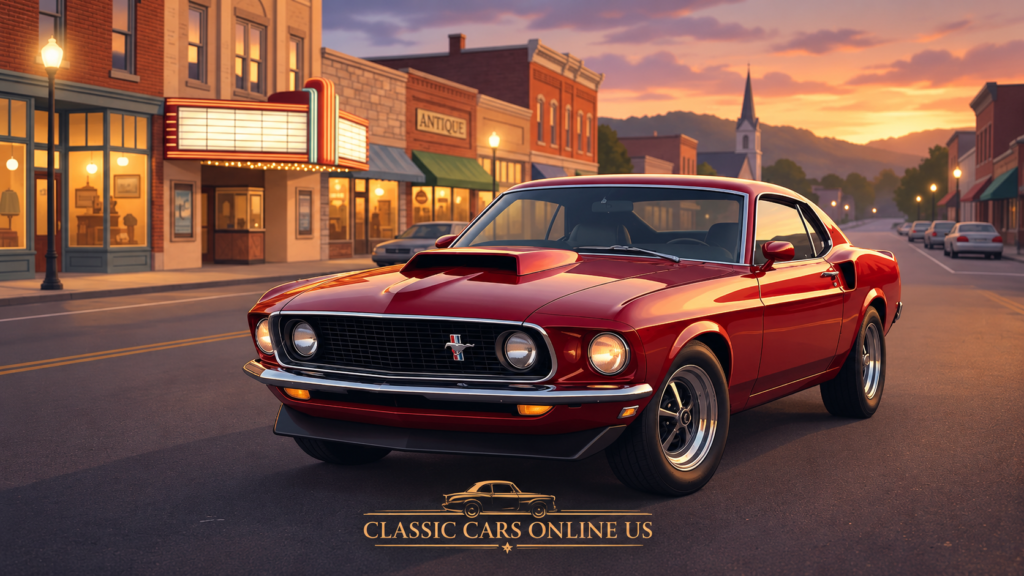
A common formula was to pair a mid-size car with a powerful V8, giving it strong straight-line performance at a price more buyers could afford. Take a mid-size car, then drop in the biggest V8 that would fit. Rear-wheel drive. Two doors. Low price. The goal was to win from one stoplight to the next, or down a quarter-mile drag strip.
The classic era runs from about 1964 to 1972. Pontiac’s GTO often gets credit for starting it. Soon Chevrolet, Ford, Dodge, Plymouth, and others joined in. You can browse them by brand:
- GM muscle cars, like the Chevelle SS and GTO
- Ford muscle cars, like the Mustang Boss 429
- Chrysler muscle cars, like the Hemi ‘Cuda
These cars were not smooth or graceful. Corners were not their strength. Brakes and comfort were basic. Compared with modern performance cars, many classic muscle cars fall short in areas such as handling, braking and overall refinement. That’s not the point. Old muscle cars feel raw and alive, and that’s what people love.
Why Muscle Car Prices Climbed
Three things pushed prices up.
Nostalgia. Some buyers are drawn to the cars they admired when they were younger, while others appreciate their styling, performance, and place in automotive history.
Rarity. Limited production can support collector values, especially when a model also has strong demand and well-documented originality, according to Old Cars Weekly.
Cost when new. The Hemi engine was a pricey option. Many buyers picked cheaper engines instead, so fewer Hemi cars were made.
Muscle cars have always had booms and busts. Muscle-car values and demand have experienced ups and downs. By the early 1970s, rising fuel costs, insurance expenses and changing regulations were creating new challenges for high-performance cars.
Muscle Car Prices Then and Now
Here is what two famous muscle cars cost when they were new:
| Car | Price when new | Source |
|---|---|---|
| 1970 Plymouth Hemi ‘Cuda hardtop | About $4,035 ($3,164 base plus $871 for the Hemi) | Old Cars Weekly |
| 1969 Ford Mustang Boss 429 | About $4,798 | Sports Car Market |
Those prices look tiny today. A 1971 Hemi ‘Cuda convertible drew a reported high bid of $4.8 million at Mecum in 2021. Hagerty called it the highest price it had ever seen offered for a muscle car. Keep in mind that a bid is not always a sale.
Here is the catch. A big jump in price does not always mean a great return. Time matters. Try this example with made-up numbers:
- A car costs $4,000 new in 1970.
- It sells for $100,000 in 2026.
- That is 56 years. The gain works out to about 6% a year.
That is decent, but then you subtract the costs of owning the car. That brings us to the next section.
Click Below to Download the free Muscle Car Cost and Value Worksheet
How the Muscle Car Market Looks Right Now
Hagerty updates its collector car indexes every quarter. Its latest update came out on October 22, 2026. Here is what it says about muscle cars:
- The American Muscle Car Index held steady. It tracks the rarest, most sought-after models.
- The 1969 Boss 429 rose 19% in that update.
- Hagerty says many everyday muscle cars have been “gradually softening” in value.
- Its Affordable Classics Index rose, led by the 1970 Camaro SS, up 12%.
The pattern is clear. Top-tier rare cars can do very well. Common cars may rise slowly or drop a little. That’s why the type of car matters so much.
Muscle Cars Don’t Pay You Back While You Own Them
Stocks can pay dividends. Muscle cars can’t. They cost money every year. Here are the costs to plan for:
- Storage. A dry, safe garage or rented space.
- Insurance. Collector policies are often cheaper than regular ones but may limit your miles.
- Maintenance. Old cars need frequent attention.
- Repairs. Parts can be pricey, and some are hard to find.
- Restoration. A full restoration can cost more than the finished car is worth.
- Time. Finding, fixing, and driving these cars takes work.
Add those costs to your purchase price before you decide whether a car is a “good deal.”
What to Check Before You Buy
Value comes down to a few big things.
- Rarity. Fewer built usually means a stronger market over time.
- Condition. Hagerty rates cars from concours (perfect) down to fair. The same model can sell for a very different price depending on its grade.
- Originality. Original, numbers-matching cars usually bring more. Ask for proof of the engine and transmission.
- Paperwork. Build sheets, window stickers, and service records back up a car’s story.
- Clones. Some cars are built to look like rare models. Verify before you pay a rare-car price.
- A second opinion. Hire a mechanic who has worked on these cars. Our guide on buying a project car covers what to look for.
Collector or Driver? Pick Your Lane
Not everyone wants a trophy car. A rare, fully original muscle car may be something you protect, not drive. A more common model is easier to enjoy. You can take it to a cruise-in without worrying about every rock chip.
If you want to drive your car often, a common version may be the better value. Decide what you want before you start shopping.
Frequently Asked Questions
Are muscle cars a good investment?
Some rare models have grown in value a lot. But values can rise and fall, and ownership costs add up. Think of a muscle car as a hobby first.
Which muscle cars are the rarest?
Low-production models like the 1970 Hemi ‘Cuda convertible and the 1969 Boss 429 Mustang are among the most sought-after.
Do muscle cars hold their value?
It depends on the car. Rare, well-documented cars have done best. Hagerty says many everyday models have softened recently.
Muscle cars may be gone from showrooms, but they still turn heads. If you’re shopping, learn the model, check the paperwork, and budget for the real costs. Do that, and you’ll enjoy the car whether or not the price ever goes up.
Want More Info on the Muscle-Car Era?
If you enjoy seeing what made these cars iconic, The Age of the Muscle Car by Clay Fees takes a broad look at the rise and fall of American muscle cars, from the early days in the industry through the end of the 1970s. This book digs into the automotive styling, muscle car performance and the car culture that helped define the era.
Explore: The Age of the Muscle Car (*Amazon Associate)
*As an Amazon Associate, Classic Cars Online US earns from qualifying purchases.
Join Our Conversation About Classic Muscle Cars
Which classic muscle car would you put at the top of the list? The quarter-mile numbers tell one story, but every enthusiast has a favorite.
Join the conversation!
- Follow Classic Cars Online US on YouTube for more classic-car features, performance stories and automotive history.
- Join us on Facebook to share your favorite muscle cars, compare notes with other enthusiasts and keep the conversation going.
There’s always another amazing car worth talking about. We’ll see you at the starting line!