
Originally published April 13, 2016 | Updated November 19, 2026
A lot of folks would love a fully restored American muscle car sitting in the garage. The price tag is the problem. Top-condition muscle cars can sell for six figures, and some of the rarest bring far more. That puts them out of reach for many hobbyists.
Consider this for a moment: a project classic car is a more affordable way in. These cars need work, sometimes a lot of it, but they can cost much less than their restored counterparts. They also give you something a finished car never will: the chance to bring a car back to life yourself.
What Is a Project Classic Car?
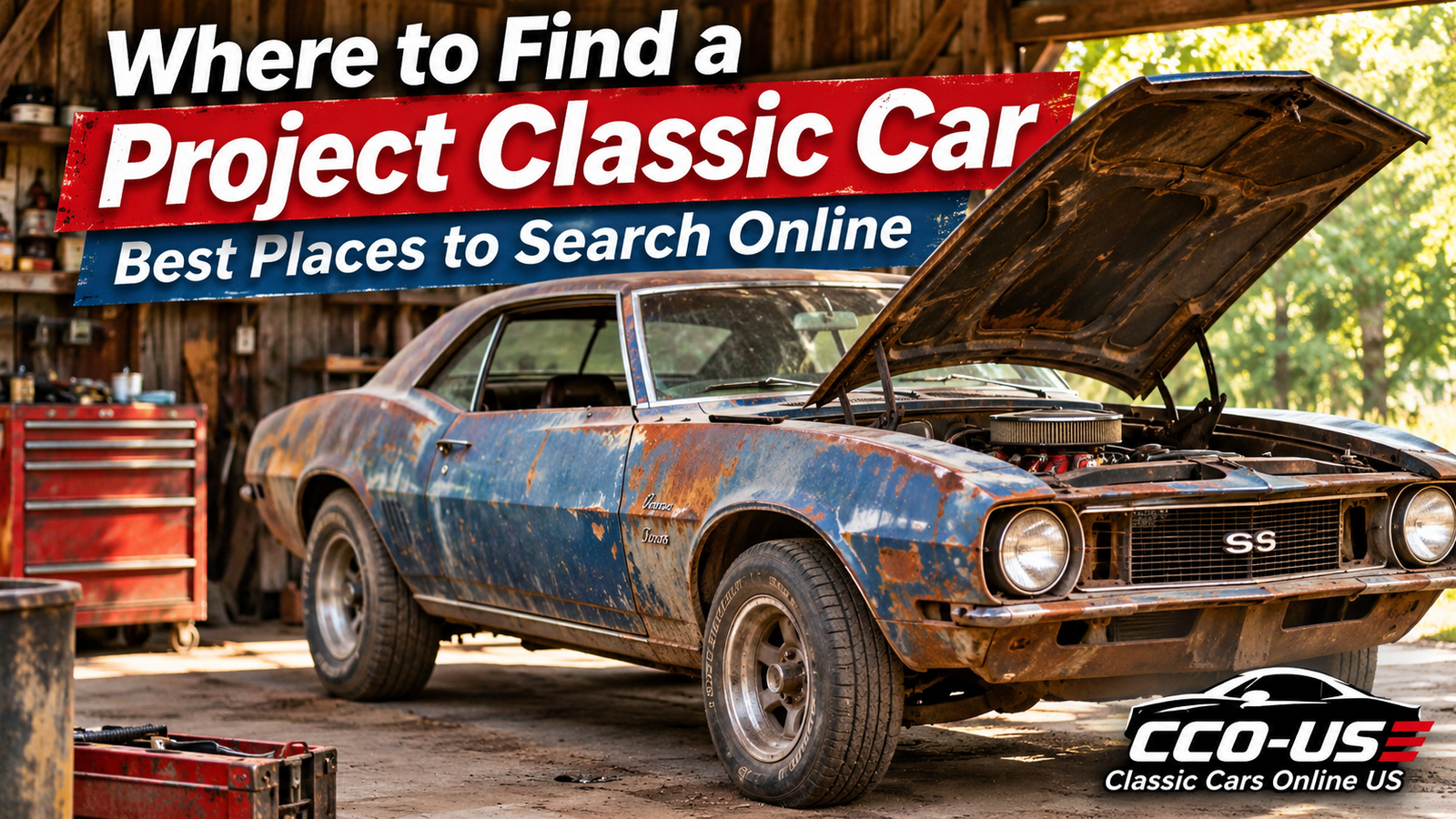
A project classic car is an older vehicle in some state of disrepair. It might run but look rough. It might sit in pieces in a barn. Either way, it needs real work before it’s ready for the road.
Before you start shopping, decide what you want to do with it. That choice shapes everything else.
Restore It, Resell It, or Build It Your Way

There are three common paths, and each one calls for a different kind of car.
- Factory-correct restoration: You return the car to the way it left the assembly line. This takes careful research and attention to detail. You’ll spend a lot of time hunting down original parts, so look for a car that’s as complete as possible.
- Custom build: You use the car as a canvas for your own ideas. Condition may matter less here, since you may be changing much of it anyway. However, major rust or structural damage can still make a project expensive.
- Restore to resell: Your goal is a profit. Check which types of restorations are selling well at auctions and in recent sales before you commit. Restoration costs add up fast, so run the numbers first.
Best Places to Search for a Project Classic Car
The internet has made hunting for project cars much easier than it used to be. These are good places to start.
- Specialty classified sites: Long-running enthusiast marketplaces such as Hemmings list a wide range of collector vehicles, including project cars.
- Online auction sites: Bring a Trailer has a dedicated Projects section featuring cars that need work. The comments section can also provide useful observations from other enthusiasts.
- General marketplaces: eBay Motors, Craigslist and Facebook Marketplace turn up bargains, especially close to home. Expect more variety in listing quality and seller experience, so be careful.
- Facebook groups and car clubs: Enthusiast groups and make-specific clubs are great for leads. Members often hear about cars for sale before they’re ever listed publicly.
- Swap meets and car shows: Walking the rows lets you see cars in person and talk to owners face to face. Many “for sale” signs never make it online.
Don’t forget old-fashioned networking. Tell friends, mechanics and parts suppliers what you’re looking for. Many project cars change hands through word of mouth.
What to Check Before You Buy
A cheap car can turn expensive fast if it hides serious problems. Whenever you can, inspect the car in person or hire someone you trust to do it.
- Rust: Check floors, trunk pans, rocker panels, wheel wells and the bottoms of fenders. Light surface rust may be manageable, but rust that has eaten through the metal can be costly to repair.
- Frame and structure: Look for cracks, kinks or sloppy repairs. On a unibody car, inspect the structural sections and attachment points as well. Serious structural damage can sink a project.
- Missing parts: Count what’s absent. Trim, glass and interior pieces can be hard to find and expensive.
- Title and paperwork: Check the title status and make sure the VIN on the vehicle matches the paperwork. Rules for titles and registration vary by state.
- Numbers-matching details: If you want a factory-correct restoration, ask whether the engine and transmission are original to the car. Check the documentation and identifying numbers rather than relying on the seller’s description alone.
A paint thickness gauge can also help identify areas with unusually thick paint, which may indicate previous bodywork or filler. Keep in mind that readings aren’t definitive, and the gauge must be appropriate for the vehicle’s body material.
Plan your budget around the whole job, not the purchase price. Bodywork, paint, engine work and upholstery all add up.
Why Project Cars Appeal to So Many Enthusiasts
Lower cost is only part of the draw. Many people simply love the process. Taking something neglected and bringing it back to life is deeply satisfying, and you learn a lot along the way.
Even if you’re not building the car for yourself, a good project can be a way to get into the hobby on a realistic budget.
Your Project Classic Car Is Out There Waiting
The right car won’t always be the shiniest one. Look for a car you can afford to finish, with a plan that matches your skills, your budget and your goals. Search widely, inspect carefully and be patient. Sooner or later, the right one shows up.
Join the conversation!
Follow Classic Cars Online US on YouTube for more classic-car features, performance stories and automotive history.
Join us on Facebook to share your favorite muscle cars, compare notes with other enthusiasts and keep the conversation going.
There’s always another amazing car worth talking about. We’ll see you at the starting line!