
Originally published 4/8/2016|Updated October 16, 2026
Few cars capture the spirit of American performance like a classic muscle car. Long hoods, powerful V8 engines, bold styling and the promise of quick acceleration made these machines legends on American roads. More than half a century later, they remain favorites among collectors, restorers and enthusiasts.
But which classic muscle cars deserve a place on a list of the best? The answer depends on what you value. Some models helped create the muscle car market. Others pushed engine performance to new heights, while a few became famous for their styling, racing connections or place in popular culture.
This guide explores 10 classic American muscle cars that helped define the era. Whether you are researching automotive history, choosing a restoration project or dreaming about a future addition to your garage, these are models worth knowing.
For a broader introduction to the category, start with our guide to muscle cars and their history.
What Makes a Classic Muscle Car Special?
The classic American muscle car era is generally associated with the 1960s and early 1970s. Automakers competed to offer strong performance in cars that buyers could drive on public roads.
The traditional formula paired a powerful engine with a relatively affordable American passenger car. Many of these vehicles used rear-wheel drive and V8 engines, with optional performance packages that added more power and other upgrades.
There are some important distinctions, though. The Ford Mustang and Chevrolet Camaro are generally classified as pony cars because of their smaller, sportier body styles. High-performance versions overlap with the muscle car tradition, but the categories are not identical.
The term “best” is also subjective. One enthusiast may prefer a rare factory performance package, while another values distinctive styling, racing history, ease of restoration or the sound of a big-block V8.
With that in mind, here are 10 standout examples from the classic American performance era.
1. 1964 Pontiac GTO
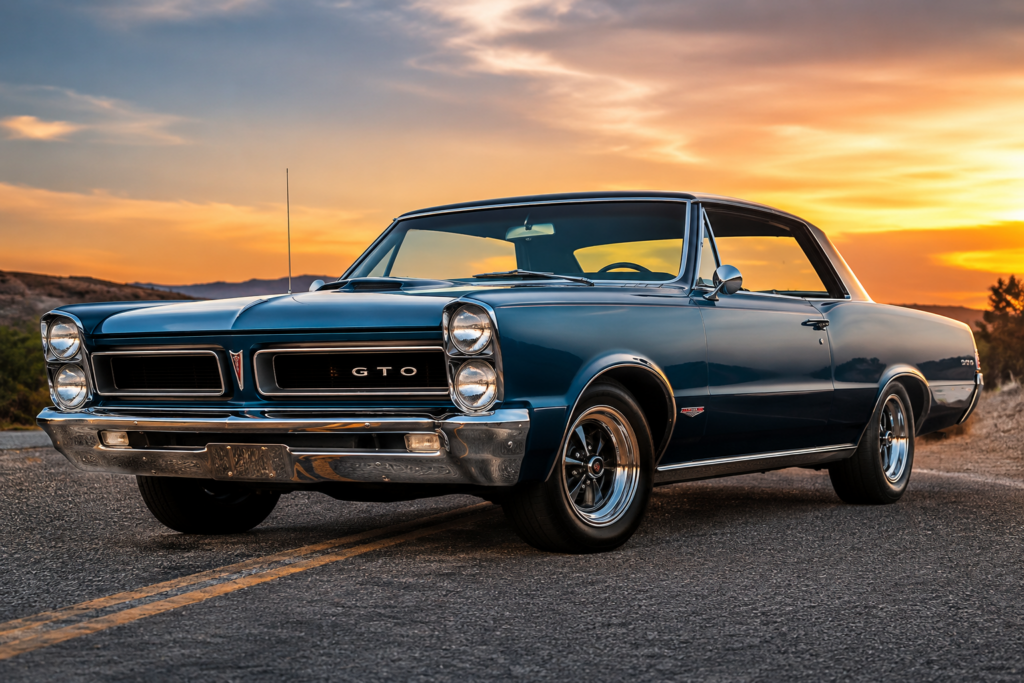
The Pontiac GTO helped launch the modern muscle car movement. Introduced as an option package for the Pontiac Tempest, it combined an intermediate-size car with a 389-cubic-inch V8 and a strong performance image.
The original GTO offered an appealing combination of power, style and everyday usability. Pontiac showed that buyers wanted more than a practical family car. They also wanted performance and personality.
The GTO’s success encouraged competitors to develop their own high-performance models. That influence is a major reason the car remains central to muscle car history.
Why it stands out: The GTO helped establish the formula that made muscle cars a major part of American automotive culture.
Collector consideration: Verify the model year, original equipment and engine identity when evaluating a car advertised as an authentic GTO. A badge alone does not establish originality.
2. 1970 Chevrolet Chevelle SS 454 LS6
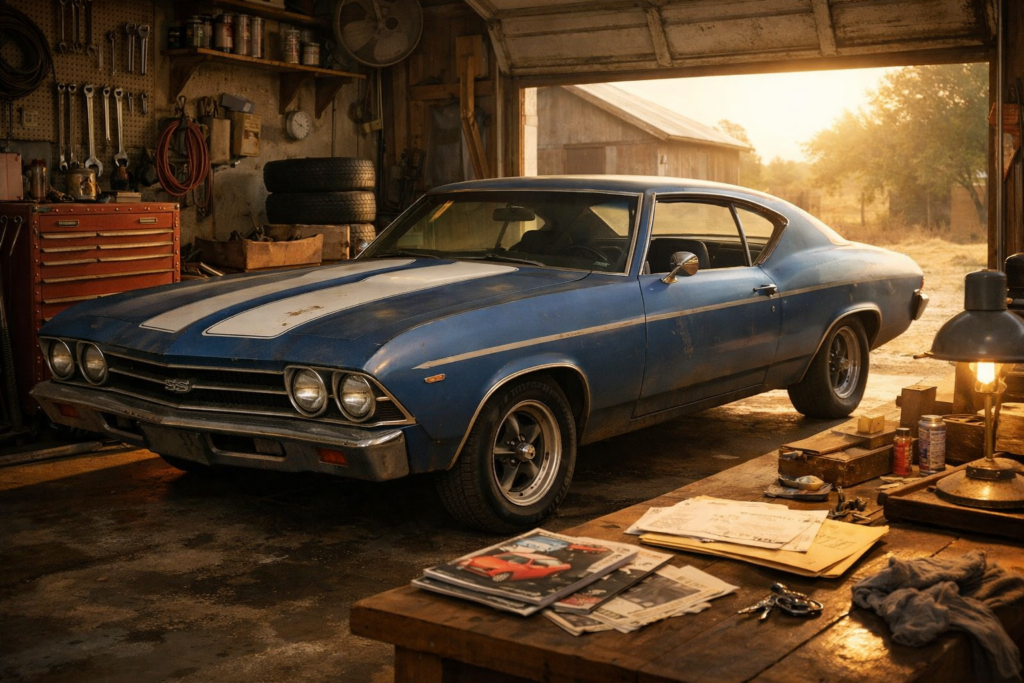
The 1970 Chevrolet Chevelle SS 454 LS6 represents the peak of the classic muscle car horsepower race.
Chevrolet offered the Chevelle SS with several engine choices, but the LS6 454-cubic-inch V8 is the version that attracts the most attention from performance enthusiasts. Chevrolet rated this engine at 450 horsepower from the factory.
The Chevelle paired its serious power with muscular proportions and a bold front end. It delivered the kind of straight-line performance that made the early 1970s such a memorable period in American automotive history.
Why it stands out: The LS6 Chevelle is one of the best-known examples of the era’s factory horsepower competition.
Collector consideration: Rare, high-performance Chevelles deserve careful documentation checks. Engine stamps, vehicle identification information, factory paperwork and other supporting records can help establish authenticity.
3. 1969 Ford Mustang Boss 429
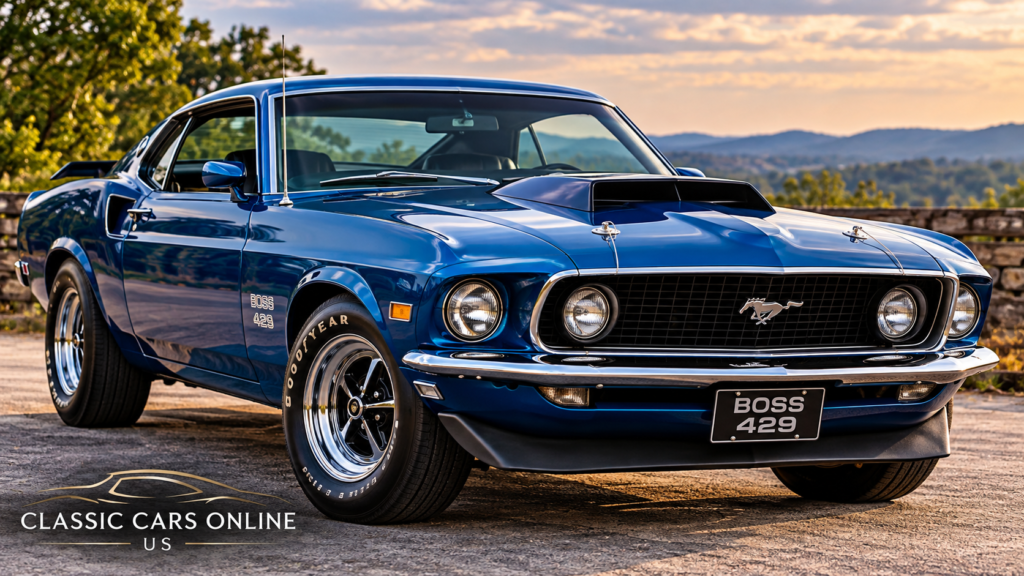
The Ford Mustang Boss 429 brought NASCAR-related engineering into a limited-production road car.
Ford developed the Boss 429 Mustang to support the homologation requirements associated with its racing program. Homologation means building enough production-based vehicles to meet the rules of a particular competition series.
The enormous 429-cubic-inch V8 required substantial changes to the Mustang’s engine compartment. Kar Kraft handled the specialized conversions, helping create one of the most unusual factory Mustangs of its time.
The Boss 429 was not simply a Mustang with a larger engine. Its special engineering, limited production and racing connection set it apart from ordinary models.
Why it stands out: It combines a major motorsports connection with unusual engineering and collector appeal.
Collector consideration: Documentation is especially important when evaluating a Boss 429. Confirm that the vehicle’s identity and claimed factory configuration match reliable records.
4. 1970 Oldsmobile 4-4-2 W-30
Oldsmobile’s 4-4-2 offered a different take on muscle car performance. Its name came from the original combination of a four-barrel carburetor, four-speed manual transmission and dual exhaust, although equipment varied by year and configuration.
By 1970, the 4-4-2 had developed into a serious performance car. The W-30 package added special performance equipment, making it one of the most desirable versions.
The 1970 model paired its athletic character with a more understated look than some competitors. That combination appeals to enthusiasts who appreciate performance without needing the most dramatic styling in the parking lot.
Why it stands out: The W-30 demonstrates how Oldsmobile competed with Chevrolet and Pontiac while giving its performance cars a distinct identity.
Collector consideration: Learn the differences between standard 4-4-2 models and genuine W-30 cars. Original equipment and documentation can make a major difference in a vehicle’s identity and value.
5. 1970 Buick GSX Stage 1
Buick was known for comfort and refinement, but the GSX Stage 1 showed that the brand could also deliver serious muscle.
The 1970 GSX was based on the Buick GS 455 and combined a large-displacement V8 with distinctive styling. Its Stage 1 performance option added to the car’s reputation for strong acceleration and abundant torque.
Torque is the twisting force an engine produces. It plays an important role in how forcefully a car accelerates, especially at lower engine speeds.
The GSX’s bold appearance made it easy to distinguish from more restrained Buick models. Today, its combination of performance, styling and relative rarity makes it a memorable part of muscle car history.
Why it stands out: It brought Buick luxury and refinement together with the performance expected of a serious muscle car.
Collector consideration: Check the car’s original configuration and supporting paperwork. A GSX badge or Stage 1 claim should be backed by evidence.
6. 1970 Pontiac GTO Judge Ram Air IV
The Pontiac GTO Judge turned the already popular GTO into an even more attention-grabbing performance package.
Pontiac introduced the Judge as a bold, youth-oriented model with distinctive graphics and performance equipment. The Ram Air IV engine option adds another layer of interest for collectors.
The Judge was not merely about horsepower. Its bright colors, special trim and unmistakable personality helped it stand apart in a crowded performance market.
That mix of mechanical ability and visual character is part of the reason the Judge remains one of the most recognizable muscle car names.
Why it stands out: It combines the GTO’s established performance heritage with a memorable appearance and a strong place in muscle car culture.
Collector consideration: Check the specific model year and engine option carefully. Not every Judge came with a Ram Air IV, and advertised specifications should be verified against the individual vehicle’s records.
7. 1969 Dodge Charger Daytona
The Dodge Charger Daytona took the muscle car idea in a different direction by emphasizing aerodynamics as well as engine power.
Built for NASCAR competition, the Daytona featured a pointed front nose and a tall rear wing. These unusual additions helped address the aerodynamic challenges of racing at high speeds.
Its appearance was far removed from the conventional Charger design, making the Daytona one of the most distinctive American performance cars of the period.
The Daytona also represents an important point in automotive history: going faster was not just about adding horsepower. Managing airflow and stability mattered, too.
Why it stands out: Its combination of racing purpose, dramatic design and limited production makes it a landmark performance car.
Collector consideration: Daytona replicas and modified Chargers exist, so verify the vehicle’s identity and original configuration before paying a premium for an authentic example.
8. 1971 Plymouth Hemi ‘Cuda
The Plymouth Barracuda evolved into one of the most recognizable high-performance cars of the early 1970s. Its Hemi-powered version combined the compact E-body platform with Chrysler’s famous 426-cubic-inch Hemi V8.
The engine’s name refers to its hemispherical combustion chamber design. The Hemi’s reputation was built on its performance potential and its association with competitive racing.
By 1971, the ‘Cuda had become a standout among the last of the classic muscle car era’s most powerful factory offerings. Its aggressive proportions and performance credentials continue to draw attention at car shows and collector auctions.
Why it stands out: The Hemi ‘Cuda combines a celebrated engine, distinctive styling and a strong connection to the final years of the classic muscle car boom.
Collector consideration: Authentic Hemi-powered cars can command substantial premiums. Confirm the engine, vehicle identity and factory documentation before considering a purchase.
9. 1968 Ford Mustang Shelby GT500 KR
The 1968 Shelby Mustang GT500 KR, with KR standing for “King of the Road,” brought Shelby’s performance identity to the Mustang platform.
It used Ford’s 428 Cobra Jet V8 and received special styling and performance-related equipment. The result was a powerful grand-touring car that combined Mustang proportions with Shelby’s racing-inspired image.
Shelby Mustangs occupy a distinct place in the performance-car world. They share some characteristics with muscle cars but also reflect the pony car and high-performance grand-touring traditions.
Why it stands out: The GT500 KR combines a major performance name, distinctive Shelby identity and the appeal of a high-powered late-1960s Mustang.
Collector consideration: Shelby identity and factory configuration matter. Review serial-number information and credible documentation rather than relying on badges or appearance alone.
10. 1969 Chevrolet Camaro ZL1
The 1969 Chevrolet Camaro ZL1 is one of the most unusual high-performance Camaros of the classic era.
The ZL1 engine was an all-aluminum 427-cubic-inch V8 associated with Chevrolet’s racing efforts. A special-order program made it possible to obtain the engine in a very small number of Camaros.
Because the Camaro was a pony car rather than a traditional intermediate-size muscle car, the ZL1 also illustrates how the boundaries between performance categories could overlap.
The combination of a lightweight engine design, serious performance intent and extremely limited production helped establish the ZL1 Camaro’s place among the most celebrated American performance cars.
Why it stands out: It represents an unusual factory performance package that brought race-oriented engineering into a road-going Camaro.
Collector consideration: The ZL1 name carries a significant authenticity premium. Verify the car’s factory history and supporting documentation before treating it as a genuine example.
How to Choose the Right Classic Muscle Car
The best classic muscle car for you depends on your budget, mechanical skills, intended use and interest in originality.
Before buying, consider the following:
- Set a realistic budget. Purchase price is only part of the cost. Insurance, storage, maintenance, transportation and restoration work can add up quickly.
- Research the exact model. Engine options, trim packages and equipment can vary significantly by year. Do not assume that two cars with the same model name have the same specifications.
- Check originality. A documented factory performance car may be more desirable to some collectors than a modified example. Other buyers prefer a well-built restomod.
- Inspect the body and structure. Rust, previous collision repairs and poorly completed restoration work can become expensive problems.
- Verify the paperwork. Vehicle identification numbers, engine identification, build records and restoration receipts can help establish a car’s history.
- Arrange an independent inspection. Have a qualified classic car specialist examine the vehicle before committing to a purchase.
If you are new to collecting, start by comparing several examples of the same model. That makes it easier to understand the differences between original cars, restored vehicles and modified builds.
Original Restoration or Restomod?
Classic muscle cars can be restored in several ways, and the right approach depends on your goals.
An original-style restoration aims to preserve or return the vehicle to its factory configuration. This approach may appeal to collectors who value historical accuracy and documented originality.
A restomod retains the classic car’s appearance while incorporating modern upgrades. Depending on the build, these may include improved brakes, updated suspension, modern fuel injection, air conditioning or a more powerful engine.
Neither approach is automatically better for every owner. A carefully documented original-style restoration can appeal to a different buyer than a modified car built for regular driving.
Before beginning a project, decide whether your priority is historical authenticity, comfortable road use, performance or a balance of all three. That decision will help guide the budget, parts selection and work plan.
Classic Muscle Cars Today
Classic muscle cars represent a distinctive chapter in American automotive history. They brought powerful engines, bold styling and competitive performance marketing to a broad group of buyers.
The Pontiac GTO helped establish the formula. Cars such as the Chevelle SS 454 LS6 and Buick GSX Stage 1 pushed factory performance further, while the Charger Daytona demonstrated the importance of aerodynamics in racing.
Other models, including the Boss 429 Mustang, Hemi ‘Cuda and ZL1 Camaro, became enduring collector favorites because of their engineering, rarity and history.
There is no single best classic muscle car for everyone. The most rewarding choice is the one that fits your interests, budget and plans for ownership.
Whether you are researching automotive history, looking for a classic muscle car that’s for sale (eBay Partner*) or simply enjoying these machines from afar, classic muscle cars offer plenty to discover.
Explore more in our guides to muscle cars, Ford muscle cars, GM muscle cars and Chrysler muscle cars.
Classic Cars Online US celebrates the history, engineering and enduring appeal of classic American automobiles. If you would like to connect on social media, be sure to visit and like this site’s Facebook page, the Best Classic Cars for Sale Online Facebook page or join the Classic Cars Online: Classic Cars for Sale Facebook group.
Affiliate Disclosure: Classic Cars Online US participates in the eBay Partner Network, an affiliate advertising program. We may earn a commission when you click links to eBay and make a qualifying purchase, at no additional cost to you.
Every one of these is representative of the cars I defeated in autocross competition with a 1967 Corvair. The are overpowered, poor-handling junk built to sell to people who only think of moving in a straight line. I raced the Corvair for 7 years, starting from dead stock to a modified 250+ HP autocrosser that never lost to ant American V-8. Not once, not ever.
Thanks for taking the time to leave a comment. It was great hearing about your experience with autocrossing and your Corvair.
I’m sorry about that: LaureJ@consultant.com – I had another email set up for this site, but it gives me trouble sometimes.