
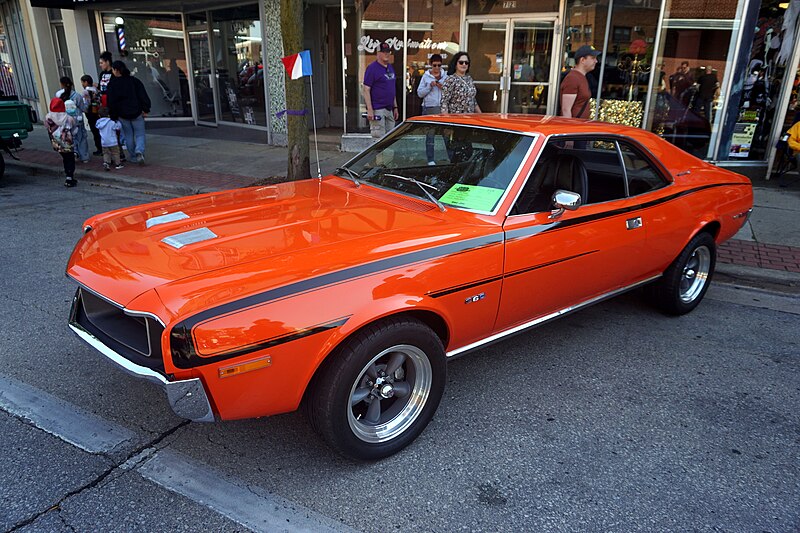
The AMC Javelin stands as one of the most distinctive and underappreciated American muscle cars of its era. Produced by American Motors Corporation (AMC) from 1968 to 1974, the Javelin was AMC’s bold entry into the highly competitive pony car market dominated by the Ford Mustang, Chevrolet Camaro, and Dodge Challenger.
Throughout its two generations, the Javelin combined striking design elements with impressive performance capabilities, carving out its own unique place in American automotive history despite being produced by one of Detroit’s smaller manufacturers.
The Birth of the Javelin
The late 1960s represented a golden age for American performance cars, with every major manufacturer vying for a share of the lucrative youth market. AMC, facing financial challenges and needing to shed its conservative image, made a strategic decision to enter the muscle car segment.
The Javelin was developed under the leadership of innovative AMC designer Richard Teague, who was tasked with creating a stylish sports coupe that could compete with the established players while working with significantly smaller design and production budgets.
- Unveiled at the 1967 Chicago Auto Show
- Officially launched for the 1968 model year
- Replaced the Rambler Marlin in AMC’s lineup
- Designed to appeal to the younger, performance-oriented buyers
First Generation (1968-1970)
The first-generation AMC Javelin immediately turned heads with its long hood, fastback roof design, and distinctive styling that set it apart from its competitors. AMC took a different approach from other manufacturers by offering the Javelin as a larger, more comfortable pony car rather than producing a direct Mustang clone.
This first iteration established the Javelin as a legitimate contender in the muscle car wars with respectable performance and customization options.
- Available with inline-6 (232 cu in, 199 cu in) and V8 engines (290, 343, and 390 cu in)
- Featured unique “twin-venturi” front end styling
- Offered in base and more upscale SST trim levels
- Optional “Go Package” added performance upgrades including power disc brakes, heavy-duty suspension, and dual exhaust
The Javelin AMX Performance Model
In 1969, AMC introduced the performance-oriented Javelin AMX package, which should not be confused with the separate two-seater AMX model. The Javelin AMX represented AMC’s most serious attempt to capture the high-performance market.
These special variants featured enhanced engines, suspensions, and styling cues that signaled their performance intentions to knowledgeable enthusiasts.
- Standard 343 or 390 cubic inch V8 engines
- Special handling package with stiffer springs and shock absorbers
- Unique styling elements including hood scoops
- Functional Ram Air induction system available
- Interior upgrades including special gauge packages
Racing Heritage
The Javelin built a respectable competition record despite AMC’s limited resources compared to the Big Three automakers. Under the guidance of Team Penske, Javelins competed successfully in the SCCA Trans-Am racing series, helping to establish the model’s performance credentials.
These racing efforts significantly boosted the Javelin’s reputation among performance enthusiasts and demonstrated AMC’s commitment to building genuine performance vehicles.
- Won the SCCA Trans-Am championship in 1971 and 1972
- Raced by legendary drivers including Mark Donohue and Peter Revson
- Featured special “Trans-Am” production editions to commemorate racing success
- Used innovative weight-saving techniques for racing applications
- Helped establish AMC’s performance credibility against larger manufacturers
Second Generation (1971-1974)
The second-generation AMC Javelin debuted in 1971 with a complete redesign that featured a more aggressive and muscular appearance. Designer Richard Teague created a distinctive look with dramatic wheel arches, a longer hood, and a shortened rear deck.
This generation arrived as the muscle car era was beginning to fade due to rising insurance rates, emissions regulations, and the fuel crisis, but still managed to offer impressive performance options while many competitors were reducing their performance offerings.
- Featured dramatic “Coke bottle” styling with bulging fender flares
- Offered a 401 cubic inch V8 as the top engine option
- Longer and wider than the first generation
- Interior was more driver-focused with aircraft-inspired cockpit design
- Last model year was 1974, as AMC shifted focus to smaller, more fuel-efficient vehicles
Signature Design Elements
Throughout its production run, the Javelin featured several distinctive design elements that set it apart from other muscle cars of the era.
These styling cues have helped the Javelin maintain its unique identity in the collector car market and contribute to its growing appreciation among enthusiasts today.
- Flying buttress C-pillars on the second generation
- Front fender bulges inspired by the Penske racing cars
- Optional “Pierre Cardin” designer interior package
- “Twin-venturi” front grille design on first generation
- “Cowl-induction” hood designs on performance models
- Distinctive vertically stacked taillights on later models
Engine and Performance Options
The Javelin offered a wide range of powerplants throughout its production run, from economical six-cylinder engines to powerful V8s that could compete with the best muscle cars of the era.
AMC sourced these engines from their own engine lineup, with the top performers capable of impressive acceleration figures for their time.
- Base models: 232 and 258 cubic inch inline-6 engines
- Mid-range options: 290, 304, and 360 cubic inch V8s
- High-performance options: 343, 390, and 401 cubic inch V8s
- Top 401 V8 produced 330 horsepower and 430 lb-ft of torque
- Transmission options included 3-speed automatic and 3-speed or 4-speed manuals
- Quarter-mile times for 401-equipped models were in the low 14-second range
Unique Features and Options
The Javelin offered several unique features and option packages that helped differentiate it from competitors and appeal to buyers looking for something different.
AMC was known for offering creative packages and options to compensate for their smaller dealer network and marketing budget.
- “Go Package” performance option bundle
- “Mod” interior design schemes with wild patterns and colors
- “Big Bad” exterior color options in brilliant orange, green, and blue
- “Pierre Cardin” designer interior with bold black and white stripes
- “Buyer Protection Plan” – an industry-leading warranty
- Optional handling package developed from Trans-Am racing experience
The Javelin in Popular Culture
While not as prominent in popular culture as some of its competitors, the Javelin made notable appearances in television, film, and other media.
These appearances helped cement the car’s place in American automotive culture and contributed to its lasting legacy.
- Featured in the television series “Adam-12” as a police pursuit vehicle
- Used by Alabama state police as highway patrol cars
- Appeared in various action films of the early 1970s
- Featured on automotive magazine covers throughout its production
- Used in AMC’s “The Winning Streak” advertising campaign
Collecting the AMC Javelin Today
The Javelin has experienced a resurgence in collector interest in recent years, as muscle car enthusiasts broaden their horizons beyond the more common offerings from major manufacturers. Once overlooked, Javelins are now appreciated for their distinctive styling, interesting history, and relative rarity.
Collector values have been rising, though they remain more affordable than comparable Mustangs, Camaros, and Challengers.
- First-generation models are prized for their classic proportions
- Second-generation 401-powered cars command the highest prices
- AMX versions are the most collectible variants
- Documented Trans-Am special editions are rare finds
- Pierre Cardin interior models have a strong following
- Reproduction parts availability has improved significantly
Restoration Challenges and Considerations
Restoring a Javelin presents some unique challenges compared to more common muscle cars. AMC’s smaller production numbers and the company’s eventual demise mean that certain parts can be more difficult to source.
However, a strong owner community and increasing aftermarket support have made restoration more feasible in recent years.
- Body panels and trim pieces can be challenging to find
- Engine parts for AMC V8s are less common than Ford or Chevy components
- Specialized knowledge of AMC vehicles is less widespread
- Documentation and factory information can be harder to access
- Owner clubs provide valuable resources for restoration guidance
- Several specialists now focus exclusively on AMC vehicle restoration
The Javelin’s Legacy
The AMC Javelin represents an important chapter in American automotive history, showcasing how a smaller manufacturer could compete with industry giants through innovative design and marketing. The Javelin demonstrated AMC’s ability to create exciting, desirable vehicles despite limited resources, and helped establish performance credibility for the brand.
Today, the Javelin is increasingly recognized as a distinctive and important muscle car that deserves appreciation alongside its more famous contemporaries.
- Proved smaller manufacturers could compete in the performance segment
- Demonstrated innovative design could compensate for smaller budgets
- Helped establish AMC’s performance image
- Won championships against better-funded factory racing programs
- Represents a unique alternative to mainstream muscle cars
- Continues to influence automotive designs today
Javelin Clubs and Communities
A dedicated community of Javelin enthusiasts helps keep the model’s legacy alive through clubs, events, and online forums.
These organizations provide valuable resources for owners and admirers of AMC’s pony car, including technical support, parts sourcing, and opportunities to share appreciation for these unique vehicles.
- American Motors Owners Association
- AMC Javelin/AMX International Club
- National American Motors Club
- Regional AMC clubs throughout North America
- Active online forums and social media groups
- Annual Javelin-specific meets and gatherings
Conclusion
The AMC Javelin remains one of the most distinctive and underappreciated American muscle cars, representing a bold challenger from an underdog company. Through two generations and numerous variants, the Javelin combined head-turning style with legitimate performance credentials, earning its place in the pantheon of classic American performance cars.
As collector interest in more unusual muscle cars grows, the Javelin’s unique design, interesting history, and relative rarity ensure its continued appreciation among enthusiasts who value something different from the mainstream offerings of the era.
Follow Classic Cars Online US!
Thank you for exploring the fascinating history of the AMC Javelin with Classic Cars Online US. We invite you to follow us on NewsBreak for daily updates on classic American cars, restoration tips, market trends, and automotive history.
Also, click here to join the growing community on our Facebook page to connect with fellow enthusiasts, share your own classic car stories, and stay informed about upcoming features and events. Your passion for American automotive history is what drives our content — connect with us today to ensure you never miss our latest posts!