
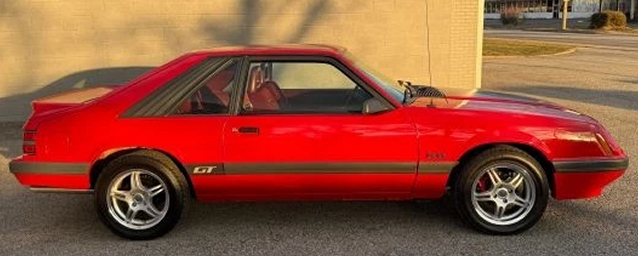
The 1986 Ford Mustang GT holds a special place in Ford Mustang history as the first year Ford put multiport fuel injection on the iconic 5.0-liter V8. It was also the last year of the beloved Four-Eye Fox Body design. That combination makes this car unique among all Fox Body Mustangs, and collectors and enthusiasts are starting to take notice.
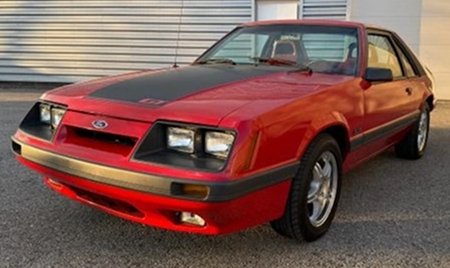
This article covers everything you need to know about the 1986 Mustang GT, and to add some eye candy, it’s featuring a stunning Fox Body that’s for sale on eBay (#affiliate) by MAXmotive. Whether you are a longtime fan, a first-time buyer, or just someone who wants to learn more about third generation Mustangs, you will find accurate specs, honest buyer advice, and some real talk about where the market is headed.
| 1986 Ford Mustang GT: Quick Facts | |
| Engine | 5.0L HO V8 (302 cid), multiport fuel injected |
| Horsepower | 200 hp at 4,000 rpm |
| Torque | 285 lb-ft at 3,000 rpm |
| Transmission | 5-speed Borg-Warner T-5 manual or 4-speed automatic |
| 0 to 60 mph | Approximately 6.3 seconds |
| Quarter Mile | 14.7 seconds |
| Body Style | Hatchback or convertible |
| Model Year | Final year of the quad-headlight Fox Body design |
| Total Built | 224,410 Mustangs sold in 1986 (all models) |
What Makes the 1986 Mustang GT Different From Other Fox Bodies?
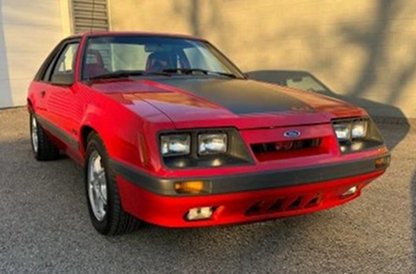
The 1986 GT stands apart because it bridges two eras. It carries the final Four-Eye exterior and the first fuel-injected 5.0 V8. No other Fox Body year can say both of those things at once.
Why It’s Called the Four-Eye

The Four-Eye nickname comes from the four rectangular headlights that Ford used on the Fox Body Mustang from 1979 through 1986. Enthusiasts fell in love with that look, and it became one of the most recognizable front ends in American muscle car history.
When Ford redesigned the front of the Mustang for 1987, the quad headlights were gone. The new look was called the Aeronose, and it was inspired by the SVO. It looked more modern, but for a lot of collectors, the Four-Eye has aged in a way that feels timeless.
’86 Fox Body Identification Tip
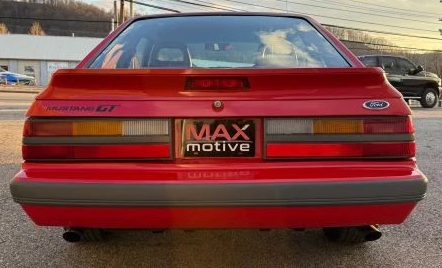
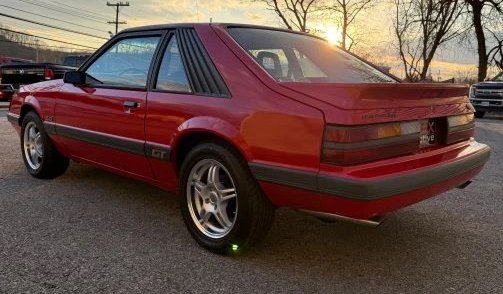
There is also a useful trick for identifying a 1986 Fox Body in the wild. That year, the federal government required all cars to have a Center High-Mounted Stop Light, which most people just call a third brake light. On the 1986 Mustang hatchback, Ford integrated it into the rear spoiler.
So, if you see a Fox Body with both quad headlights and a center brake light in the spoiler, it can only be a 1986. That detail matters to collectors who want to know exactly what they are looking at.
Mechanical Upgrades for 1986
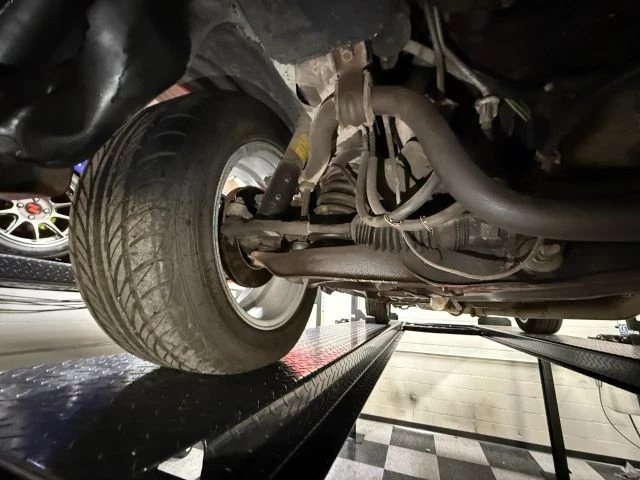
Ford also made some important mechanical improvements in 1986. The clutch grew from 10 inches to 10.5 inches on V8 models. The rear differential was upgraded from the 7.5-inch unit to the stronger 8.8-inch, which was better suited to handling the power of the 5.0. These were not flashy changes, but they made the car more durable and more capable.
One more thing worth noting: 1986 was also the final year for the Mustang SVO. Only 3,379 SVOs were built that year. The turbocharged four-cylinder model never found the audience Ford had hoped for, and the GT’s V8 simply offered better performance at a lower price. The SVO bowed out quietly, and the GT carried the Mustang forward.
1986 Ford Mustang GT Engine and Performance Specs
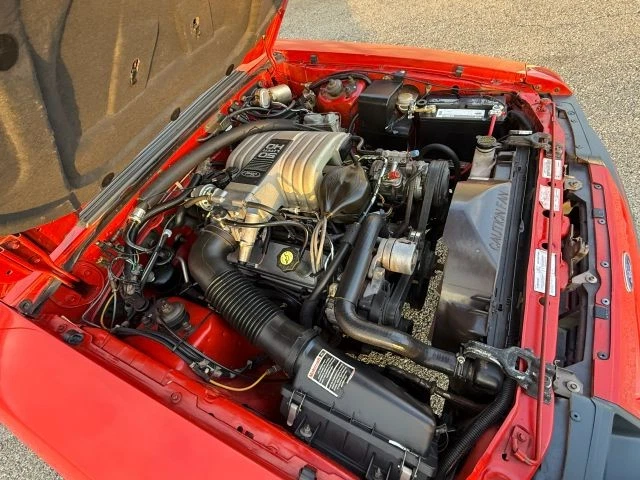
The 1986 Mustang GT came with a 5.0-liter High Output V8. It displaced 302 cubic inches and was rated at 200 horsepower and 285 lb-ft of torque. The engine used a 9.2 to 1 compression ratio and breathed through a cast-iron block that Ford had been refining for years.
Fuel Injection
The big news for 1986 was fuel injection. The 1985 GT used a four-barrel carburetor, which was the traditional way to feed a V8. For 1986, Ford switched to a multiport fuel injection system. This was the first time that setup appeared on the 5.0 in a Mustang GT.
HP & Torque
The change actually dropped peak horsepower by 10 compared to the 1985 model, but it added 20 lb-ft of torque. More importantly, that torque arrived lower in the rpm range, which made the car feel stronger and more responsive in everyday driving. On the street, the injected engine felt better than the numbers suggested.
Transmission
The standard transmission on the GT was the 5-speed Borg-Warner T-5 manual. A 4-speed automatic was also available. The T-5 was a popular choice among enthusiasts because it put the driver in direct control of every gear change and made the most of the engine’s torque curve.
Performance Specs
Performance numbers for the 1986 GT were genuinely impressive by the standards of the era. Zero to 60 miles per hour took approximately 6.3 seconds. The quarter mile came in at 14.7 seconds. That quarter-mile time was the first sub-15-second pass the Mustang GT had managed in years, and it put the car back in serious competition with its rivals.
Rivals
Those rivals included the Chevrolet Camaro IROC-Z, the Buick Grand National, and the Pontiac Trans Am. All three were strong cars. The Mustang GT held its own against every one of them, and it did it at a price that undercut most of the competition. (It also always reminded me slightly of the Dodge Chargers of that era.)
Suspension and Handling
The 1986 GT was not just a straight-line car. Ford set it up to handle corners as well.
- Front Suspension: Up front, the car used independent coil-spring suspension with a 26.5mm anti-roll bar.
- Rear Suspension: Out back, a semi-floating solid rear axle with coil springs and gas-pressurized shocks kept things planted. A 23.0mm rear anti-roll bar helped manage body roll in turns.
- Steering System: Steering was rack-and-pinion with hydraulic assist. The ratio was 2.46 turns lock to lock, which is quick and direct.
- Limited Slip Differential: A limited-slip differential came standard, and the car rolled on Goodyear Eagle VR60 tires.
- Brake system: Brakes were 10.1-inch vented discs up front and 9.1-inch drums in the rear.
For a street car of that era, it was a well-sorted package that still holds up today.
1986 Mustang GT Interior, Features, and Options
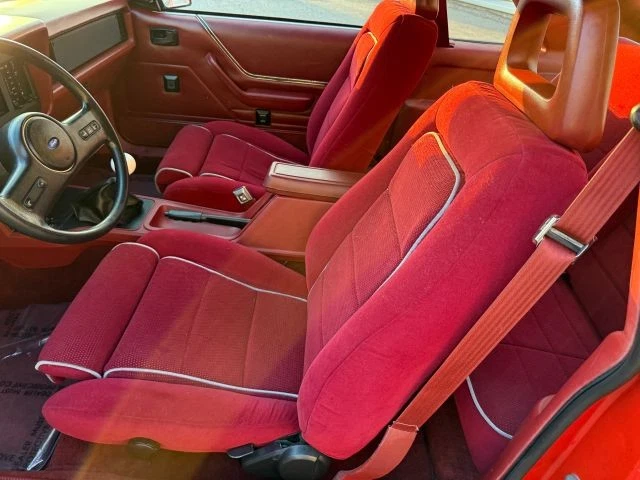
The 1986 GT interior was functional and driver-focused. Ford made some quiet improvements for the model year, including added sound-deadening material and a single-key locking system, meaning one key now operated both the door locks and the ignition. Those might sound like small things, but they improved the everyday experience of owning the car.
Standard features on the 1986 GT included air conditioning, power windows, power locks, and cruise control. For the first time, GT buyers who ordered the optional leather seats could choose between two interior color options. That gave buyers a bit more freedom to personalize the car.
Visual Appeal
The red-on-red color combination on the featured MAXmotive example is one of the most eye-catching ways to spec a Fox Body GT. The bold exterior red against a matching red interior gives the car a period-perfect look that stands out at any car show. If you can find an original red interior in good shape, it adds real appeal.
The featured car also has a Kenwood aftermarket radio and 16-inch Voxx wheels. Both are common and tasteful upgrades that fit the era without looking out of place. The original radio and wheels are a question worth asking about if originality matters to you, but for most drivers who plan to enjoy the car, this setup works well.
1986 Ford Mustang GT Collector Value and Market Outlook
Fox Body Mustang values have been climbing for several years now, and the trend shows no sign of slowing down. Clean GT examples are currently trading in the range of $20,000 to $35,000 depending on mileage, condition, and originality. According to data from Classic.com, the average sale price for a third-generation Mustang GT sits around $17,478 across all condition levels.
The high end of the market tells an interesting story. In July 2025, a modified 1986 GT known as the ProFox sold for $77,000. That is an exceptional result for a heavily built car, but it shows where the ceiling can go when the right car meets the right buyer.
Collector Advantages
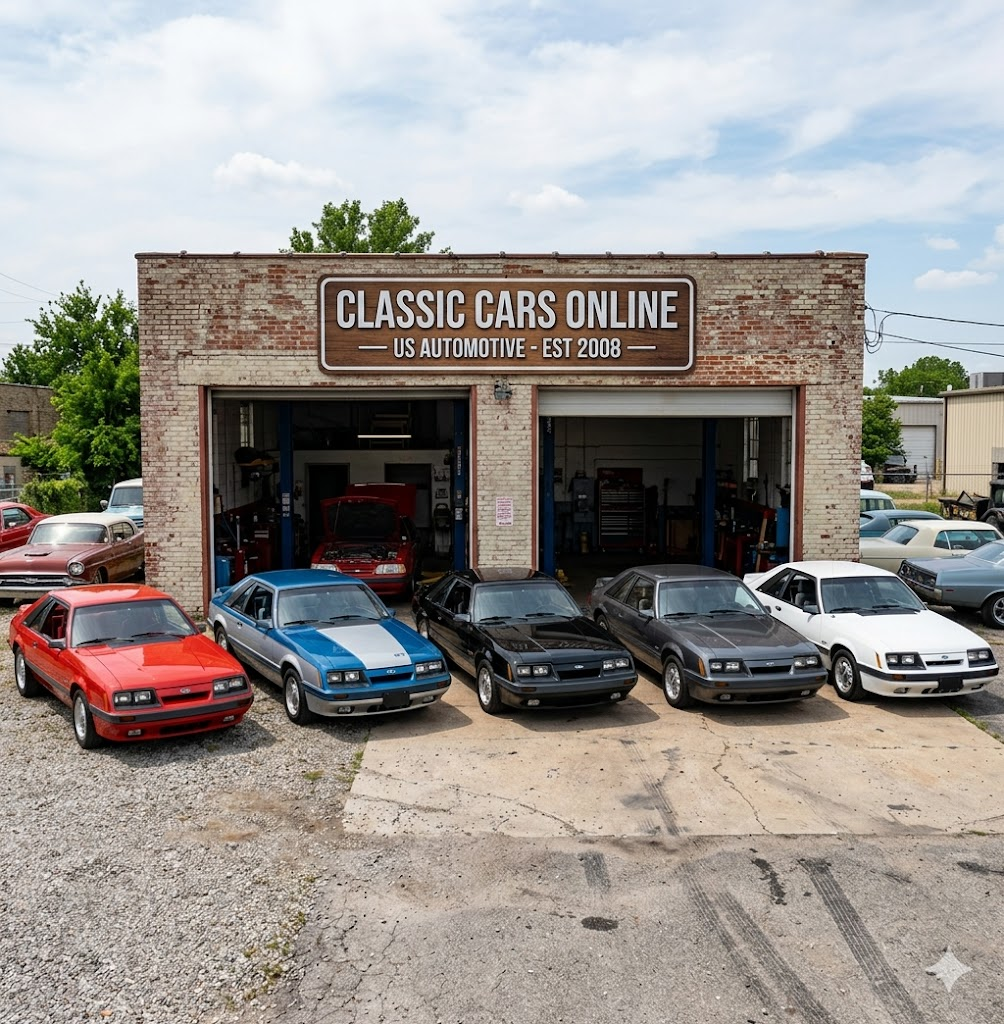
The 1986 GT has a specific collector advantage that other Fox Body years do not share. It is the only year with both the Four-Eye design and multiport fuel injection on the 5.0. That makes it a year that enthusiasts can point to as genuinely significant, not just another entry in a long production run.
Part of what’s driving Fox Body demand right now is the generation that grew up with these cars. Many of the buyers entering the collector market today remember these Mustangs as the cool car from their teenage years. That kind of personal connection tends to hold value well over time.
If you are shopping for a 1986 GT, low actual miles are worth paying for. The featured MAXmotive example featured in this article has 80,456 miles on the clock, which is real-world used without being worn out. Cars like this are getting harder to find. You can browse comparable listings through eBay Motors at the link below.
What to Look For When Buying a 1986 Mustang GT

Key things to check out when buying one of these Fox Body Mustangs include: rust, transmission functionality & condition, engine condition, multiport fuel injection system, and the condition of interior plastics.
A well-maintained 1986 GT is a solid, reliable classic. The 5.0 is a tough engine and the platform is well supported by the aftermarket. That said, there are some specific things worth checking before you hand over your money.
Rust is the first thing to look at on any Fox Body. The floor pans, frame rails, and rear quarters are the spots most likely to show problems. These cars were not known for great rust protection from the factory, and a lot of them lived in salt-belt states. Get under the car and look carefully.
The T-5 5-speed manual transmission is generally reliable, but it has a known weakness in third gear. If you hear grinding when shifting hard into third, the synchronizer is worn. That repair is manageable but adds to your costs, so factor it in.
Always verify that the 5.0 under the hood is the original engine. Check the VIN against the door data tag and confirm the engine code matches. Engine swaps are common on Fox Bodies, and not all of them are disclosed up front.
The early multiport fuel injection system on the 1986 GT is dependable, but it is worth inspecting the injectors and the fuel pressure regulator if the car has not been recently serviced. A rough idle or stumble at light throttle can often be traced back to one of those two items.
Finally, budget for interior plastics. The Fox Body interior was not built to last forever, and sun exposure causes the dash, door panels, and trim pieces to fade and crack over time. A car with a clean interior is worth more than one that needs restoration work inside.
The 1986 Mustang GT: A Fox Body Worth Knowing
The 1986 Ford Mustang GT earned its place in Mustang history as a genuinely capable performance car that competed well against the best Detroit had to offer in the mid-1980s. It was fast, it was affordable, and it was fun to drive. Those qualities have not gone away.
What makes the 1986 GT even more interesting today is what it represents. It closed out the Four-Eye era and opened up the age of fuel injection on the 5.0. You will not find another Fox Body year that can claim both of those distinctions.
Collector values are rising, clean examples are getting harder to find, and the enthusiast community around these cars is as strong as ever. If you have been thinking about adding a Fox Body GT to your collection, 1986 is a year worth looking at seriously.
| Browse 1986 Mustang GT Listings on eBay Motors Find comparable Fox Body GTs from sellers across the country. Search eBay Motors Now → (#Affiliate) |