
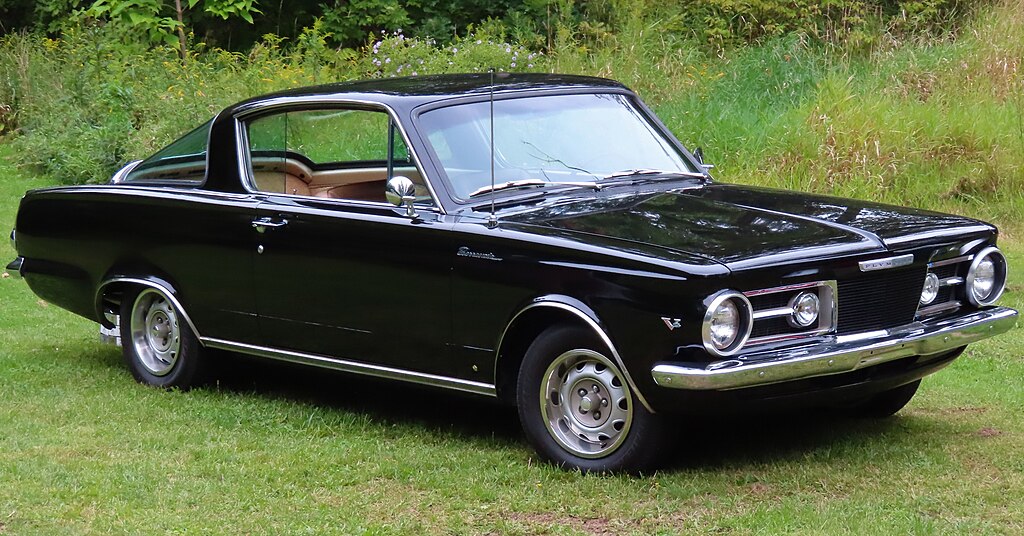
The Plymouth Barracuda remains one of America’s most iconic pony cars, evolving dramatically through its three distinct generations. From its humble beginnings as a Valiant-based fastback to becoming a muscle car legend, the ‘Cuda (as it was affectionately known) left an indelible mark on automotive history.
First Generation (1964-1966): The Original Fastback
The Barracuda’s story begins in 1964, just weeks before Ford unveiled the Mustang. Originally developed as Plymouth’s answer to the emerging sporty compact market, the first-generation Barracuda was essentially a Valiant with a distinctive fastback roofline.
Key Features:
- Massive 14.4 square foot wraparound rear window – the largest ever installed on a production car
- Available with the legendary 273 cubic inch “Commando” V8 producing 235 horsepower
- Formula S performance package introduced in 1965, adding upgraded suspension and larger brakes
- Shared its A-body platform and most components with the Plymouth Valiant
The first-generation models, while overshadowed by the Mustang’s runaway success, established the Barracuda as Plymouth’s performance-oriented compact offering.
Second Generation (1967-1969): Coming Into Its Own
For 1967, Plymouth gave the Barracuda its own distinct styling while still sharing the A-body platform with the Valiant. This generation marked a significant step toward the Barracuda’s muscle car identity.
Notable Developments:
- Available in three body styles: fastback, notchback, and convertible
- Engine options expanded to include the 383 cubic inch big-block V8
- Introduction of the Formula S package with the 340 cubic inch small block
- Limited production 1969 ‘Cuda 440 models with 375 horsepower
The second-generation Barracuda demonstrated Plymouth’s commitment to performance, though the shared platform with the Valiant still imposed certain limitations on engine fitment and styling.
Third Generation (1970-1974): Muscle Car Legend
The 1970 redesign transformed the Barracuda into one of the most desirable muscle cars ever created. Now riding on Chrysler’s E-body platform (shared with the Dodge Challenger), the third-generation Barracuda abandoned all connections to the Valiant.
Legendary Features:
- Completely redesigned body with no shared sheet metal with previous generations
- Available with virtually every Mopar performance engine, including:
- 340 cubic inch small block
- 383 cubic inch big block
- 440 cubic inch big block (in 4-barrel and Six Pack configurations)
- 426 cubic inch Hemi
- Available in hardtop coupe and convertible body styles
- Iconic ‘Cuda performance trim with unique styling elements
- Vibrant “High Impact” color options like Plum Crazy, Lime Light, and Vitamin C
The third-generation Barracuda, particularly in ‘Cuda form, represented the pinnacle of Mopar muscle. Production ended in 1974 due to changing emissions regulations, insurance costs, and the oil crisis.
The Barracuda Legacy
Though it survived just ten years and three generations, the Plymouth Barracuda – especially the 1970-1971 Hemi ‘Cuda models – has become one of the most valuable and sought-after American muscle cars. A pristine 1971 Hemi ‘Cuda convertible (one of just 11 built) sold for $3.5 million at auction, cementing the model’s legendary status.
The Barracuda’s evolution reflects the rapid transformation of American performance cars during the 1960s and early 1970s, from humble beginnings to outrageous power before regulatory and economic realities brought the muscle car era to a close.
Each generation of the Barracuda represents a distinct chapter in automotive history, offering enthusiasts a fascinating progression of styling, engineering, and performance that continues to captivate collectors and car lovers today.
Follow us on NewsBreak to see all of new posts as they come out, and join us on Facebook in the Classic Cars Online US: Classic Cars for Sale group to see more Plymouth Barracudas and other classic Mopar muscle cars!