
Originallly published April 7, 2016| Updated October 2, 2026
Plymouth never set out to be the loudest name on the street. The brand was introduced on July 7, 1928, by Walter Chrysler, and for most of its life it was the affordable choice. That’s what makes the muscle car years so much fun. A brand built on practical family cars ended up with some of the most sought-after machines in Detroit history.
How Plymouth Got Started
Chrysler wanted a low-priced car to take on Ford and Chevrolet, and it worked. By 1931, Plymouth had become the third best-selling make in the country, behind only Chevrolet and Ford, and its sales helped Chrysler get through the Depression. Muscle was still decades away, but the formula was already there: good value and a lot of car for the money.
The Barracuda: Plymouth Jumps into the Pony Car Race
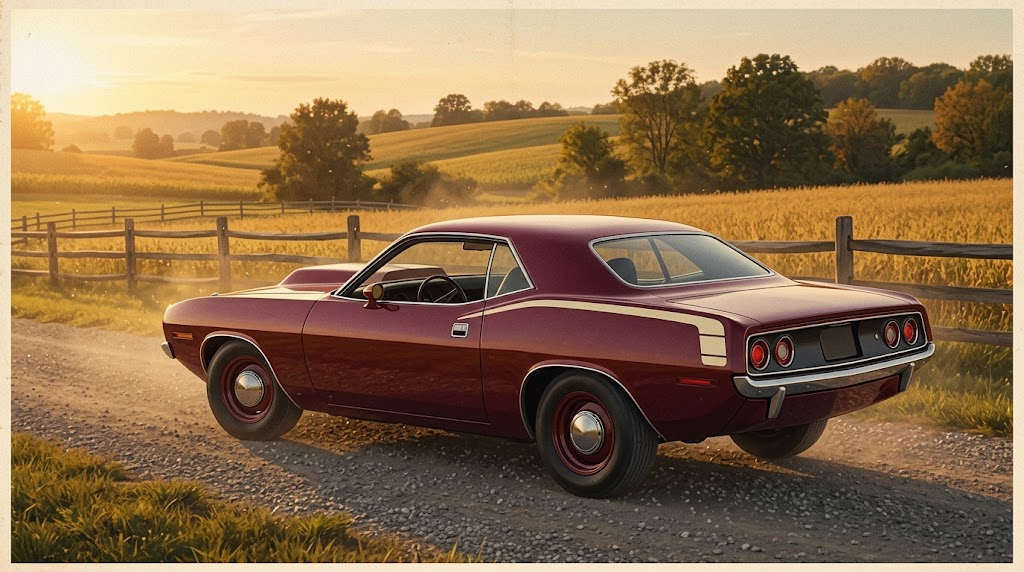
In 1964, Plymouth introduced the Barracuda, a sporty fastback built on the humble Valiant platform. It beat the Ford Mustang to market by two weeks, but the Mustang won the sales race anyway. The Mustang outsold the early Valiant Barracuda by roughly 8 to 1.
The early cars weren’t muscle cars, but the Barracuda grew up fast. In 1968 the 426 Hemi was offered in the Barracuda, and by 1970 the redesigned E-body ‘Cuda was ready for the big leagues, as shared by slashgear.
The Plymouth GTX: The “Gentleman’s Muscle Car”
If the Barracuda was Plymouth’s pony car, the GTX was its grown-up hot rod. Standard power was the 440 Super Commando V8, rated at 375 hp. The 425 hp 426 Hemi was optional, so contrary to some old write-ups, the Hemi was never the only choice. Plymouth positioned the GTX as the refined, well-equipped alternative, and then the cheaper Road Runner arrived in 1968 and stole much of its thunder.
The Hemi ‘Cuda: The One Everybody Wants
Ask a Mopar fan for the holy grail and you’ll hear “Hemi ‘Cuda.” Plymouth built only 652 Hemi hardtops and 14 convertibles for 1970, and the 1971 numbers were even smaller. Rarity and 425 horsepower are why prices are sky-high. A yellow 1970 Hemi ‘Cuda convertible sold at auction for nearly $2 million, according to conceptcarzslashgear.
The Barracuda was built from 1964 through 1974, so the ‘Cuda’s glory years were remarkably short, as noted on Wikipedia.
Plymouth’s Last Hurrah: The Prowler and the End of the Brand
In 1997 Plymouth surprised everyone with the Prowler, a retro-styled hot rod that looked like nothing else in showrooms. It was a fun last act, but it wasn’t enough. Sales slid through the 1990s, and DaimlerChrysler discontinued the Plymouth nameplate in 2001. The last car sold under the Plymouth badge was a 2001 Neon, as noted by hagleyautoevolution.
Plymouth Muscle Cars at a Glance
- Barracuda (1964–1974): a Valiant-based fastback that grew into the Hemi ‘Cuda
- GTX (1967–1971): the “gentleman’s” muscle car with a standard 440 and an optional Hemi
- Road Runner (1968 on): the stripped-down, budget-friendly muscle option
- Hemi ‘Cuda (1970–1971): 425 hp and very low production, the top collector prize
- Prowler (1997 on): the retro hot rod that closed out the brand
What Collectors Look For Today
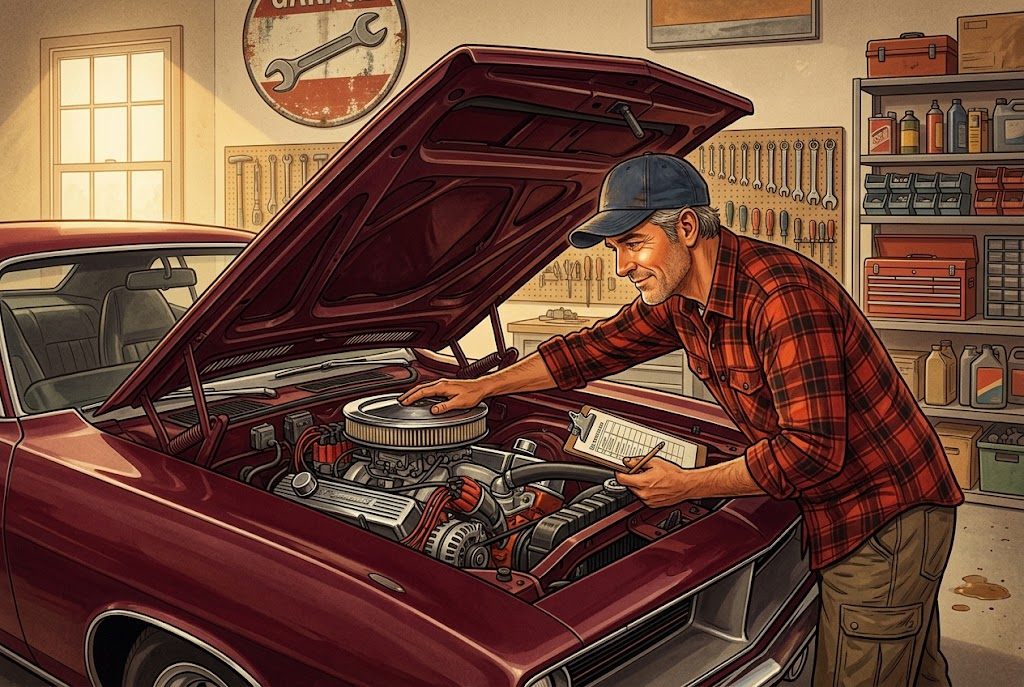
If you’re shopping for one, documentation matters as much as paint. Look for matching numbers, original build paperwork, and proof of the engine the car left the factory with, because the difference between a 440 car and a Hemi car is enormous in dollars. Restoration is half the fun, and these cars reward patience.
Sources and Further Reading
- Plymouth (automobile) on Wikipedia
- Plymouth, 1928–2001, Hagley Museum and Library
- Plymouth GTX on Wikipedia
- Plymouth Barracuda on Wikipedia
- Plymouth GTX, Muscle Car Facts
Free Download: Plymouth Muscle Car Collector’s Checklist
Whether you’re walking a swap meet, browsing a show field, or looking over a car in someone’s garage, it’s easy to forget what to check once the excitement hits. That’s why I put together a free two-page checklist for Plymouth muscle car fans.
Print one sheet per car. It has space for the VIN, fender tag or build sheet code, and the engine, transmission, and rear axle numbers, plus a yes/no box to mark whether each one matches the paperwork. It also covers a documentation checklist, condition ratings, a photo checklist for the shots you’ll want before you leave, and a section for your offer and restoration budget. A quick-reference box is on there too, with a few key Plymouth muscle car facts.
Keep a few in a folder or clipboard so you can compare cars side by side before you buy.