
Originally published April 9, 2016|Updated October 29, 2026
Few cars have a story as big as the Mustang. It showed up in the spring of 1964, sold like crazy, and never really left the spotlight. If you love classic cars, want to learn the basics before buying one, or just enjoy a good automotive story, Ford Mustang history is a great place to start.
Let’s take a ride through every generation, one era at a time.
How the Ford Mustang Got Its Start
Ford Division General Manager Lee Iacocca championed the idea of a new kind of car in the early 1960s. He wanted something sporty and stylish with four seats, light weight, and a price tag under $2,500. Young buyers were growing in number, and Ford wanted a car that spoke to them.
Ford built the Mustang on the underpinnings of the humble Ford Falcon. That kept costs down while the long hood and short rear deck gave it a sleek look. This new type of car became known as a “pony car,” and a whole class of rivals followed.
The 1964½ Mustang: A Hit at the World’s Fair
The Mustang made its public debut on April 17, 1964, at the New York World’s Fair in Flushing Meadows, Queens. It started at $2,368, and the crowds went wild. According to Ford’s own press history, the car caused a sensation with its long hood, short rear deck, and sporty features.
You may have heard people call these early cars “1964½” Mustangs. That nickname comes from the timing. The car arrived in the middle of the model year, months before the usual start of the 1965 lineup. Fans and collectors still debate the label, and Hagerty has a good rundown of first-generation Mustang facts if you want to dig deeper.
A few things that made the early cars special:
- Small beginnings: The base engine was a 170-cubic-inch six-cylinder making 101 horsepower.
- V8 power: Buyers who wanted more could choose a V8, and the 289 soon became a favorite.
- Lots of choices: Ford offered a long list of options, so owners could make the car their own.
- Fast sales: Ford reportedly took more than 22,000 orders on the first day, and the first-year sales goal was met within months.
The Mustang even served as the pace car at the 1964 Indianapolis 500. In 1999, the U.S. Postal Service gave it a stamp showing a 1964½ convertible.

First Generation (1964½ to 1973): The Golden Years
The first generation covers a big stretch of history, and many collectors still chase these cars today.
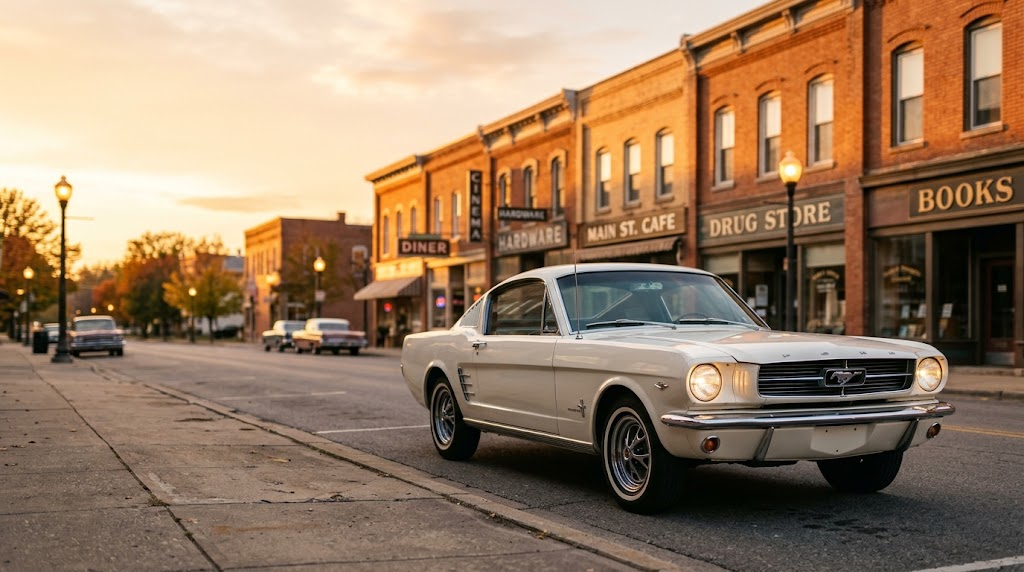
- 1965 to 1966: The fastback body style arrived for 1965, along with the GT package, which added sportier equipment. This was also when Carroll Shelby began turning Mustangs into performance machines with the GT350.
- 1967 to 1968: The car grew a bit larger and gained a bolder look. For the first time, a big-block V8 could fit under the hood. The 1968 Mustang GT 390 Fastback also became a movie star in Bullitt.
- 1969 to 1970: The Mustang got even more aggressive. This was the era of the Mach 1, the Boss 302, and the Boss 429, all built with racing and street performance in mind.
- 1971 to 1973: The cars grew larger again, and stricter emissions rules started to squeeze horsepower. The wild muscle car years were winding down.
Second Generation (1974 to 1978): The Mustang II
Fuel prices jumped in the early 1970s, and car buyers wanted smaller, thriftier rides. Ford answered with the Mustang II, a compact car that was much smaller than the 1973 model. It sold well at the time, but many fans felt it lacked the spirit of the originals.
Enthusiasts have warmed up to it over the years. It remains one of the more affordable ways into Mustang ownership.
Third Generation (1979 to 1993): The Fox Body
In 1979, the Mustang switched to a new platform known as the Fox. It was lighter, roomier inside, and easier to modify. The 5.0-liter V8 returned to the lineup, and performance fans cheered.
Fox-body cars have become popular with drag racers and tuners. Ford also offered the SVT Cobra near the end of the run, giving buyers a factory hot rod.
Fourth Generation (1994 to 2004): A Fresh Look
For the Mustang’s 30th birthday, Ford gave it a new design. It kept the classic proportions but added smoother, more modern lines. Buyers could choose a V6 or a V8, and the Cobra models kept the performance flag flying.
Fifth Generation (2005 to 2014): Retro Goes Mainstream
The 2005 Mustang looked back at the 1960s for inspiration. Its styling felt familiar, but the car underneath was modern. It brought back the classic look and a strong V8 sound, and the Mustang’s popularity climbed again.
Sixth Generation (2015 to 2023): A Global Pony Car
The 50th anniversary brought a Mustang built for drivers around the world, including an independent rear suspension as standard equipment for better handling. Ford also introduced the all-electric Mustang Mach-E SUV in 2021. Although it carries the Mustang name, it’s a separate vehicle that sparked plenty of debate among traditional Mustang fans.
Seventh Generation (2024 to Today)
The newest Mustang keeps the shape and V8 rumble that fans love while adding updated technology inside. After more than 60 years, the formula still works: distinctive styling, strong performance, and an appeal that continues to attract new generations of drivers.
Thinking About Buying a Classic Mustang?
If this history has you ready to start *shopping for a classic Ford Mustang, a few easy-to-follow tips can save you some grief:
- Check for rust. Look at the floor pans, the trunk, and the area around the front shock towers.
- Match the numbers. Compare the VIN and the data plate to see if the car is what the seller says it is.
- Know the model year. A 1964½ is different from a 1965, and the details affect value.
- Set a repair budget. Even a nice driver can need brakes, tires, and fluids.
- Get a second opinion. A trusted mechanic or club member can spot things you might miss.
- Get a repair manual. A good Mustang repair manual* can help you understand what you’re looking at before you hand over any cash.
- *(This post contains affiliate links. As an Amazon Associate, Classic Cars Online US earns from qualifying purchases, at no extra cost to you.)
For beginners, an early six-cylinder Mustang or a Mustang II can be an affordable entry point into classic Mustang ownership. Parts availability and prices vary by model, condition, and year, so research before buying.
Ford Mustang History’s Significance Today
The Mustang proved that a car could be fun, good-looking, and affordable all at once. It changed what Detroit built, and it gave millions of people their first taste of performance. Whether you like the early classics, the Fox-body years, or today’s models, there’s a Mustang with a story for you.
Join the conversation!
Follow Classic Cars Online US on YouTube for more classic-car features, performance stories and automotive history.
Join us on Facebook to share your favorite Mustangs, compare notes with other enthusiasts and keep the conversation going.
There’s always another amazing car worth talking about. We’ll see you at the starting line!
*This post contains affiliate links. If you buy through an eBay or Amazon link, Classic Cars Online US may earn a commission at no extra cost to you.