
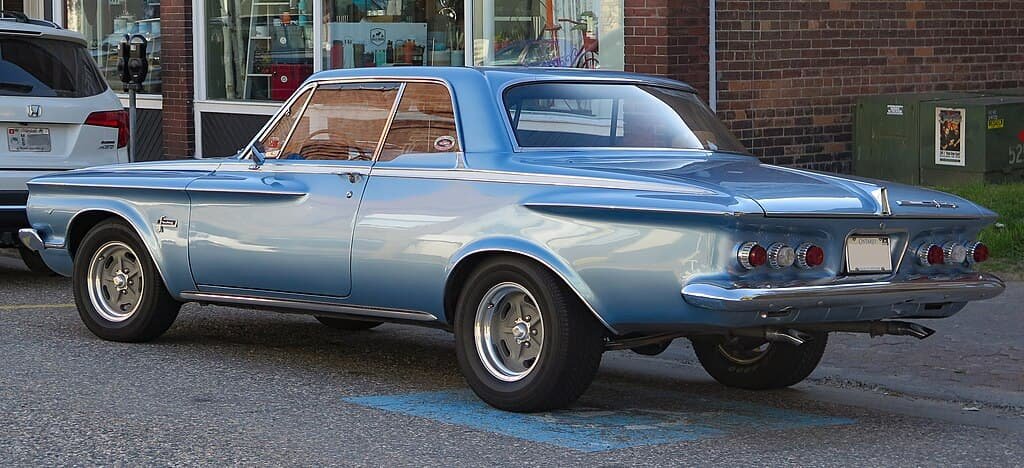
I was really happy when the third-gen Plymouth Fury came up as the next car to cover here on Classic Cars Online US, because I’ve always like the body lines and style of this model.
The third-generation Plymouth Fury represents one of the most intriguing chapters in American automotive history—a bold experiment in downsizing from earlier Plymouth Fury models that initially sparked controversy but ultimately proved Chrysler’s engineering prowess. From 1962 to 1964, these intermediate-sized Fury models challenged conventional wisdom about what a full-size American car should be, delivering exceptional performance in a more manageable package.
Plymouth’s Great Downsizing Gamble
Plymouth’s decision to shrink the Fury for 1962 was daring and innovative. The 1962 Plymouths measured seven inches shorter and up to 400 pounds lighter than the 1961s, a dramatic departure from the era’s “bigger is better” philosophy. This wasn’t merely a styling exercise—it was a complete philosophical shift that moved the Fury from the full-size category to what we’d now call mid-size territory.
The 1962 Fury emerged as a downsized model riding on the new Chrysler B-body unibody platform, marking the beginning of what would become known as the B-body intermediate class. This transition wasn’t without risk, as the market didn’t take to “standard” Plymouths (or Dodges) shrunk to near compact size, resulting in Plymouth falling from a tenuous number-three position for 1960 all the way to eighth for 1962 — its worst placing ever.
Model Years and Body Styles
The third-generation Fury ran from 1962 through 1964, with each year bringing refinements to address initial market resistance. The third generation Fury was built on a shorter platform, and was offered in sedan, coupe, convertible, and wagon body styles.
1962: The inaugural year featured clean, angular styling with a focus on simplicity. The downsizing was most evident here, with Plymouth trying to convince buyers that smaller could indeed be better.
1963: Another restyle marked the 1963 Plymouth Sport Furys, bringing straighter lines and a more conventional look. This year also introduced a new 5 year or 50,000 mile warranty, along with a new, very clean grille and rear.
1964: The final year of the generation saw an improvement in sales, especially the two-door hardtop, which featured a new slanted roofline. This dramatic roofline became one of the generation’s most distinctive features.
The Sport Fury Returns
One of the most significant developments was the reintroduction of the Sport Fury trim package, offered as a hardtop coupe or a convertible in mid-1962. The Plymouth Sport Fury was reintroduced in the third generation as the top of the line variant of the Plymouth Fury, bringing back the performance-oriented trim that had been missing since 1959.
The Sport Fury wasn’t just about badges—it represented Plymouth’s commitment to performance during an era when the muscle car movement was just beginning to take shape.
Engine Options: From Mild to Wild
The third-generation Fury offered an impressive range of powerplants that could satisfy everyone from economy-minded buyers to serious drag racers:
Base Engines
- 225 Slant Six: The reliable workhorse that provided excellent fuel economy
- 318 V8 (230 hp): The entry-level V8 option
Mid-Range Performance
- 361 V8: Available in multiple configurations with 265/305/310 horsepower ratings
- 383 V8: The popular mid-size big block with 320/325/330/335 horsepower options
High-Performance Options
- 413 V8 (1962 only): A rare option producing 365/380/410 horsepower
- 426 Wedge (1963-1964): The serious performance option with 365/370/375/415/425 horsepower
The crown jewel was undoubtedly the 426 “Max Wedge” engine. For racers, there was a new option: the 426 Wedge “Super Stock,” with 415 or 425 hp and compression ratios of 11:1 or 13.5:1. A limited amount of 426 Wedge ‘Super Stock’ engines were planted into the engine bays with the purpose of being raced and not legal on the streets.
Unique Features and Quirks
Push-Button Automatic
One of the most distinctive features of the third-generation Fury was Chrysler’s push-button TorqueFlite automatic transmission. There were none better than the push-button Torqueflites, at the time; the automatics were eating the manuals for lunch at the drag strip. This space-age control system mounted the transmission buttons on the dashboard, creating a unique and futuristic driving experience.
1964 model year was seeing the return of the console shifter. 1965 would be the elimination of all pushbutton shifting in all Chrysler cars, making the third-generation Fury one of the last cars to feature this innovative technology.
Unibody Construction
Part of that weight-savings came from a switch to full unibody construction, without the front subframe of 1960-1961, which made for uncommonly tight, solid cars better able to exploit the fine handling of Chrysler’s torsion-bar front suspension. This advanced construction method contributed to the Fury’s exceptional rigidity and handling characteristics.
Distinctive Styling Elements
The 1963 models featured particularly memorable styling touches: Red, white and blue badging was abundant on the 1963 Fury. The tri-colored bars were applied to the C-pillars, rear deck lid, interior door panels as well as the hood ornament. These patriotic design elements reflected the optimistic spirit of the early 1960s.
Another unique feature was the turn signal design: The front turn signals were mounted high on the fenders, although easier to damage in that configuration, they were well accepted. These lamps were unique because of their white lenses. Amber signals became a federal requirement in 1963, and competitors were putting amber lenses on their cars. However, Chrysler used an amber bulb behind a white lens for aesthetics when not illuminated.
Law Enforcement Favorite
Despite initial sales struggles, the third-generation Fury found favor with law enforcement agencies. No wonder law-enforcement agencies bought so many of these vehicles, thanks to their combination of performance, durability, and handling prowess. The Fury was a favorite of many police forces, adopted by the tough New York Police Department.
A Legendary Survivor
The durability of these Furys became legendary. The Fury also set a record: Joseph Vaillancourt’s 1963 Plymouth Fury, driven as a cab since the mid-1960s, reached 2,609,698 km (over 1.6 million miles), when it was struck by a truck. This remarkable endurance record stands as testament to the solid engineering that went into these cars.
Market Recovery
While 1962 was challenging, helped by deftly reskinned standards for 1963, Plymouth’s model-year production improved from 340,000 to a more heartening 488,500. The market was beginning to appreciate what Plymouth had accomplished with its downsized approach.
Fury Collector Market 2025
The third-generation Fury has found new appreciation among collectors. The top sale price was $137,500 for a 1963 Plymouth Sport Fury Convertible, while the average price of a Plymouth Fury – 3rd Gen is $42,662. These values reflect growing recognition of the generation’s historical significance and unique character.
Legacy and Conclusion
The 1962-1964 Plymouth Sport Furys weren’t nearly as bad as they’re usually portrayed. Yes, they could have been built better (Chrysler was still in its “rust period“) and the styling certainly didn’t suit everyone. But in other respects these cars hold up surprisingly well. In size and balance they’re still right today, and the long-hood/short-deck proportions were drawn years before we’d ever heard of “ponycars”.
The third-generation Plymouth Fury was ahead of its time — a preview of the intermediate muscle car era that would dominate the late 1960s. While it may have been initially misunderstood by the marketplace, history has vindicated Plymouth’s bold experiment. These cars offered genuine performance in a more rational package, proving that innovation sometimes requires taking risks that won’t be fully appreciated until years later.
Today, the third-generation Fury stands as a fascinating chapter in American automotive evolution — part cautionary tale about market timing, part celebration of engineering excellence, and entirely deserving of its place in the classic car pantheon.
Join the Conversation About Classic Cars in Our Facebook Group
Thanks for reading! I would love to hear your thoughts! Click here to join us on FaceBook.