
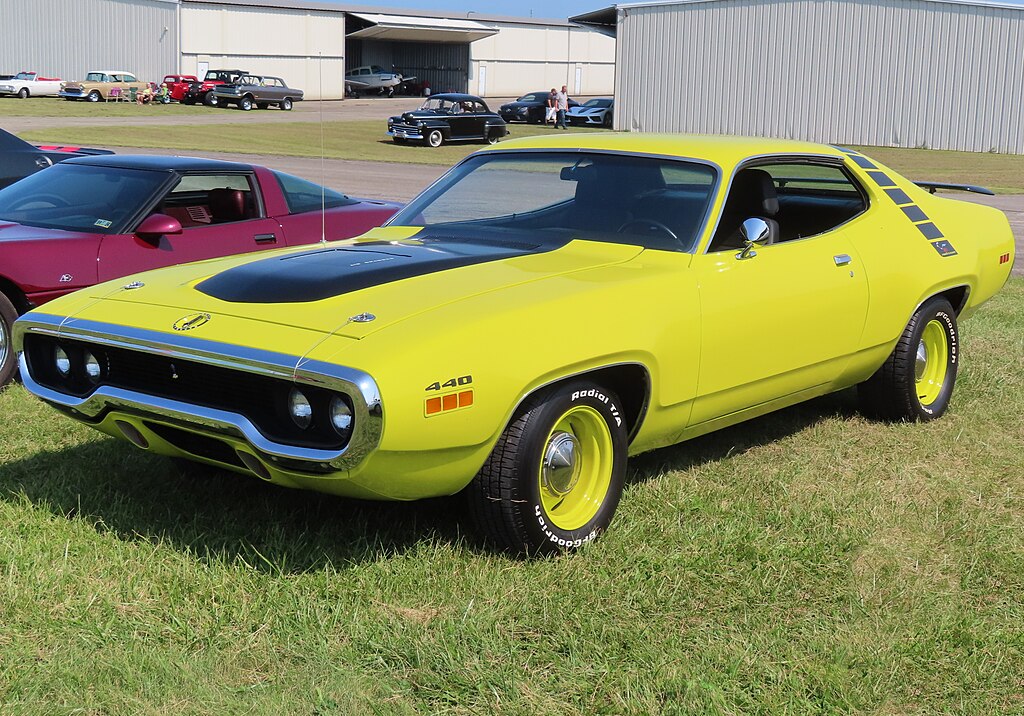
When Plymouth launched the second generation Road Runner in 1971, the muscle car landscape was rapidly changing. While the first generation had defined affordable performance, this new model would need to adapt to rising insurance costs, stricter emissions standards, and evolving consumer preferences.
The result was a fascinating transition that balanced the Plymouth Road Runner‘s performance heritage with the realities of a new automotive era.
Design Evolution: The Fuselage Body
The 1971 redesign brought Plymouth’s “fuselage” styling philosophy to the Plymouth Road Runner, creating a dramatically different appearance from its predecessor. The sweeping lines and curved body sides created a more sophisticated look, while the streamlined profile maintained the car’s performance image.
Available in both hardtop and coupe configurations, the new body rode on a slightly longer 115-inch wheelbase, with overall length growing to 203.2 inches.
Notable exterior features included:
- Chrome-trimmed simulated air intakes on the hood
- Optional “Air Grabber” hood with dual scoops
- Bold striping packages
- Distinctive loop-style front bumper
- Optional “Billboard” side stripes
- Revised dual round taillights
Power Under the Hood
Despite industry trends toward lower compression ratios and reduced performance, the second-generation Plymouth Road Runner still offered impressive powerplant options:
1971 Engine Choice Lineup:
- 383 cubic inch V8 (base engine): 300 horsepower
- 440 cubic inch V8 (4-barrel): 375 horsepower
- 440+6 (Six Pack): 385 horsepower
- 426 Hemi: 425 horsepower (final year for the legendary Hemi)
Transmission Options:
- 3-speed manual (standard) transmission
- 4-speed manual transmission with Hurst shifter
- TorqueFlite 727 automatic transmission
Year-by-Year Plymouth Road Runner Evolution

1971
The debut year showcased the most powerful lineup, representing the last hurrah of the unrestricted muscle car era. The Plymouth Road Runner maintained its performance credibility while offering improved comfort and refinement over the first generation.
1972
Significant changes marked 1972, as Plymouth adapted to new regulations:
- Switch to net horsepower ratings
- Lower compression ratios across the board
- 440+6 and Hemi options discontinued
- Base 383 replaced by a 400 cubic inch V8
- New front grille design
- Enhanced sound insulation
1973-1974
The final years saw further evolution:
- Revised front bumper design to meet impact standards
- Enhanced safety features
- Focus shift toward luxury options
- Improved ride quality
- Last year for the 440 V8 option
Interior and Features
The second generation brought a more upscale interior environment while maintaining the Plymouth Hemi Road Runner’s performance heritage:
- High-back bucket seats
- Rally instrument cluster
- Optional center console
- Improved sound insulation
- Wood grain trim options
- Continued use of the “Beep-Beep” horn
- Optional Air Conditioning
- AM/FM radio options
Historical Context and Legacy
The second-generation 1973 Plymouth Road Runner emerged during a pivotal time in automotive history. Several factors influenced its development and evolution:
Industry Challenges:
- Rising insurance premiums for high-performance vehicles
- New federal emissions regulations
- Safety requirement changes
- The looming fuel crisis
Market Impact:
- Shift toward luxury and comfort features
- Declining interest in pure performance models
- Competition from smaller, more efficient vehicles
- Rising production costs
Special Editions and Packages
The second-generation Plymouth Road Runner offered several unique packages and special editions that added distinct character to the model line:
Plymouth Road Runner Air Grabber Hood
One of the most distinctive features available was the Air Grabber hood system. Unlike many hood scoops of the era, this was a functional performance option that included:
- Vacuum-operated door mechanism
- Dual air intakes
- “Air Grabber” graphics
- Improved cold air induction
- Hood pins for secure closure
GTX Package
While the GTX became its own model in previous years, elements of its luxury-performance formula were available on second-generation Plymouth Road Runners:
- Upgraded interior trim
- Additional sound insulation
- Specific wheel options
- Distinctive exterior accents
- Optional leather interior trim
Plymouth Road Runner Performance Hood Options
Beyond the Air Grabber, Plymouth offered several hood designs:
- Standard flat hood
- Twin-scoop hood
- Blackout hood treatment
- Optional hood pins
- Performance hood paint treatments
Racing Heritage
While the muscle car era was waning, the second-generation Plymouth Road Runner still made its mark in motorsports:
- NASCAR appearances
- NHRA stock class competition
- Notable quarter-mile achievements
- Regional racing success stories
- Modified racing applications
Plymouth Road Runner Production Numbers and Collectability
Production declined throughout the second generation, making these models increasingly rare today:
- 1971: 14,218 units
- 1972: 7,628 units
- 1973: 5,404 units
- 1974: 4,705 units
While first-generation Plymouth Road Runners typically command higher values, the second generation offers unique appeal:
- Rarer production numbers
- Last of the true muscle car era
- More comfortable for regular use
- Distinctive styling
- Strong performance potential
Restoration Considerations
For those considering a second-generation Plymouth Road Runner project, several unique aspects of this iconic model deserve attention:
Body and Sheet Metal
- Specific rust-prone areas around rear window
- B-pillar structural considerations
- Quarter panel replacement challenges
- Bumper fit and alignment specifics
- Fuselage body panel alignment tips
Mechanical Systems
- Period-correct engine option-specific cooling requirements
- Transmission mount variations
- Suspension bushing updates
- Brake system improvements
- Steering box considerations
Parts Availability
- Reproduction body panel options
- Interior trim sourcing
- Engine parts interchange information
- Alternative replacement solutions
- NOS parts market overview
Muscle Car History Transition Phase
The second-generation Plymouth Road Runner represents a fascinating transition period in muscle car history. While it couldn’t match the raw performance numbers of its first-gen Road Runner predecessor, it successfully adapted to changing times while maintaining the Road Runner’s performance spirit. Today, these models offer collectors and enthusiasts a unique combination of muscle car heritage, distinctive styling, and historical significance.
The 1971-1974 Plymouth Road Runner stands as a testament to how American performance cars evolved in the face of new challenges, making it an important chapter in automotive history. Whether viewed as the end of an era or a bridge to a new age of performance, the second-generation Plymouth Road Runner remains a compelling example of muscle car evolution.
Ready to discover more classic car stories and connect with fellow enthusiasts? Browse our extensive archives for more detailed histories and specifications or join our active Facebook community “Classic Cars Online US: Classic Cars for Sale” to share your own classic car experiences and discover vintage vehicles for sale. Whether you’re researching your dream car or looking to connect with other passionate collectors, we’d love to have you as part of our growing classic car family!
Feel free to explore our articles and leave comments or reach out through our contact form. Your classic car journey starts here!