
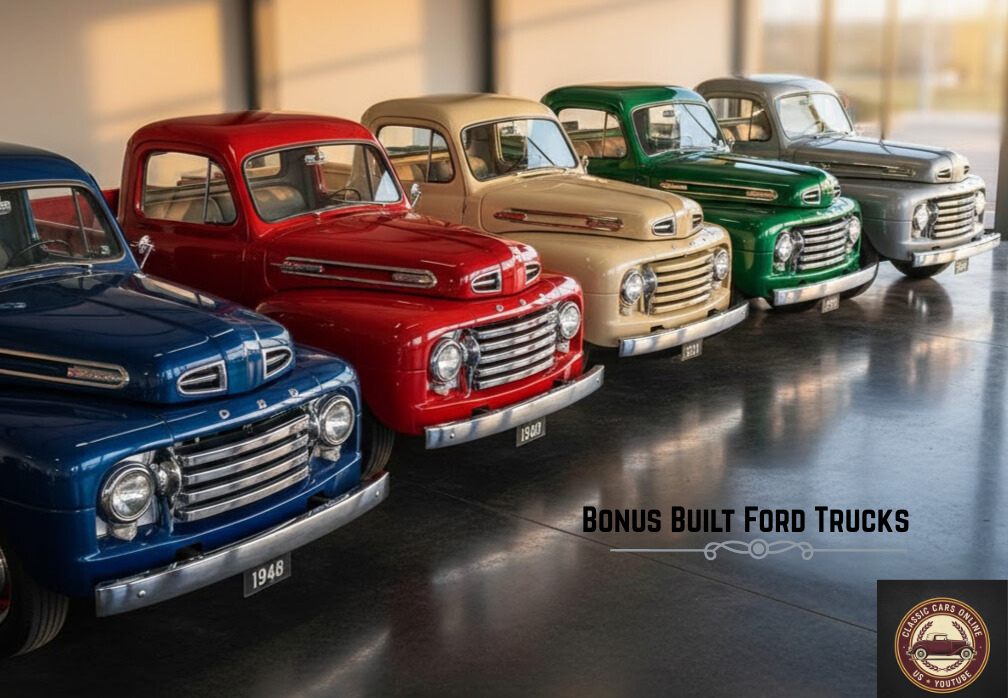
When Ford introduced its Bonus Built line in 1948, the company wasn’t just launching new trucks — it was setting the stage for an entirely new era in pickup design. These were the first Ford trucks built after World War II, marking the beginning of the now-iconic F-Series.
Each model year between 1948 and 1952 brought new refinements in engineering, styling, and comfort, blending the rugged dependability of prewar trucks with the modern touches that defined postwar America. Today, Ford’s Bonus Built trucks stand as symbols of innovation and strength—machines built for real work, but designed with unmistakable style.
The Birth of the Bonus Built Line (1948)
The 1948 Ford F-Series—known internally as the Bonus Built line—represented a major shift in how Ford designed trucks. Before this series, most pickups shared platforms with passenger cars. The Bonus Built models introduced a dedicated truck chassis, giving Ford’s work vehicles better load capacity and durability.
The 1948 models featured a rounded body, horizontal center-bar grille, and a roomier cab that set them apart from prewar designs. They were also available in multiple configurations, from the half-ton F-1 to the heavy-duty F-8. Power came from a reliable flathead V8 or an optional six-cylinder engine, giving owners a choice between smooth performance and rugged torque.
Refinement and Reliability (1949–1950)
In 1949, Ford made subtle improvements to its already-popular design. Trim details were updated, the cab was better sealed against dust, and visibility improved slightly — small refinements that made the trucks more comfortable for daily use.
The 1950 models introduced one of the most recognizable grille changes of the era: a bold bullet-nose center medallion flanked by wide horizontal bars. These trucks combined classic Ford styling with improved mechanical reliability, keeping the Bonus Built line fresh in a rapidly modernizing market.
Under the hood, Ford continued to offer the flathead V8, now paired with better cooling and ignition systems. Farmers, small business owners, and tradesmen across America came to rely on these trucks for their unbeatable balance of strength and style.
A Strong Finish for the Series (1951–1952)
By 1951, the Bonus Built line had become the standard of toughness. Ford refreshed the body with a wider grille and the addition of bold “FORD” lettering across the hood—making brand pride unmistakable. The interiors were roomier, and improved ventilation made them more comfortable for long drives.
In 1952, Ford refined the design one last time before launching the second-generation F-Series in 1953. The grille was redesigned again, featuring split chrome bars that gave it a more upscale appearance. These last Bonus Built models also introduced updated electrical systems and minor mechanical improvements, cementing their reputation for durability and easy maintenance.
Legacy of the Ford Bonus Built Trucks
The Bonus Built era did more than modernize Ford trucks — it laid the foundation for every F-Series that followed. These postwar workhorses proved that a truck could be both rugged and refined. Their dedicated chassis, cab design, and comfort-focused interiors influenced Ford’s approach for decades to come.
Today, collectors prize Bonus Built trucks for their distinctive styling and historical importance. Restored examples often appear at car shows and classic auctions, where they represent not just Ford’s engineering legacy but the spirit of postwar American innovation.
A Bridge Between Pre-War Practicality and Modern Innovation
From 1948 to 1952, the Ford Bonus Built trucks redefined what a pickup could be. Built for hard work yet engineered with care, they stood as a bridge between prewar practicality and modern innovation. More than just vehicles, these trucks told the story of a country rebuilding—and of a company that saw toughness as more than strength; it was a way of life.
Love classic Ford trucks? Check out vintage F-Series parts and accessories on eBay to keep your own restoration running strong — shop now on eBay #ad.
For more history, walkarounds, and restoration stories, subscribe to the Classic Cars Online US YouTube channel for weekly deep dives into iconic American vehicles.