
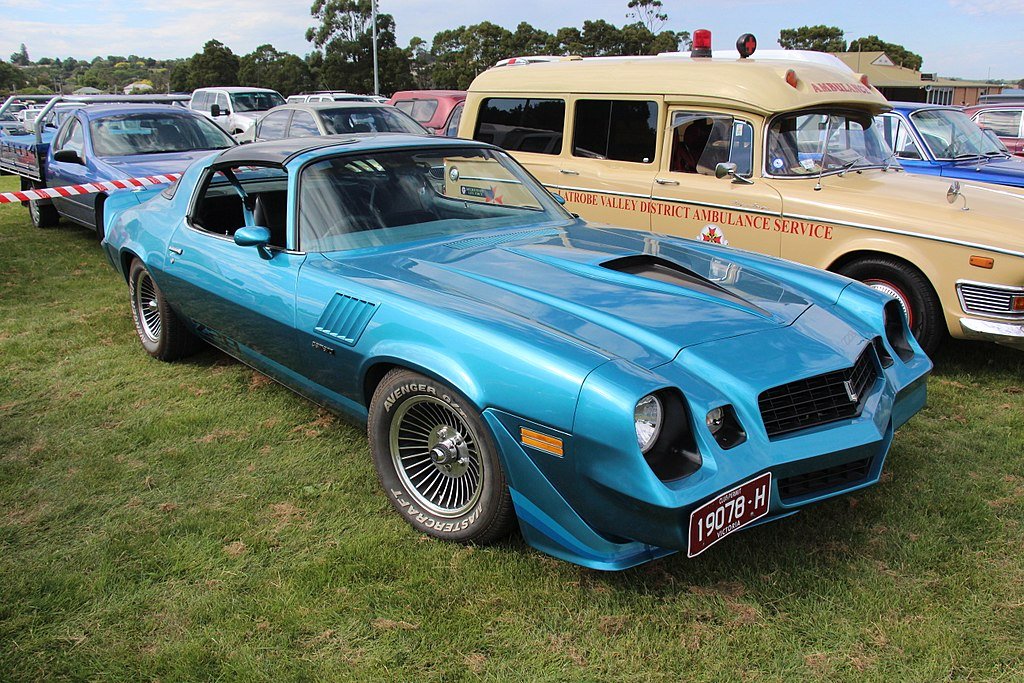
When it comes to classic American muscle cars, few vehicles capture the imagination quite like the second-generation Chevrolet Camaro. Produced from 1970 to 1981, this sleek and powerful machine represented a dramatic evolution from its first-generation Camaro predecessor, establishing itself as one of the most distinctive and sought-after muscle cars of its era.
Design Evolution
The second-gen Camaro’s design was a radical departure from the boxy lines of the 1960s. Taking inspiration from European sports cars, Chevrolet’s designers created a lower, wider, and more aggressive profile. The distinctive long hood, short deck proportions, and swooping fastback roofline gave the car an unmistakable presence on the road. This European-influenced styling, combined with pure American muscle, created a unique fusion that still turns heads today.
Performance Credentials and Technical Evolution
The second-generation Camaro’s powertrain options tell the story of American performance through the 1970s. Early models offered an impressive range of engines:
- The base straight-six displaced 250 cubic inches and produced 155 horsepower
- The small-block V8 family included 307, 350, and rare 302 cubic inch options
- The legendary Z28 package featured the high-revving 360-horsepower LT-1 V8
- SS models came with either the 350 or the mighty 396 (402) big-block V8
- The ultra-rare COPO cars packed the fire-breathing 427 V8
As emission regulations tightened, Chevrolet adapted:
- 1973 saw the introduction of low-lead fuel compatibility
- 1975 models introduced the catalytic converter
- By 1977, the Z28’s 350 V8 was tuned for better efficiency while maintaining performance
- 1980-81 models featured Computer Command Control (CCC) electronic engine management
Transmission options included the sturdy Muncie 4-speed manual, the heavy-duty Borg-Warner Super T-10, and the reliable Turbo Hydra-Matic 350 and 400 automatics.
Notable 2nd-Gen Chevy Camaro Variants and Special Editions
The second-generation Camaro offered an impressive array of trim levels and special editions, each with unique characteristics:
Rally Sport (RS) Package
- Available across most model years
- Distinguished by unique front-end treatment
- Hidden headlights (1970-73)
- Special striping and trim
- Upgraded interior appointments
Type LT (Luxury Touring)
- Introduced in 1973
- Full instrumentation including tachometer
- Distinctive hood striping
- Deluxe interior with wood-grain trim
- Additional sound insulation
- Special suspension tuning for improved ride quality
Z28 Performance Package
- Discontinued after 1974, reintroduced in 1977
- Special suspension with larger sway bars
- Unique hood and stripe packages
- Four-speed manual transmission standard
- Limited-slip differential
Super Sport (SS)
- Available 1970-72
- Could be combined with RS package
- Heavy-duty suspension
- Choice of 350 or 396/402 engines
- Distinctive hood treatment and stripes
Year-by-Year Highlights
- 1970-73: Split-bumper design, peak performance era
- 1974-77: New aluminum bumpers, improved handling
- 1978: Major facelift with new nose and tail treatment
- 1979: Updated interior and gauge cluster
- 1980-81: Aerodynamic improvements, electronic engine management
Special Editions and Production Numbers
- 1974 Spirit of America: 2,000 units produced, all white with blue/red trim
- 1976-77 Air Conditioning Anniversary: 2,590 units with unique silver paint and burgundy interior
- 1978 Z28 Gold Medalist: Limited run of 1,000 units commemorating Olympic support
- 1979 IROC prototype: Only 10 units produced, all with special suspension tuning
- 1980-81 Z28 Air Induction: 5,800 units with functional hood scoop
Notable Production Highlights:
- 1970 Z28: 8,733 units produced
- 1970 SS 396/402: 1,864 units
- 1971 SS (last year): 4,862 units
- 1973 Type LT (first year): 32,327 units
- 1977 Z28 (reintroduction): 14,349 units
- 1979 Z28 (peak year): 84,877 units
Particularly rare combinations include:
- 1970 Z28/RS with LT-1 engine and TH400 automatic: 206 units
- 1971 SS 396 convertible: 188 units
- 1973 Type LT with Z28 package: 2,575 units
- 1979 Z28 with 4-speed manual and T-tops: 3,207 units
Second-Generation Chevy Camaro Ownership and Restoration Considerations
When evaluating a second-gen Camaro for purchase or restoration, several critical areas deserve careful attention:
Structural Integrity
- Floor pans, particularly under the seats and trunk area
- Frame rails, especially at the front suspension mounting points
- Cowl area where the windshield meets the hood
- Rear quarter panels, particularly around wheel wells
- Rocker panels and door bottoms
- Subframe mounts and surrounding metal
Common Restoration Challenges
The second-gen Camaro presents several typical restoration hurdles:
- T-top models often suffer from water damage and frame flex
- Split-bumper models (1970-73) require careful alignment during reassembly
- Original interior parts, especially dash pads and door panels, can be difficult to source
- Correct carburetor specifications vary significantly by year and engine
- Original trim pieces for Type LT models are increasingly rare
- Z28 and RS-specific parts command premium prices
Period-Correct Accessories and Add-Ons
The second-gen Camaro was a popular platform for customization in its day, and many period-correct accessories are now highly sought after:
Popular Period Accessories:
- Cragar SS wheels
- American Racing Torq-Thrust wheels
- L88-style hood scoops
- Lakewood traction bars
- Gabriel Hi-Jacker air shocks
- Grant GT steering wheels
- Hurst T-handle shifters
- Craig PowerPlay 8-track players
- Jensen triaxial speakers
- Centerline wheels (late ’70s)
- Cal Custom valve covers
- Stewart-Warner gauges
Documentation and Authentication
Verifying the authenticity of a second-gen Camaro requires careful attention to detail:
Key Documentation:
- Build sheet (often found under carpet or seat padding)
- Protect-O-Plate warranty tag
- Original window sticker
- Tank sticker (found on top of fuel tank)
- Factory broadcast sheet
- Original sales documentation
VIN and Trim Tag Decoding:
- VIN location on dashboard and subframe
- Engine code stamping on block
- Transmission stamps and date codes
- Rear axle codes
- Paint and trim codes on cowl tag
- Assembly plant markings
Important date codes appear on:
- Engine block and heads
- Transmission case
- Alternator
- Distributor
- Carburetor
- Major suspension components
Modern Parts and Support Resources
The second-gen Camaro enjoys exceptional aftermarket support, with multiple vendors specializing in different areas:
Restoration Parts Suppliers:
- Classic Industries: Complete catalogs for every year, specializing in sheet metal and trim
- Ground Up SS396: Extensive inventory of correct-date components
- National Parts Depot (NPD): Large selection of reproduction interior parts
- Original Parts Group (OPGI): Specialized in high-quality reproduction trim
- Year One: Comprehensive selection of performance and restoration parts
- Detroit Speed: Premium suspension and chassis components
- Rick’s Camaros: Extensive inventory of original and reproduction parts
Cross Compatibility
Many mechanical components are shared with other GM vehicles of the era, making engine and transmission parts readily available through suppliers like Summit Racing, Jegs, and AutoZone. The cross-compatibility with other GM platforms extends to:
- Engine components (shared with Corvette, Nova, Chevelle)
- Transmission parts (common with most GM rear-wheel-drive vehicles)
- Rear end components (shared with Nova and other F-bodies)
- Basic suspension parts (common with other F-body platforms)
Online Second-Generation Chevrolet Camaro Resources:
- Team Camaro Tech: Technical database and forum
- Nastyz28.com: Extensive technical articles and community support
- CamaroForums.com: Active restoration community
- SecondGenCamaro.com: Dedicated to 1970-81 models
- YearOne Tech Vault: Free technical resources
Performance Modifications and Upgrades
Today’s second-gen Camaro owners have access to an impressive range of performance upgrades that can enhance both driveability and power while maintaining the car’s classic character:
Suspension Improvements:
- Detroit Speed subframe connectors and mini-tubs
- Global West control arms and suspension components
- QA1 or Viking adjustable shocks
- Hotchkis Sport suspension packages
- Energy Suspension polyurethane bushings
- Larger anti-roll bars from companies like Hellwig
Brake Upgrades:
- Wilwood 4-wheel disc brake conversion kits
- Baer Brake Systems Pro+ packages
- Master Power Brakes conversion systems
- Hydratech hydraulic brake assist systems
- Upgraded brake lines and proportioning valves
Engine Performance:
- Edelbrock aluminum heads and intake manifolds
- MSD ignition systems and distributors
- Holley Sniper EFI conversion kits
- FiTech fuel injection systems
- March serpentine pulley systems
- Vintage Air front runner drive systems
Transmission Options:
- Tremec TKO-600 5-speed conversion
- T56 6-speed upgrade kits
- 700R4/4L60E automatic transmission swaps
- McLeod clutch and flywheel packages
- Hurst shifter upgrades
Cooling and Comfort:
- Be Cool aluminum radiators
- Vintage Air climate control systems
- Sound deadening materials from Dynamat
- LED lighting conversion kits
- Modern audio system integration
Classic Car Community and Support
One of the best aspects of second-generation Camaro ownership is the strong enthusiast community. From technical support to shared restoration tips, fellow owners are always ready to help. We invite you browse around the site here and to join our Facebook group, Classic Cars Online US: Classic Cars for Sale, where you’ll find a wealth of knowledge and experience from fellow enthusiasts who share your passion for these remarkable machines.