
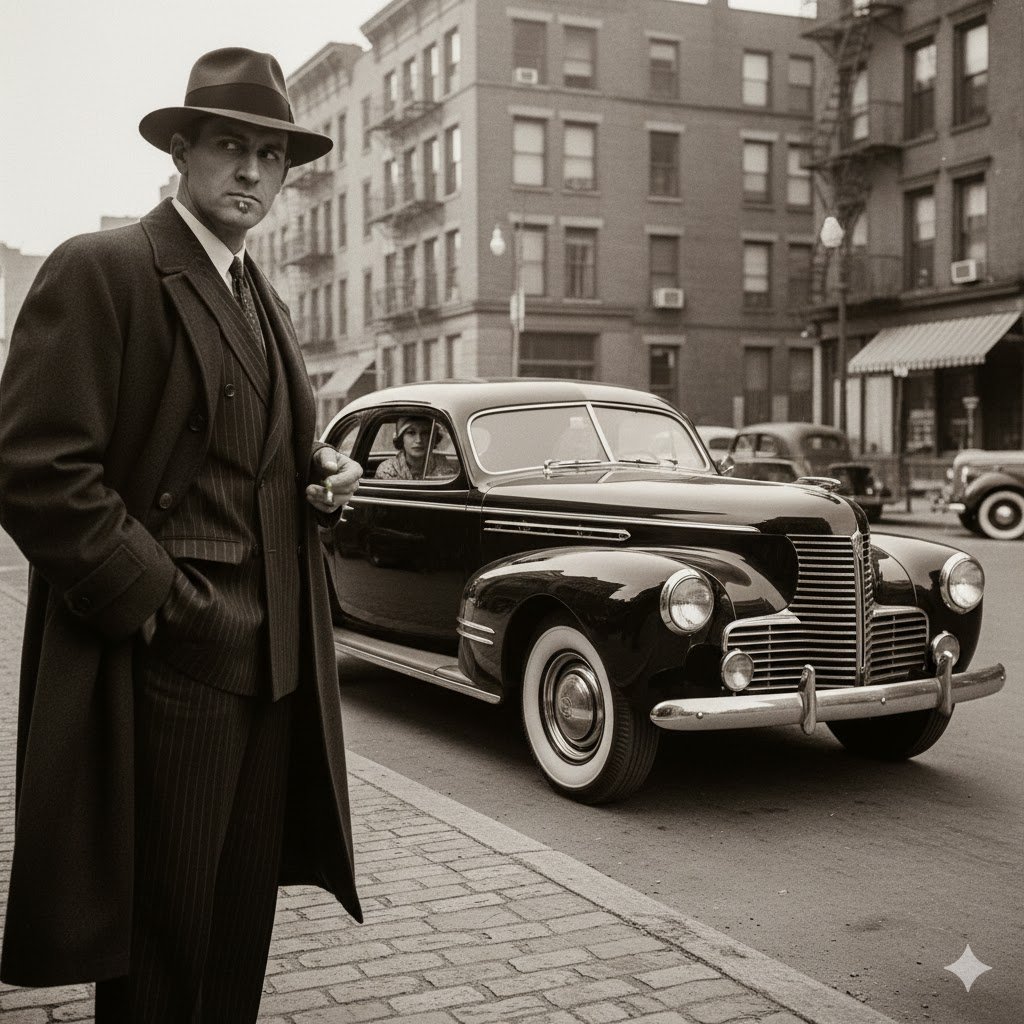
When we think of American luxury automobiles, Cadillac immediately comes to mind. But for 13 years, from 1927 to 1940, Cadillac had a companion brand that competed directly with Packard and other premium makes: LaSalle. Today, these elegant automobiles are largely forgotten by the general public, but they represent some of the most beautiful and historically significant cars of the pre-war era.
The 1939 LaSalle Coupe, in particular, represents the brand at its peak—just one year before it would be discontinued forever. If you’re considering a classic luxury car from the 1930s, understanding the LaSalle story helps explain why these cars offer exceptional value and undeniable style.
What Is a LaSalle?
LaSalle was a brand of automobile manufactured by the Cadillac division of General Motors from 1927 to 1940. The brand was created to fill the pricing gap between Buick (GM’s upper-middle brand) and Cadillac (GM’s luxury flagship). LaSalle cars were priced below Cadillacs but offered similar styling, engineering quality, and prestige.
The name honored René-Robert Cavelier, Sieur de La Salle, a 17th-century French explorer who claimed the Louisiana Territory for France. This fit perfectly with Cadillac’s own French-inspired naming (named after Antoine de la Mothe Cadillac, founder of Detroit).
Market Positioning
In the luxury car hierarchy of the 1930s, LaSalle occupied an important middle ground:
Premium Luxury Tier:
- Packard
- Cadillac
- Lincoln
- Duesenberg
- Pierce-Arrow
Upper-Middle Luxury Tier:
- LaSalle ← positioned here
- Chrysler Imperial
- Lincoln-Zephyr (later 1930s)
Middle Tier:
- Buick
- Hudson
- Studebaker President
This positioning allowed General Motors to compete across a broader spectrum of the luxury market without diluting the Cadillac name.
The Harley Earl Connection
Perhaps the most significant aspect of LaSalle’s legacy is that it was designed by Harley Earl, marking his first major project for General Motors. Earl had been hired away from the custom coachbuilding firm Don Lee in California, where he’d made a name creating stunning custom bodies for wealthy clients.
GM president Alfred P. Sloan Jr. recognized that automobile styling was becoming increasingly important to sales. He brought Earl to Detroit specifically to design the new LaSalle, making it the first mass-produced American car to be designed by a professional stylist rather than an engineer.
Earl’s Design Philosophy
Harley Earl brought several revolutionary concepts to GM:
- Lower, longer, more graceful proportions
- Color coordinated interiors and exteriors
- Annual model changes to keep designs fresh
- Influence from European luxury marques like Hispano-Suiza
The 1927 LaSalle was a sensation, proving that styling could sell cars. Earl would go on to lead GM’s Art and Colour Section (later GM Styling) for over three decades, shaping American automotive design through the 1950s.
LaSalle Through the Years
1927-1933: The Early Years
The first LaSalles shared their chassis and running gear with Cadillac but featured distinctive styling. Early models were powered by Cadillac’s proven V8 engines and offered a full range of body styles from roadsters to formal sedans.
Pricing for the 1927 LaSalle started around $2,500—about $1,000 less than comparable Cadillacs but $500-$800 more than Buicks. This positioned the brand exactly where GM wanted it.
Sales were strong initially, with LaSalle helping to establish GM’s dominance across multiple price segments. The brand’s styling continued to evolve, with each year bringing refinements to Earl’s original vision.
1934-1937: Separation and Identity
By the mid-1930s, LaSalle had developed its own distinct identity, though it continued to share mechanical components with Cadillac. The brand offered its own unique body styles and trim levels.
During this period, LaSalle competed directly with Packard’s One-Twenty line and other premium marques. The cars were known for refined performance, quality construction, and styling that was clearly related to Cadillac but with its own character.
1938-1940: The Final Years
By the late 1930s, LaSalle’s market position was becoming complicated. Cadillac had introduced lower-priced Series 60 and 61 models that overlapped with LaSalle pricing. Meanwhile, Buick was moving upmarket with its Limited and Roadmaster lines.
The brand was caught in a squeeze—no longer necessary to fill a gap that had largely disappeared. The 1940 model year would be LaSalle’s last, with production ending as GM consolidated around the Cadillac name.
The 1939 LaSalle: Peak Design Before the End
The 1939 LaSalle represents the brand at its absolute peak. These cars featured sophisticated styling, proven mechanical components, and build quality that matched Cadillac standards.
Design Highlights
The Waterfall Grille: The most distinctive feature of 1938-1940 LaSalles was the “waterfall” grille—horizontal chrome bars cascading down the front end. This design was instantly recognizable and gave LaSalles a unique identity separate from their Cadillac siblings.
Art Deco Styling: The 1939 models featured flowing fenders, elegant proportions, and Art Deco-inspired details that represented the pinnacle of late-1930s American design. The integration of headlamps into the fenders was particularly modern for the era.
Body Styles: The 1939 lineup included sedans, coupes, and convertibles, all sharing the same basic platform but offering variety for different buyers.
Technical Specifications
Engine:
- 322 cubic inch (5.3-liter) V8
- L-head (flathead) configuration
- Approximately 125-130 horsepower
- Smooth, refined power delivery
Transmission:
- Three-speed manual with column shift
- Synchronized gears for easier shifting
Chassis:
- 120-inch wheelbase (standard models)
- 123-inch wheelbase (some longer models)
- Independent front suspension with coil springs
- Live rear axle with semi-elliptic leaf springs
- Four-wheel hydraulic brakes
Dimensions:
- Overall length: approximately 207 inches
- Width: approximately 75 inches
- Weight: 3,800-4,000 pounds depending on body style
Build Quality
LaSalle shared manufacturing facilities and quality control standards with Cadillac. These weren’t badge-engineered economy cars—they were genuine luxury automobiles built to exacting standards. Body panels fit precisely, chrome work was heavy and well-finished, and interiors featured quality materials throughout.
Why 1939 Is Significant
The 1939 model year holds special significance in LaSalle history for several reasons:
Second-to-Last Year: With 1940 being the final year, 1939 models represent the brand’s mature design philosophy before the end. They’re fully developed, debugged, and refined.
Peak Production: By 1939, GM had perfected LaSalle production, resulting in well-sorted cars that drive and handle beautifully for their era.
Historical Context: 1939 was the last full year of peace before World War II transformed everything. These cars represent the final flowering of pre-war American luxury design.
Styling Evolution: The waterfall grille was now in its second year and had been refined to perfection. The overall design represented peak Art Deco before streamlining took over in the 1940s.
Featured 1939 LaSalle Coupe
[VIDEO EMBED PLACEHOLDER: 1939 LaSalle Coupe]
This stunning 1939 LaSalle Coupe showcases why these cars remain desirable nearly 85 years later. With its beautiful gray-on-gray color scheme, restored condition, and thoughtful upgrades, it represents an excellent example of Cadillac’s companion brand.
The seller describes this particular car as being in “very good restored condition” with finish, chrome, and interior like new. Notable features include:
- 322 cubic inch V8 engine running strong
- Manual transmission
- 84,502 miles showing
- Recent Adams Graphene ceramic coating for paint protection
- Brand new Firestone whitewall tires
- Rebuilt front seat cushion
- New battery installed
- Carter electric fuel pump for reliable starting
- Tight steering, good brakes
- Currently registered and ready to drive
The owner has been transparent about known items: the radio and clock are non-operational (common for cars of this era), and the wipers are described as “lazy,” possibly needing attention to the wiper motor or vacuum system. This honest disclosure speaks to an owner who knows and cares for the car.
What to Look for When Buying a LaSalle
If you’re considering purchasing a 1939 LaSalle or any LaSalle model, here are key factors to evaluate:
Body and Structural Condition
Rust is the enemy. These cars are approaching 85-90 years old, and rust can hide in numerous places:
- Floor pans and trunk floors
- Lower door edges and rocker panels
- Fenders (especially inner fender wells)
- Frame rails and crossmembers
- Areas where wood framing meets metal body panels
LaSalles used wood framing in body construction, typical for the era. Water infiltration can rot this wood framework, leading to sagging doors, misaligned body panels, and structural issues. A thorough inspection should include checking for any signs of wood deterioration.
Mechanical Assessment
Engine: The 322 cubic inch V8 is a robust, proven design. Check for:
- Smooth running without unusual noises
- Good oil pressure (add a gauge if the car doesn’t have one)
- No excessive smoke from the exhaust
- Clean oil without water contamination
- Cooling system condition
Transmission: The three-speed manual should shift smoothly with synchronized gears. Check for:
- Easy shifting without grinding
- Proper clutch engagement
- No jumping out of gear
- Transmission fluid level and condition
Brakes: Four-wheel hydraulic brakes were modern for the era, but verify:
- Even braking without pulling to one side
- No excessive pedal travel
- Brake fluid condition
- Wheel cylinder condition (leaks are common)
Interior and Trim
Upholstery: Original upholstery is rare, but quality restorations are common. Look for:
- Proper materials and patterns for the era
- Condition of door panels
- Headliner integrity
- Carpet condition
- Seat springs and padding
Wood and Trim: Dashboard and interior trim should be intact:
- Wood veneer condition (cracks, peeling)
- Chrome trim pieces present and in good condition
- Window cranks and door handles functional
- Instruments and gauges present (working is a bonus)
Documentation and History
Having documentation significantly increases value:
- Original owner’s manual or service manual
- Service records
- Previous restoration documentation
- Photos of restoration process
- Previous ownership history
- Original purchase documents (rare but valuable)
Common Modifications and Upgrades
Many LaSalles have received thoughtful upgrades over the years. These modifications can improve reliability and drivability without compromising the car’s character:
Electrical:
- 12-volt conversions (originally 6-volt)
- Electronic ignition for easier starting
- Modern alternator replacing generator
- Additional fuses for circuit protection
Fuel System:
- Electric fuel pump supplementing or replacing mechanical pump
- Fuel line upgrades
- Modern fuel filters
Cooling:
- Modern water pump seals
- Upgraded radiator cores
- Electric cooling fans
Brakes:
- Modern brake linings
- Sleeved wheel cylinders
- Dual master cylinder conversions for safety
Tires:
- Radial tires instead of bias-ply (improves handling dramatically)
- Modern tire sizes adapted to original wheels
These upgrades are generally accepted in the collector community as they improve safety and usability without altering the car’s appearance or fundamental character.
Market Values and Investment Potential
LaSalles represent exceptional value in the classic car market, particularly compared to their contemporaries.
Current Market Ranges (Approximate)
Project Cars: $8,000 – $18,000 Incomplete, needs extensive work, missing parts, significant rust or mechanical issues
Driver Quality: $20,000 – $40,000 Complete, runs and drives, presentable appearance, may need minor work or cosmetic refresh
Show Quality: $40,000 – $75,000 Comprehensive restoration, correct details, excellent finish, fully sorted mechanically
Exceptional Examples: $75,000 – $100,000+ Concours-level restoration, rare body styles (convertibles), documented history, show awards
Value Comparison
To put these prices in perspective, comparable Packards of the same era typically command 20-40% more, while equivalent Cadillacs can be double the price of similar LaSalles. You’re getting Cadillac-quality engineering and GM build standards at a significant discount.
Investment Considerations
Appreciation Potential: LaSalles have been steadily appreciating as collectors recognize their quality, styling, and historical significance. As pre-war classics become increasingly scarce, well-maintained examples should continue gaining value.
Driving vs. Collecting: These are cars you can actually drive and enjoy, not just trailer to shows. A well-sorted LaSalle is reliable enough for touring and club events.
Parts Availability: While LaSalle-specific parts can be challenging, many components interchange with Cadillac or are shared with other GM products. The active collector community and specialized suppliers help keep these cars on the road.
Recognition Factor: While not as immediately recognizable as a Duesenberg or Packard, LaSalles draw crowds at car shows. Their Cadillac connection and Harley Earl design story give you plenty to talk about.
Where to Find LaSalles for Sale
Online Marketplaces
eBay Motors: One of the best sources for classic LaSalles. Listings include everything from project cars to show-quality examples. The auction format can sometimes yield excellent deals, though competition for nice examples is increasing.
Hemmings Motor News: The traditional source for classic car listings. Hemmings typically features higher-quality, well-documented examples with detailed descriptions.
Bring a Trailer: For premium examples with extensive documentation. Bidding is competitive, and prices typically reflect strong market values.
Classic car-specific sites: ClassicCars.com, OldCarOnline.com, and similar platforms regularly feature LaSalles.
Clubs and Communities
Cadillac-LaSalle Club: The premier organization for LaSalle enthusiasts. Members often have leads on cars for sale before they reach public listings. The club also provides technical support, parts sources, and restoration advice.
Regional car clubs: Local vintage car clubs often know of LaSalles in estates, garages, or private collections that may become available.
Estate Sales and Auctions
Many excellent LaSalles surface through estate sales when long-term owners pass away. These can be opportunities to find original, well-preserved examples with documented history.
Restoring and Maintaining a LaSalle
Parts Availability
What’s Available:
- Mechanical components (many shared with Cadillac)
- Engine rebuild kits
- Brake system components
- Weatherstripping and rubber goods
- Some chrome trim pieces
- Electrical components
- Upholstery materials
What’s Challenging:
- Body panels (usually require fabrication or donor cars)
- LaSalle-specific trim and emblems
- Glass, especially curved pieces
- Year-specific parts (particularly for the waterfall grille years)
Key Suppliers:
- Cadillac-LaSalle Club parts department
- Bob’s Automobilia
- Restoration Supply Company
- Dennis Carpenter
- Specialized vendors advertising in Hemmings
Expertise and Support
The Cadillac-LaSalle Club is invaluable for restoration support. Members include experienced restorers, mechanics who understand these cars, and historians who can help with correct details and specifications.
Online forums and social media groups also provide community support, with members sharing tips, techniques, and sources for hard-to-find components.
Cost Considerations
Mechanical Restoration: Budget $10,000-$25,000 for a complete mechanical rebuild including engine, transmission, brakes, suspension, and electrical system.
Cosmetic Restoration: A proper body-off restoration including paint, chrome, interior, and trim can easily run $40,000-$80,000 depending on body style and condition.
Partial Restoration: Many buyers opt to purchase a driver-quality car and improve it gradually. This approach spreads costs over time and allows you to enjoy the car while restoring it.
Living with a LaSalle
Driving Experience
LaSalles drive like the large, luxurious cars they are. Steering is slow by modern standards (requiring multiple turns lock-to-lock), but at highway speeds they’re stable and composed. The ride is soft and comfortable, absorbing bumps easily.
Power is adequate for the era—the 322 V8 provides smooth, refined acceleration rather than tire-smoking performance. These cars cruise comfortably at 50-60 mph and can reach 80+ mph when needed.
Brakes require more pedal pressure than modern cars but are effective once you adjust to them. The manual transmission shifts smoothly with synchronized gears.
Practicality
Daily Driver? Probably not, unless you’re truly committed. LaSalles lack modern safety features, fuel efficiency is poor (10-14 mpg), and parking a 17-foot car in modern spaces is challenging.
Weekend Touring: Absolutely. These cars are excellent for club tours, casual drives, and car shows. They’re reliable enough to drive distances and comfortable enough to enjoy the journey.
Show Car: A properly restored LaSalle is show-worthy and will draw appreciative crowds. The Harley Earl connection and Cadillac lineage give you great stories to share.
Community and Events
LaSalle ownership connects you to a passionate community:
- Cadillac-LaSalle Club national and regional events
- Pre-war car club tours and meets
- Concours events that appreciate Depression-era luxury
- General car shows where unique makes stand out
Why Choose a LaSalle?
If you’re considering a pre-war luxury car, here’s why a LaSalle deserves serious attention:
Exceptional Value: You get Cadillac engineering and GM build quality at significantly lower prices than comparable Cadillacs or Packards.
Historical Significance: These are Harley Earl’s first designs for GM—cars that changed American automotive styling forever.
Distinctive Design: The waterfall grille and flowing Art Deco lines make LaSalles instantly recognizable to enthusiasts.
Drivability: These are real cars you can drive and enjoy, not temperamental exotics requiring constant attention.
Strong Community: The Cadillac-LaSalle Club provides excellent support for owners.
Appreciation Potential: As pre-war classics become scarcer, well-maintained LaSalles should continue appreciating.
Conversation Starter: Most people don’t know about LaSalle, giving you a chance to share automotive history.
Conclusion
The LaSalle represents a fascinating chapter in American automotive history—a premium brand created to fill a market gap, designed by a legendary stylist at the start of his career, and discontinued just as it reached its peak. The 1939 models, in particular, showcase the brand at its finest, with mature styling, proven engineering, and exceptional build quality.
For collectors and enthusiasts, LaSalles offer an opportunity to own a significant piece of automotive history without the stratospheric prices commanded by Duesenbergs or top-tier Packards. These are cars with genuine Cadillac DNA, designed by Harley Earl, and built to standards that few manufacturers could match.
Whether you’re drawn to the Art Deco styling, the Cadillac connection, or simply the elegance of pre-war American luxury, a 1939 LaSalle Coupe or any LaSalle model represents an excellent entry into the world of Depression-era classics. As these cars continue to be discovered and appreciated, now is an ideal time to add one to your collection.
Frequently Asked Questions
Q: Is a LaSalle the same as a Cadillac? A: LaSalle was a separate brand manufactured by Cadillac from 1927-1940. While they shared engineering and were built to similar quality standards, LaSalles were positioned below Cadillac in price and prestige.
Q: Why did GM discontinue LaSalle? A: By 1940, lower-priced Cadillac models and higher-priced Buicks had eliminated the market gap LaSalle was designed to fill. The brand became redundant and was discontinued after the 1940 model year.
Q: Are LaSalle parts available? A: Many mechanical parts are available, as LaSalles shared components with Cadillac and other GM cars. Body panels and LaSalle-specific trim can be challenging but are obtainable through the Cadillac-LaSalle Club and specialty suppliers.
Q: What’s a fair price for a 1939 LaSalle? A: Driver-quality examples typically range from $20,000-$40,000, while show-quality cars can command $40,000-$75,000 or more depending on body style and condition.
Q: Can you drive a LaSalle regularly? A: While mechanically capable, LaSalles are best suited for weekend touring and special events rather than daily driving. They lack modern safety features and fuel efficiency.
Q: How does a LaSalle compare to a Packard? A: Both are premium 1930s luxury cars. Packards generally command higher prices and have more name recognition, but LaSalles offer comparable quality at better value. Design preferences are subjective.
Q: What engine does a 1939 LaSalle have? A: The 1939 LaSalle features a 322 cubic inch (5.3-liter) flathead V8 producing approximately 125-130 horsepower.
Q: Who designed the LaSalle? A: LaSalle was designed by Harley Earl, marking his first major project at General Motors. He would go on to become one of the most influential automotive designers in history.
Classic Cars Online US is a participant in the eBay Partner Network, earning commission on qualifying purchases through affiliate links. All opinions and recommendations are our own.
Last updated: [Current Date]