
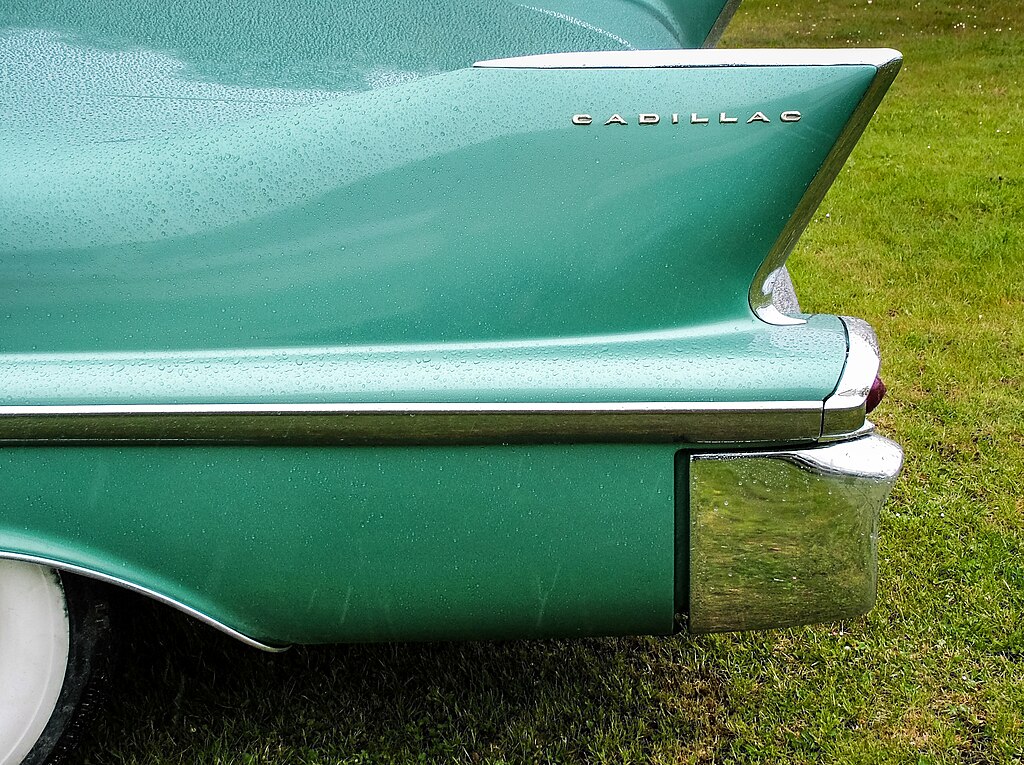

They soared into automotive legend, transforming cars from mere transportation into rolling sculptures. Cadillac’s tail fins defined an era of American optimism and continue to captivate collectors today.
From Aircraft to Automobiles
Few automotive design elements capture the optimism and exuberance of 1950s America quite like Cadillac’s tail fins. What began as a subtle aeronautical inspiration transformed into one of the most recognizable automotive styling features of the 20th century, forever changing how we think about car design.
The Origins of Fins
The story begins in 1948, when GM’s legendary design chief Harley Earl took inspiration from the Lockheed P-38 Lightning fighter plane. The 1948 Cadillac debuted with small, elegant fins that would grow increasingly dramatic over the next decade. These initial fins weren’t mere decoration – they were designed to provide stability at higher speeds, much like their aircraft counterparts.
The Golden Age
By 1954, Cadillac’s fins had evolved from subtle hints to bold statements. The 1954 Eldorado showcased more pronounced fins that would set the stage for what was to come. But it was the 1959 Cadillac Eldorado that took fin design to its zenith. Standing at an impressive 42.4 inches from ground to fin tip, these chrome-laden spears defined an era of American automotive excess and innovation.
Notable Fin Milestones
- The 1948 Cadillac Series 62 introduced the first modest fins, inspired by the P-38 Lightning aircraft
- The 1954 Eldorado Biarritz brought a more dramatic, swooping fin design that captured public imagination
- The 1957 Eldorado Brougham featured stainless steel fins with integrated tail lights
- The legendary 1959 Cadillac Eldorado reached peak fin height at 42.4 inches
- The 1960 Series 62 began the gradual reduction in fin size, marking the end of an era
Engineering Behind the Style
The engineering behind these fins was more sophisticated than many realize. Cadillac designers spent countless hours in wind tunnels, testing various fin configurations. While their aerodynamic benefits may have been modest, they did contribute to high-speed stability and helped channel air flow over the vehicle’s rear end.
Industry-Wide Impact
These iconic design elements influenced competitors across the industry. Chrysler, Plymouth, and even European manufacturers like Mercedes-Benz experimented with their own fin designs. The trend peaked in the late 1950s, with nearly every American manufacturer incorporating some version of tail fins into their designs.
Modern Legacy
The legacy of Cadillac’s fins extends beyond their era. They represented American automotive design’s ability to capture the cultural zeitgeist – in this case, the nation’s fascination with jet age technology and space exploration. Modern car design still shows traces of this influence, though in more subtle ways. The upswept character lines on many contemporary luxury vehicles pay quiet homage to this bold styling experiment.
While the era of dramatic fins eventually gave way to new design trends, their impact on automotive styling cannot be overstated. They remind us that car design at its best isn’t just about transportation – it’s about capturing dreams and turning them into sheet metal reality.
Love classic cars? Join our passionate community of enthusiasts at Classic Cars Online US: Classic Cars for Sale on Facebook. Share your stories, find your next dream car, and connect with fellow collectors who understand the allure of automotive history.