

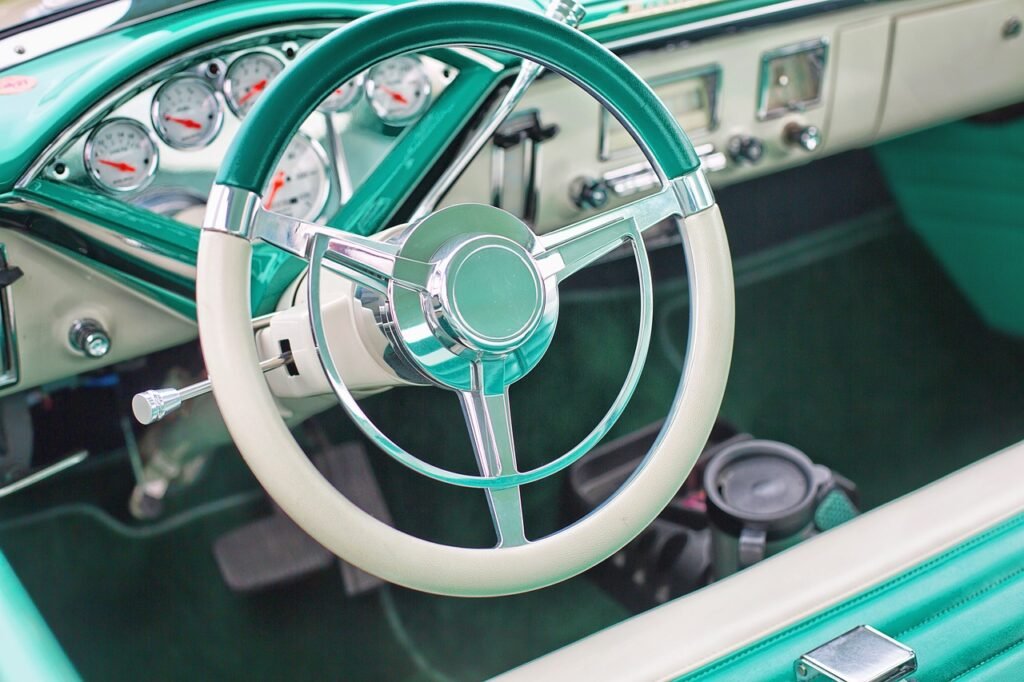
In 1951, Chrysler quietly revolutionized driving with an innovation we now take for granted. Here’s how power steering transformed the automotive landscape forever.
A Turning Point in Automotive History
When Chrysler introduced “Hydraguide” power steering on its 1951 Crown Imperial, it didn’t just make parking easier – it revolutionized the entire driving experience. This innovation, while often overlooked in automotive history, marks a crucial turning point in making cars more accessible and enjoyable to drive.
Key Benefits of Hydraguide Power Steering
- Reduced steering effort by up to 75% compared to manual steering systems
- Variable assistance that adjusted based on vehicle speed for better control
- Decreased driver fatigue on long journeys and in city traffic
- Made large luxury cars accessible to a broader range of drivers
- Enabled new front-end designs focused on aerodynamics rather than leverage
- Improved safety through more precise steering control
The Challenge of Manual Steering
Before power steering, maneuvering a heavy luxury car required significant upper body strength. The 1951 Crown Imperial, weighing over 4,500 pounds, demanded considerable effort to turn at low speeds. Chrysler’s engineers, led by the brilliant Francis W. Davis, developed a hydraulic system that would reduce steering effort by up to 75%.
How Hydraguide Worked
The Hydraguide system worked through a hydraulic pump driven by the engine’s accessory belt. This pump provided pressurized fluid to assist the steering gear, making it possible to turn the wheel with just a few pounds of effort instead of the previous 30+ pounds. The system was so well-designed that its basic principles still underpin modern power steering systems.
Progressive Innovation
What made Chrysler’s innovation particularly remarkable was its progressive action. The amount of power assist varied with vehicle speed – providing maximum assistance at parking speeds while maintaining good road feel at highway speeds. This feature, revolutionary for its time, is now standard in all power steering systems.
Industry-Wide Adoption
The impact on the automotive industry was immediate and lasting. By 1956, over 80% of American cars offered power steering as an option. The technology made cars more appealing to a broader range of drivers, particularly women, who had historically been deterred by the physical demands of driving large vehicles.
Legacy and Modern Impact
Chrysler’s Hydraguide system also influenced safety and vehicle design. With power steering, manufacturers could use higher gear ratios for more precise control, and front ends could be designed with more emphasis on aerodynamics rather than steering leverage. The reduction in driver fatigue also contributed to safer long-distance driving.
Today’s electronic power steering systems may seem far removed from the original Hydraguide, but they follow the same fundamental principle: using power assistance to enhance the connection between driver and road. Chrysler’s 1951 innovation set the standard for all that followed, proving that sometimes the most revolutionary changes are the ones we take for granted.
Passionate about classic cars? Join our thriving community at Classic Cars Online US: Classic Cars for Sale on Facebook. Connect with fellow enthusiasts, share your restoration stories, and discover your next automotive treasure.