
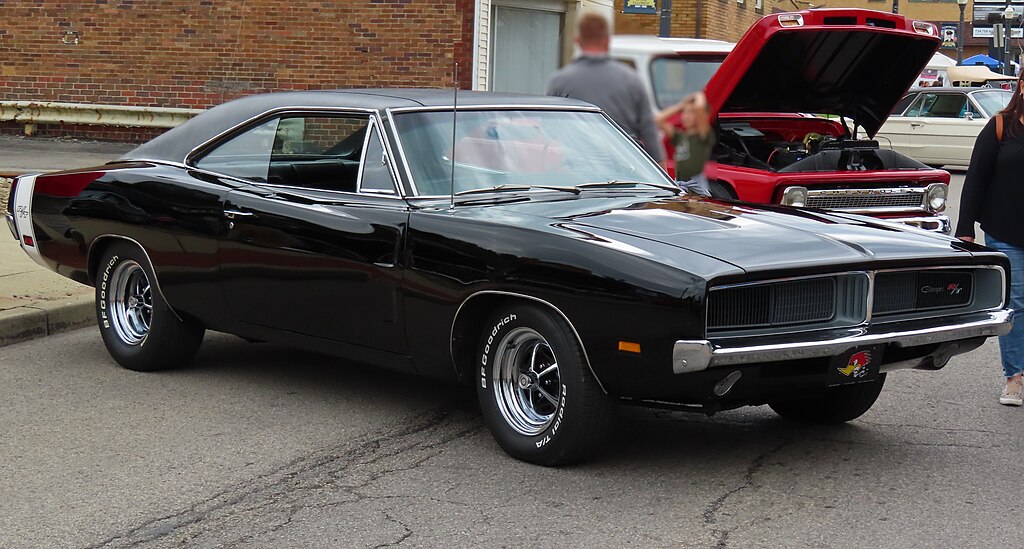
A Design Revolution
If you thought the first-generation Dodge Charger made waves in the automotive world, buckle up. The second-generation Dodge Charger, produced from 1968 to 1970, wasn’t just an evolution – it was a revolution that helped define the golden age of muscle cars.
While its predecessor introduced us to the Dodge Charger line, the second generation completely reimagined what a muscle car could be. Gone was the fastback roofline of the first gen, replaced by a sleeker “coke bottle” styling that would become instantly recognizable and highly influential in automotive design.
Power Under the Hood
This wasn’t just about looks, though. Under that sculpted hood, Dodge offered an impressive lineup of engines. From the base 318 cubic inch V8 to the legendary 426 Hemi (affectionately known as the “elephant motor” due to its size and power), there was a Charger for every kind of performance enthusiast. The R/T (Road/Track) package, introduced in this generation, became the go-to choice for serious performance fans, offering either the 440 Magnum or the aforementioned Hemi.
Notable Second-Gen Charger Models
Some of the most memorable Charger variants from this era include:
- The 1969 Bullitt Charger: This menacing black R/T became a Hollywood legend, starring in what many consider cinema’s greatest car chase. Its high-speed duel with Steve McQueen’s Mustang through San Francisco’s streets showcased both the car’s capabilities and its screen presence.
- The 1969 Charger Daytona: A NASCAR icon that broke the 200 mph barrier, featuring its distinctive nose cone and towering rear wing. While its looks were controversial, its track performance was undeniable, making it a pivotal part of racing history.
- The 1970 Charger R/T: The final year of the second generation brought refined styling and continued the high-performance tradition, representing the peak of classic muscle car development before changing regulations began to impact performance.
Interior Comfort and Style
Inside, the second-gen Charger offered a blend of comfort and sportiness. The distinctive four-pod instrument panel and optional center console created an environment that made every drive feel special. Whether you were cruising Main Street on Saturday night or heading to the drag strip on Sunday, you were doing it in style.
Legacy and Collectibility
Today, second-generation Chargers are among the most sought-after muscle cars of their era, and for good reason. They represent the perfect combination of style, performance, and historical significance that classic car enthusiasts love.
Join the Conversation
Want to join the conversation about these incredible machines? Come be part of our community in the Classic Cars Online US: Classic Cars for Sale Facebook group. Whether you own a Charger, are looking to buy one, or just appreciate these magnificent machines, we’d love to hear your story and share experiences with fellow enthusiasts.
Also, if you’re seeing this on NewsBreak, please be sure to like the post and Follow the Classic Cars Online US NewsBreak Feed so you’ll see each post as soon as it comes out!