
In the ever-evolving landscape of American automotive design, the second-generation Dodge Polara stands as a fascinating study in transition. Marking a decisive shift from the flamboyant fins of the 1950s to a more modern, squared-off aesthetic, this full-size Dodge would help define the changing tastes of the early 1960s.
Historical Context
The early 1960s represented a period of rapid change for Chrysler Corporation. Under the continued direction of styling chief Virgil Exner, the second-generation Polara emerged amid controversy. The rushed downsizing of the 1962 models stemmed from a misinterpreted rumor about GM’s plans, a decision that would significantly impact the car’s market position and sales performance. Despite this challenging start, the Polara would prove itself a worthy contender in the full-size car market, offering a compelling mix of style, performance, and innovation.
Design Evolution
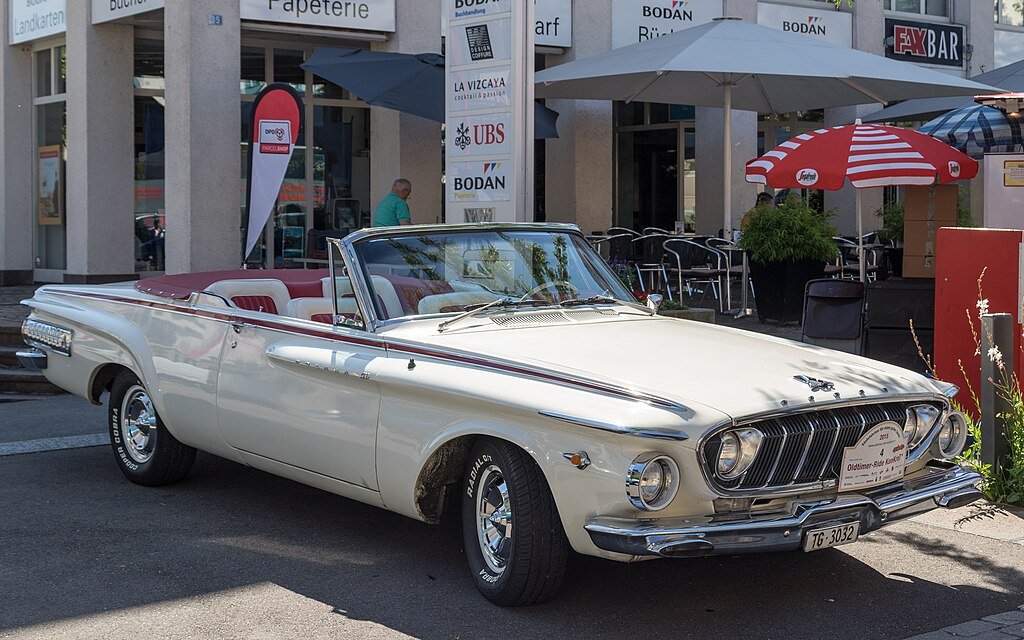
The Polara’s exterior design represented a clean break from its predecessor, embracing a more modern aesthetic that would influence Chrysler’s design language throughout the decade. The most distinctive feature was the controversial “reverse-slant” rear window, an innovative design that reduced glare and heat while creating a unique silhouette. While some critics initially derided it as awkward, the design actually improved rear passenger headroom and established a distinctive appearance that set the Polara apart from its competitors.
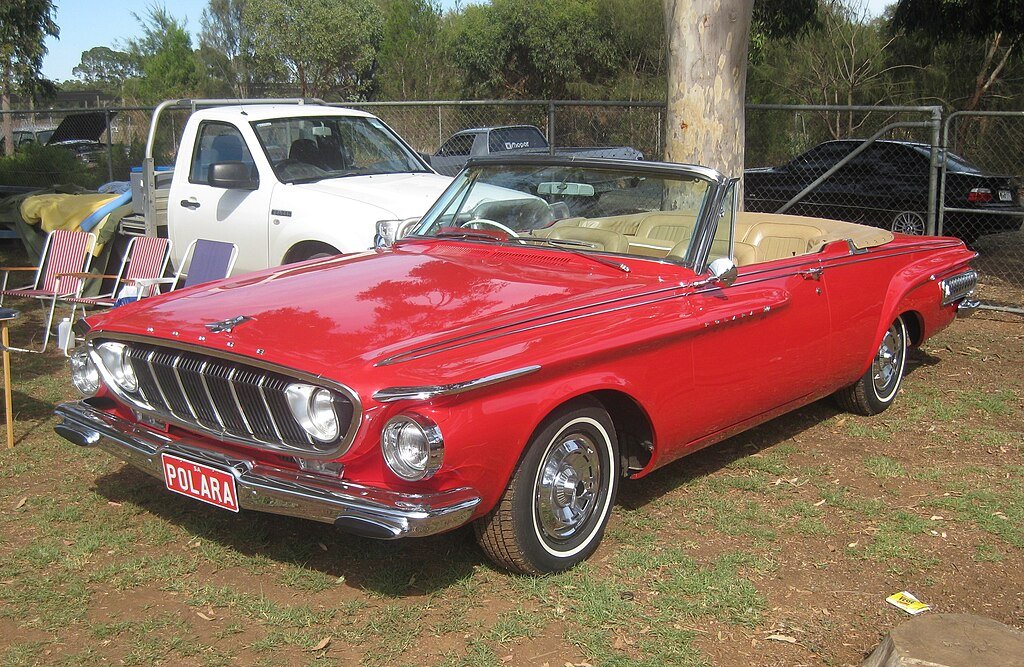
The front end featured dual headlights integrated into a wide, horizontal grille that emphasized the car’s width. Chrome treatment was more restrained than in previous years, with elegant horizontal bars creating a sophisticated, upmarket appearance. Along the sides, sculptured panels featured subtle character lines running the length of the car, with a slight concave section below the beltline breaking up the slab-sided look common to many competitors.
Color and Trim Options
Dodge offered the Polara in a carefully curated palette of colors designed to appeal to a broad range of buyers. Solid colors included”
- Polar White (code P)
- Black (code B)
- Cherry Red (code R)
- Embassy Blue (code EB)
- Each finished with multiple layers of paint and clear coat for exceptional durability.
For those seeking more visual interest, metallic finishes like:
- Silver Gray Metallic (code SG)
- Midnight Blue Metallic (code MB)
- Copper Metallic (code CM)
- Incorporated aluminum particle technology that created stunning effects under different lighting conditions.
Special order colors such as Desert Tan (code DT) and Forest Green (code FG) offered exclusivity for discerning customers.
Interior options were equally thoughtful. Standard vinyl upholstery came in:
- Black
- Blue
- Red
- Tan
- Featuring heavy-gauge material with detailed grain patterns mimicking leather.
These materials were specially formulated for durability and UV resistance. Premium cloth options showcased intricate brocade patterns, with the 1963 models featuring particularly elaborate designs incorporating metallic threads. Two-tone combinations on premium trim levels created sophisticated environments, with popular pairings including black with red accents and blue with silver trim.
Technical Specifications and Engineering
The Polara’s mechanical specifications reflected Dodge’s commitment to offering something for everyone, from economical family transportation to high-performance capability. The base powerplant was a 318 cubic inch (5.2L) V8 producing 230 horsepower, featuring hydraulic lifters for quiet operation and minimal maintenance. This reliable engine became the volume seller, offering an excellent balance of power and economy.
For those seeking more performance, the 361 cubic inch (5.9L) V8 generated 265 horsepower, featuring dual exhaust and chrome valve covers. The 383 cubic inch (6.3L) V8 stepped up to 305 horsepower, equipped with a four-barrel carburetor and performance camshaft. At the top of the range, the mighty 413 cubic inch (6.8L) Max Wedge produced up to 420 horsepower, featuring cross-ram induction and dual four-barrel carburetors.
All engines could be paired with either a standard three-speed manual transmission featuring synchronized gears, the excellent TorqueFlite automatic, or (in limited numbers) a four-speed manual transmission with a Hurst shifter. The TorqueFlite, in particular, earned praise for its smooth operation and exceptional durability.
The Polara’s unibody construction represented a major advance in structural rigidity and manufacturing efficiency. This design eliminated the separate frame, reducing weight while improving handling and crash safety. The suspension system combined Chrysler’s signature torsion bar front suspension with a multi-leaf rear setup. The torsion bars provided excellent handling and adjustability, while staggered rear shock absorbers controlled axle wrap under acceleration. Optional power steering used a constant-control pump that provided good road feel, and the optional power brakes featured a dual-chamber master cylinder for improved safety.
Market Position and Racing Heritage
In the competitive full-size car market of the early 1960s, the Polara faced stiff competition from Ford’s Galaxie and Chevrolet’s Impala. Despite the challenges presented by its controversial downsizing, the Polara carved out a distinct niche, particularly appealing to performance-minded buyers and fleet operators. Police departments valued its robust construction and powerful engine options, while taxi operators appreciated its durability and reasonable operating costs.
The Polara’s racing heritage proved particularly significant during this period. In NASCAR competition, the car demonstrated remarkable capabilities, especially when equipped with the 413 Max Wedge engine. The 1963 season saw multiple victories, with drivers praising the car’s stability at high speeds and excellent power delivery. This success helped establish Dodge’s performance credentials in the years leading up to the muscle car era, paving the way for later legends like the 426 Hemi.
Model Year Evolution
1962: The Revolutionary First Year
The initial release of the second-generation Polara represented a bold departure from its predecessor. Beyond the controversial downsizing, the car introduced several innovative features. The unibody construction, while challenging for manufacturing, provided superior rigidity and handling characteristics. The reverse-slant rear window, though polarizing, offered practical advantages in terms of reduced glare and improved ventilation. Interior appointments were notably luxurious, with deep-pile carpeting and premium vinyl upholstery standard on higher trim levels.
1963: Refinement and Enhancement
For 1963, Dodge addressed early criticisms while building on the Polara’s strengths. The front grille received a more sophisticated treatment, with finer horizontal bars and redesigned headlight surrounds. Interior options expanded to include new premium cloth materials, including the distinctive metallic-thread brocades. The engine lineup gained refinements, with improved carburetion on V8 models and enhanced cooling systems for high-performance versions.
1964: The Culmination
The final year of the second generation represented the most refined version of this design. Modified tail lamps featured a more integrated appearance, while additional bright trim options allowed for greater personalization. Interior comfort improved with redesigned seats offering better support and durability. The gauge cluster received updated graphics and improved nighttime illumination. Most significantly, the 426 Wedge engine became available late in the model year, previewing the performance advances that would come with the third generation.
Collecting and Restoration
Today, the second-generation Polara represents an increasingly attractive collector vehicle, offering a unique combination of style, performance, and historical significance. Values vary significantly based on body style and powertrain configuration, with two-door hardtops and convertibles commanding premium prices, especially when equipped with high-performance engines.
Restoration Considerations
Restoring a second-generation Polara requires careful attention to several key areas. The unibody construction, while providing excellent structural rigidity, can present challenges in rust repair. Critical areas include the torque boxes, front fender mounting points, and rear spring perches. Proper repair requires specialized skills and often involves fabricating replacement sections, as some structural components are no longer readily available.
Interior restoration benefits from improving reproduction part availability, though some trim pieces remain challenging to source. The distinctive upholstery patterns, particularly in premium models, often require custom reproduction by specialized vendors. Electrical systems generally prove reliable but benefit from systematic upgrading of grounds and connections during restoration.
Mechanically, these cars enjoy excellent parts support through the broader Mopar community. Engine and transmission components remain readily available, though some Max Wedge-specific parts command premium prices. The torsion bar suspension system usually responds well to rebuilding, with new components available to restore factory ride height and handling characteristics.
Legacy and Influence
The second-generation Polara occupies a unique place in automotive history, representing both the end of one styling era and the beginning of another. Its clean lines and emphasis on performance over flash helped establish design themes that would influence American cars throughout the 1960s. The controversial downsizing, while initially challenging, proved prescient as American cars generally became more efficiently packaged in subsequent years.
In technical terms, the Polara’s unibody construction and refined suspension geometry established standards for full-size car handling and refinement. The various powertrains, particularly the Max Wedge variants, contributed significantly to Dodge’s performance image, laying groundwork for the muscle car era that would follow.
Let’s Chat
The second-generation Polara community remains active and engaged, with owners and enthusiasts sharing information, parts, and restoration tips through various clubs and online forums. Whether you’re a current owner, prospective buyer, or simply an enthusiast of this unique period in American automotive history, numerous resources exist to support your interest.
Join the Classic Cars Online US Facebook group where we encourage readers to share their own Polara stories and experiences. Are you currently restoring one of these distinctive automobiles? Have memories of one in your family? The ongoing documentation of these cars’ histories helps preserve their legacy for future generations of enthusiasts.
By: Laure Justice