
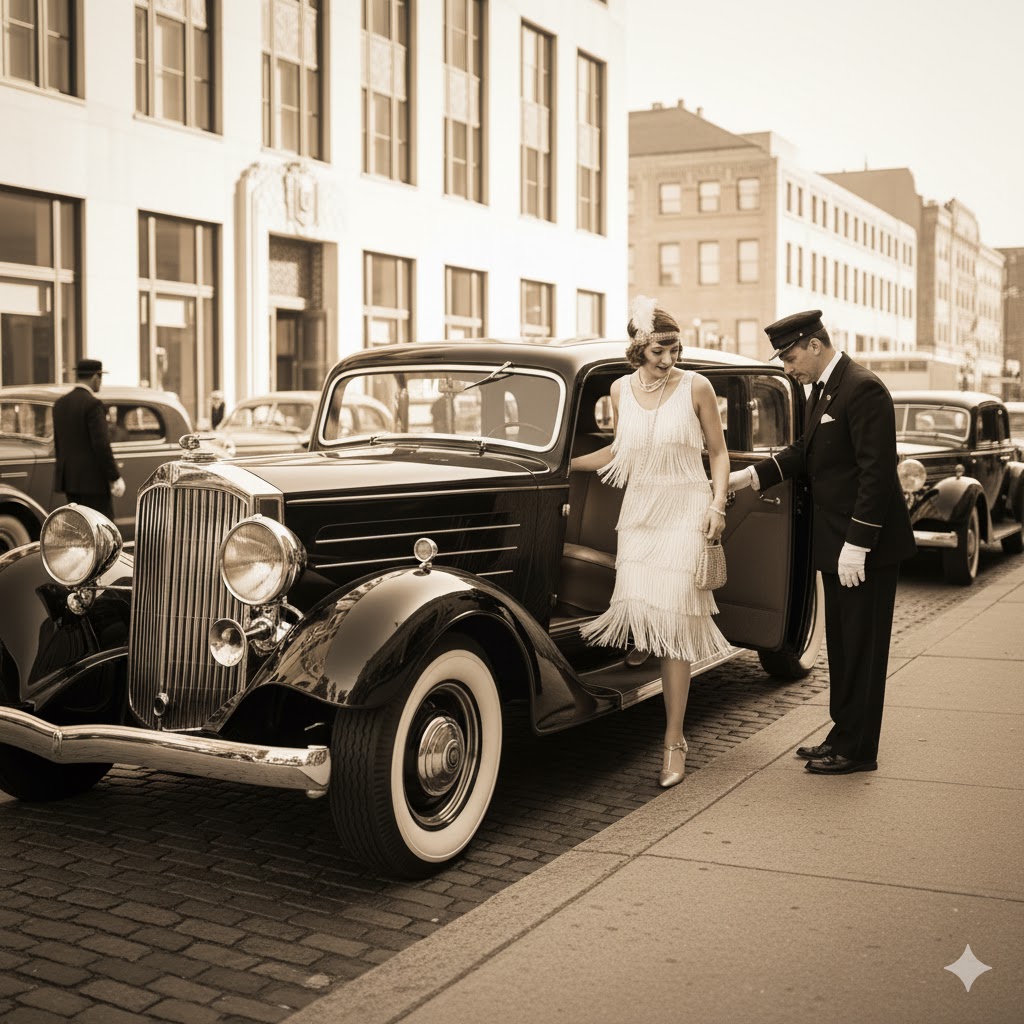
In 1929, Packard stood at the height of its prestige, crafting automobiles that defined American luxury. The Packard 8 Limousine was among the finest examples of that reputation—an elegant, commanding vehicle that combined engineering excellence with refined comfort. Long, sleek, and beautifully balanced, it carried an unmistakable sense of presence. The distinctive grille, gracefully arched fenders, and elongated silhouette were designed not only to impress but to symbolize stability and sophistication in an era that prized both.
Beneath its refined exterior, the Packard 8 was powered by a straight-eight engine producing around 90 horsepower, a notable advancement over the six-cylinder engines found in many luxury competitors of the time. That engine provided exceptionally smooth performance and quiet operation—qualities that appealed deeply to Packard’s affluent clientele. Coupled with a sturdy three-speed manual transmission and mechanical four-wheel brakes, the Packard 8 Limousine delivered a driving experience that felt both controlled and dignified.
Inside, every detail was designed for comfort and exclusivity. The interior featured plush mohair upholstery, polished wood trim, and a partition separating the chauffeur’s compartment from the passenger cabin. Window shades, footrests, and folding jump seats added an extra touch of refinement for those who preferred to be driven rather than drive. The attention to craftsmanship was meticulous—Packard used only the finest materials, ensuring that every surface looked and felt luxurious. The brand’s slogan, “Ask the Man Who Owns One,” wasn’t just advertising—it was a point of pride for owners who knew they were driving the very best.
The Golden Era of Packard
The late 1920s were a period of extraordinary success for Packard. In 1929, the company offered a diverse lineup including the Standard Eight, Custom Eight, and the high-performance Speedster models, all sharing the same engineering integrity that had made the brand famous. Each vehicle was built by hand, with fit and finish that rivaled the finest European marques. Packard’s Detroit factory—one of the most advanced in the world at the time—combined precision manufacturing with old-world craftsmanship, creating vehicles that appealed to America’s elite.
Packard’s customers were industrialists, bankers, film stars, and diplomats who wanted not just a car, but a statement. At a time when automobiles were still evolving from utilitarian machines into symbols of personal success, Packard offered something unmatched: reliability wrapped in elegance. The brand’s reputation for excellence was so strong that it became a cultural marker of wealth and good taste.
Luxury in a Time of Change
The year 1929, however, was also one of dramatic contrast. The stock market crash in October signaled the beginning of the Great Depression, which would reshape the American economy and challenge even the strongest companies. Despite this, Packard’s dedication to quality allowed it to endure when many luxury automakers did not. During the early 1930s, the company introduced more affordable models without compromising its signature craftsmanship, allowing it to retain a loyal customer base while adapting to the new economic reality.
While competitors like Pierce-Arrow and Peerless faded, Packard managed to remain profitable through much of the Depression. This resilience came from its ability to balance exclusivity with adaptability. The company maintained its high-end line while also offering vehicles that brought the Packard name within reach of a broader audience. Even in lean years, a Packard still represented refinement and success.
Engineering Influence and Lasting Legacy
The 1929 Packard 8 Limousine also marked a turning point in automotive design and engineering. Its straight-eight engine set a standard for smoothness that would influence other luxury manufacturers for years. Cadillac, Lincoln, and even European automakers began focusing more heavily on engine refinement and ride comfort, recognizing that these were the qualities that defined true luxury.
Packard’s engineering innovations went beyond powertrains. Its mechanical brake system, advanced for its time, offered better stopping performance and improved safety. The suspension design helped deliver a smooth, stable ride—crucial in an era when most roads were still uneven and unpaved. These features reinforced Packard’s reputation not only as a luxury automaker but as a pioneer of precision engineering.
1929 Packard 8 Limousine Specifications (Quick Reference)
Manufacturer: Packard Motor Car Company, Detroit, Michigan
Model Year: 1929
Series: Seventh Series Packard Eight
Engine: Inline 8-cylinder, L-head
Displacement: 320 cubic inches (5.2 liters)
Horsepower: Approximately 90 hp @ 3,200 rpm
Transmission: 3-speed manual, floor-shift
Brakes: 4-wheel mechanical drum brakes
Wheelbase Options: 140.5 inches (Standard Eight) / 145.5 inches (Custom Eight)
Body Styles: Limousine, Sedan, Coupe, Touring Car, Convertible Coupe, Roadster
Weight: Around 4,600–5,000 lbs (depending on body style)
Price When New: $3,150–$4,300 (approximate, depending on configuration)
Top Speed: Around 75 mph (impressive for the era)
Notable Features:
- Handcrafted coachbuilt bodies with custom interior trim options
- Partitioned rear compartment with jump seats in limousine configuration
- Mohair upholstery, wood accents, and fine detailing throughout
- Packard’s famous “Goddess of Speed” or “Adonis” radiator mascot
- Smooth, quiet performance with exceptional ride quality for its time
Packard’s Place in Automotive History
By the end of the 1930s, Packard’s influence could be seen across the entire luxury market. Its elegant styling, mechanical sophistication, and commitment to craftsmanship set benchmarks that other automakers sought to match. Even as the company evolved through the mid-20th century, the cars of the late 1920s and early 1930s remained symbols of its golden age.
The 1929 Packard 8 Limousine, in particular, continues to captivate collectors and enthusiasts today. Restored examples highlight the artistry of the era—glossy lacquer finishes, stately chrome accents, and interiors that evoke the quiet dignity of early American luxury. These cars are prized not only for their rarity but for the quality of their construction; when maintained properly, many still run with the same smoothness and strength they offered nearly a century ago.
A Timeless Expression of Elegance
Owning or even seeing a 1929 Packard 8 Limousine today is like stepping back into an era when automobiles were crafted as works of art. Each car told a story of success and style, designed for those who valued excellence above all else. Packard’s blend of innovation, beauty, and precision made it the most respected name in American luxury before the war—and its legacy continues to inspire admiration from collectors and historians alike.
Though time has moved on, the spirit of the Packard 8 Limousine remains timeless. It represents the optimism, craftsmanship, and sense of achievement that defined the late 1920s—an era when owning a Packard meant you truly had arrived.