

I’ve always been particularly drawn to the first and second-generation Dodge Chargers. There’s something about those early models that just stops me in my tracks every time I see one. I love it when I spot a ’66 or ’67 at a car show – that revolutionary fastback design with those hidden headlights created a presence that, in my opinion, was unmatched in its era. Every time I get to see one up close, opening those doors to reveal those four bucket seats and that full-length console, I’m struck by how unique these cars really were.
Personal Note on Early Dodge Charger Design
The ’68-’70 models hold an equally special place in my heart. That “Coke bottle” styling is, to my eye, pure automotive artistry. The way the body curves in at the middle and then flares out again at the wheels creates this sense of contained energy, like the car is ready to pounce. While I appreciate all generations of the Charger, these early models, with their perfect blend of elegance and aggression, represent what I consider to be some of the finest automotive design work of the muscle car era.
Dodge Charger Overview — Through the Generations
The Dodge Charger stands as one of the most recognizable names in American automotive history, representing over five decades of muscle car evolution. From its birth in the golden age of muscle cars to its modern incarnation as a high-performance sedan, the Charger’s story is one of constant reinvention while maintaining its core identity as a powerful, bold American vehicle.
Key Dodge Charger Innovations Through the Years
- First-ever muscle car with hidden headlights and full-width grille (1966)
- Pioneer of the “Coke bottle” styling that defined late ’60s American performance (1968)
- First American production car to feature a rear-facing camera (2006)
- Introduction of the supercharged Hellcat, revolutionizing modern muscle car performance (2015)
First Generation Dodge Charger (1966-1967): The Birth of a Legend
The original Charger emerged during the peak of America’s muscle car era, introducing a distinctive fastback design that would influence automotive styling for years to come. Based on the Chrysler B platform, this first iteration transformed Dodge’s image with its unique features, including a full-width grille that concealed retractable headlights and an interior that showcased four individual bucket seats with a full-length console.
While the base 318 cubic inch V8 provided adequate performance, I feel it was the optional 426 Hemi that established the Charger’s performance credentials.
Notable First-Gen Dodge Charger Features:
- Electrically operated hidden headlights
- Full-width radiator grille
- Four bucket seats with fold-down rear seats
- Full-length center console
- Distinctive full-width taillights
Available First-Gen Dodge Charger Engines:
- 230hp 318 V8 (base)
- 325hp 383 V8
- 425hp 426 Hemi
- 365hp 440 Magnum
Second-Generation Dodge Charger (1968-1970): The Golden Age
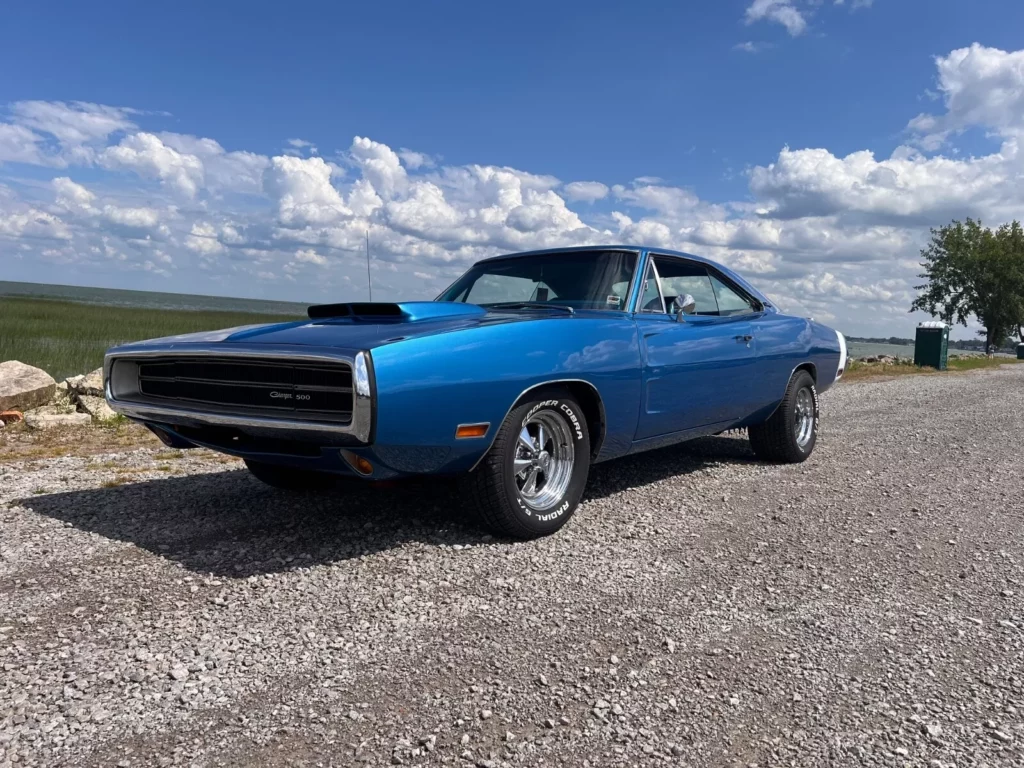
Perhaps the most iconic of all Dodge Charger designs, the second generation introduced the beloved “Coke bottle” styling that would define late ’60s muscle cars. This era gave us the legendary R/T (Road/Track) performance package and the aero-warrior Dodge Charger Daytona.
The 1968-1970 Dodge Charger reached pop culture immortality through appearances in various films and TV shows, most notably as the menacing black car in “Bullitt” and the General Lee in “The Dukes of Hazzard.”
The introduction of the 440 Six Pack and continued availability of the 426 Hemi cemented this generation’s reputation for exceptional performance.
Iconic Second-Gen Dodge Charger Special Editions:
- 1969 Dodge Charger Daytona
- 18-inch nose cone
- 23-inch tall rear wing
- Only 503 units produced
- First stock car to break 200 mph
- 1970 Dodge Charger R/T
- Distinctive “bumble bee” stripes
- High-impact color options
- Optional 426 Hemi engine
- 1969 Dodge Charger 500
- Flush-mounted grille
- Modified rear window
- NASCAR homologation special
Third Generation Dodge Charger (1971-1974): The Luxury Evolution
As the muscle car era began to wane, the third generation of the Dodge Charger evolved into a more luxurious personal coupe. The third generation maintained impressive styling with a split grille design and a semi-fastback roofline but shifted focus toward comfort and refinement.
The third-gen Dodge Charger SE (Special Edition) trim level introduced upscale features like a vinyl roof and leather interior. While still available with powerful engines early in this generation, increasing emissions regulations and the oil crisis gradually shifted priorities away from pure performance.
Third-Gen Dodge Charger Design Changes:
- Split grille design
- Modified split taillight design
- More pronounced hood bulge
- Optional vinyl roof treatments
- New “fuselage” body styling
Fourth Generation Dodge Charger (1975-1978): The Personal Luxury Era
The fourth-generation Dodge Charger shared its platform with the Chrysler Cordoba, fully embracing the personal luxury coupe market. While this represented a significant departure from its muscle car roots, it reflected changing consumer preferences of the late 1970s. This generation offered features like optional T-tops and plush interiors, though performance was notably reduced compared to earlier models.
Premium Fourth-Gen Dodge Charger Features Added:
- Opera windows
- Available T-top roof
- Corinthian leather interior
- Power windows and locks
- Landau vinyl roof options
Fifth Generation (1982-1987): The Front-Wheel Drive Experiment
After a brief hiatus, the Dodge Charger name returned for a fifth generation on a front-wheel-drive compact car based on the Dodge Omni platform. While radically different from its predecessors, this generation still maintained a performance focus through models like the Shelby Charger.
Though controversial among purists, this ‘kinda cute’ iteration of the Charger demonstrated the nameplate’s adaptability to changing market conditions and fuel efficiency requirements.
Fifth-Gen Dodge Charger Performance Variants:
- Shelby Charger
- Charger GLHS
- Carroll Shelby Edition
- Turbo packages
Modern Era Dodge Charger (2006-Present): The Four-Door Revolution
The Dodge Charger’s return in 2006 marked a bold reimagining of the muscle car concept, introducing a four-door sedan format while maintaining strong visual links to its heritage. This modern interpretation successfully translated classic Dodge Charger design elements into a contemporary performance sedan.
The current generation continues to uphold the Dodge Charger’s performance legacy through various models, from the practical V6 versions to the tire-shredding Hellcat variants producing over 700 horsepower.
Modern Dodge Charger Performance Milestones:
- SRT8 introduction (2006)
- 392 HEMI debut (2012)
- Hellcat launch (2015)
- Redeye variant (2021)
Dodge Charger Design Evolution Through the Decades
Throughout its history, the Dodge Charger’s design has continuously evolved while maintaining certain signature elements that define its character. Each generation brought its own interpretation of muscle car styling, from the original fastback to today’s aggressive sedan profile.
The evolution of the Dodge Charger’s design tells the story of American automotive styling trends, from the excesses of the muscle car era through the formal luxury period to today’s blend of heritage and modern aesthetics.
Signature Dodge Charger Design Elements:
- Hidden headlights (1966-1970)
- Distinctive grille treatments
- Muscular rear haunches
- Fastback roofline (1966-1974)
- Full-width taillights
Notable Dodge Charger Design Chiefs:
- Carl Cameron (First Generation)
- Richard Sias (Second Generation)
- Bill Brownlie (Third Generation)
- Ralph Gilles (Modern Era)
Special Editions That Defined the Dodge Charger
The Dodge Charger’s history is punctuated by numerous special editions that pushed the boundaries of performance and style. These limited-production models often introduced innovations that would later appear on regular production models, while others remained unique collectors’ items that captured the imagination of enthusiasts.
Dodge Charger Racing Specials:
- 1969 Daytona
- 1969 Charger 500
- 2006 Charger Super Bee
- 2017 Daytona 392
Dodge Charger Performance Packages:
- R/T (Road/Track)
- Scat Pack
- SRT (Street Racing Technology)
- Hellcat
- Redeye
- Jailbreak
Dodge Charger Commemorative Editions:
- 50th Anniversary Edition (2016)
- Stars & Stripes Edition (2019)
- Last Call editions (2023)
The Dodge Charger’s Legacy and Impact
Throughout its various incarnations, the Dodge Charger has remained a significant part of American car culture. Each generation reflects its era’s automotive priorities while maintaining connections to the nameplate’s performance heritage. From pure muscle car to luxury cruiser to modern performance sedan, the Charger’s ability to evolve while maintaining its core appeal has ensured its place in automotive history.
The Charger’s influence extends beyond mere transportation, having shaped popular culture through numerous film and television appearances, racing successes, and its role in the broader muscle car movement. As Dodge prepares for the future, the Charger continues to demonstrate how classic American performance can adapt to changing times while maintaining its essential character.
Stay Connected with Classic Cars Online US
Love classic cars? Don’t miss any of our upcoming deep dives into automotive history. Follow Classic Cars Online US on NewsBreak to have all our latest articles, news stories, and classic car profiles delivered directly to your news app. From detailed model histories like this Charger overview to restoration guides and classic car market insights, we’ve got your passion for automotive history covered.