
A Complete Guide to Safe Muscle Car Transport
Originally published 4/7/2016| Updated 9/29/2026
Whether you’re headed to a car show, moving across the country, or bringing home a project car you just bought, hauling a muscle car takes more planning than moving an everyday vehicle.
These classic cars are heavy, often low to the ground, and usually worth far more than their sticker price suggests. The right transport choice keeps your paint, undercarriage, and drivetrain exactly as you left them.
This guide covers how to choose a transport method, decide between hiring a pro and doing it yourself, and prep your car so it arrives in the same condition it left.
Open vs. Enclosed Transport: Which Is Right for Your Muscle Car?
The first decision is how your car travels.
Open carriers are the multi-car haulers you see on the interstate. They’re the most common and usually the most affordable option. Your car is exposed to weather, road debris, and dust, but for a daily-driven or well-insured car on a short trip, many owners consider that an acceptable risk.
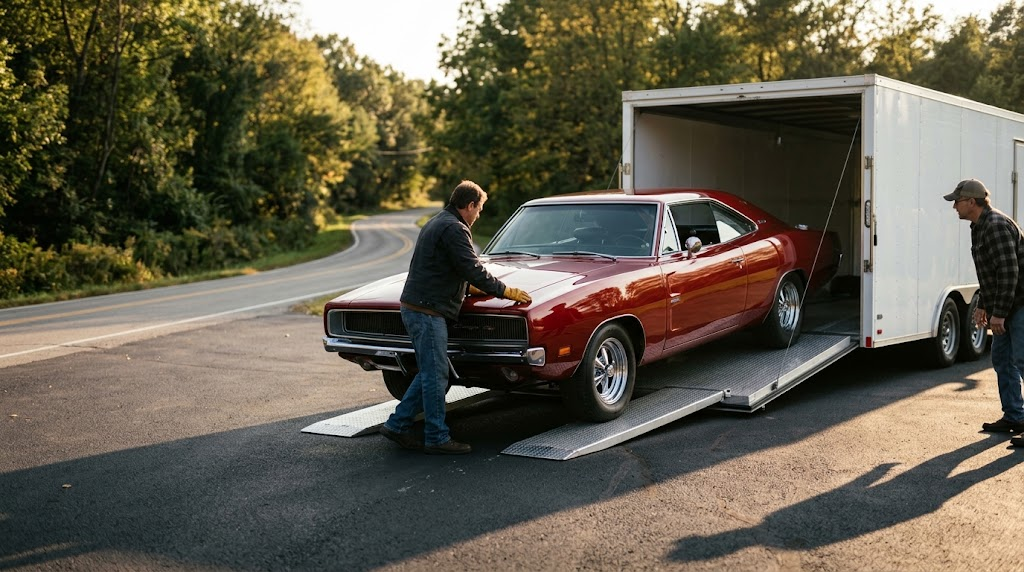
Enclosed carriers wrap your car in a covered trailer, shielding it from rain, hail, sun, rock chips, and prying eyes. They typically cost noticeably more, but for a numbers-matching classic, a fresh paint job, a rare trim package, or a show car, the extra cost is usually worth it. Many enclosed carriers also use soft straps and liftgates, which are gentler on low-slung cars.
A quick rule of thumb: if a rock chip or a week of road grime would make you wince, go with enclosed transportation.
Choosing the Right Trailer or Carrier Equipment
If you’re moving the car yourself, or vetting a hauler’s equipment, the type of trailer matters a great deal.
Car Trailers vs. Tow Dollies
A car trailer carries all four wheels off the ground. A tow dolly lifts only the front wheels and leaves the rear wheels rolling on the pavement.
For most muscle cars, a full trailer is the better choice. Classic muscle is overwhelmingly rear-wheel drive, and towing a rear-drive car on a dolly means the rear wheels spin on the road, which can wear on the drivetrain unless you disconnect the driveshaft. Dollies are really designed for front-wheel-drive vehicles. A full trailer also avoids stressing the steering and suspension, and it’s far kinder to a car with older, tired components.
Open Flatbed, Enclosed Trailer, or Hydraulic Liftgate?
- Open flatbed or car-hauler trailer: Affordable and widely available; fine for short trips.
- Enclosed trailer: Protects against weather and theft; ideal for valuable cars.
- Hydraulic liftgate or low-angle ramps: Important for cars with low front air dams, lowered suspension, or long overhangs. Steep ramps can scrape or crack bumpers, splitters, and exhaust.
Hiring a Professional Car Transporter
For long distances or valuable cars, most owners hire a professional. Here’s how to find a good one.
Carrier vs. Broker
A carrier owns the trucks and drives your car. A broker arranges the shipment by matching your job with an independent carrier. Brokers can widen your options and save you time, but you should know which one you’re dealing with, and ask who will physically be moving your car.
Where to Find Reputable Transporters
- Ask fellow owners at local cruise nights, car clubs, and online forums who they trust.
- Check reviews on independent sites, not just testimonials on the company’s own page.
- Look for a company that regularly hauls performance and collector cars, and ask to see photos of their equipment.
- Confirm the company is properly licensed and insured. Carriers operating across state lines should have a USDOT number you can look up.
Get Multiple Quotes, and Compare Them Carefully
Collect at least three quotes, and make sure they’re for the same service. The cheapest bid isn’t always the best deal if it leaves out insurance, enclosed transport, or a guaranteed pickup window. A price that’s far below the others is a red flag, since it may signal a broker who can’t actually find a driver at that rate.
Questions to Ask Before You Book
A short phone call can tell you a lot. Ask about:
- Total cost, and what’s included (fuel, insurance, fees)
- Deposit amount and cancellation policy
- Insurance coverage limits and the deductible, and whether your own policy applies
- Pickup and delivery windows
- Whether your car’s height, weight, wheelbase, and ground clearance fit their equipment
- How they handle a car that doesn’t run or has limited clearance
- Whether you can ride along or track the shipment
Give them your car’s year, make, model, and any modifications. Lowered suspension, wide tires, or a big spoiler can all change how the car has to be loaded.
How to Prepare Your Muscle Car for Transport
Preparation protects you and speeds up the handoff.
- Wash the car so existing dings and scratches are easy to see.
- Photograph everything from every angle, including the interior, engine bay, undercarriage, and odometer. Date-stamped photos are your best evidence if a damage claim ever comes up.
- Keep fuel low, around a quarter tank, to reduce weight.
- Check for leaks and top off or address fluids as needed. Leaking oil on a carrier below can create problems.
- Secure or remove loose items, including aftermarket accessories, antennas, and anything in the trunk.
- Fold in mirrors and make sure the battery is charged and the parking brake works.
- Note any quirks, like a sticky ignition, a manual shifter, or a tricky alarm, and hand the driver a spare key.
- Disable the alarm so it doesn’t go off mid-haul.
Inspection and Paperwork: Don’t Skip These
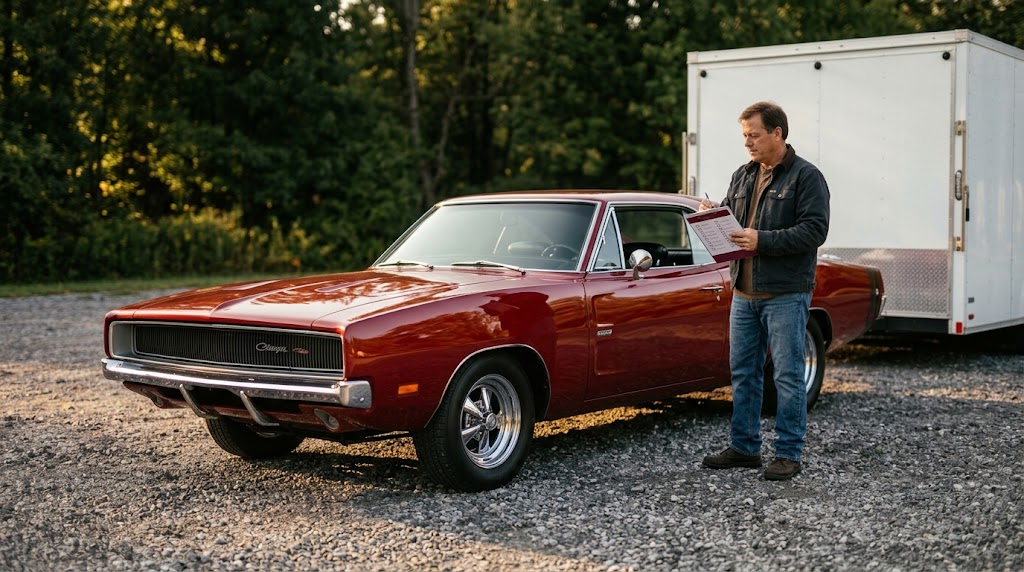
When the driver arrives, inspect the car together and note every existing mark on the bill of lading, the shipping document that doubles as your receipt and condition report. Don’t sign until it accurately reflects the car’s condition.
Read the whole contract before signing, including the terms on delays, damage claims, and insurance. Keep your copy of everything.
Delivery Day: What to Check
When the car arrives, inspect it in good light before you sign off. Compare its condition against your photos and the bill of lading. Look at the paint, wheels, glass, undercarriage, and bumpers. If you see new damage, note it on the paperwork before the driver leaves and take photos right away. Once you sign clean, it becomes much harder to file a claim.
Should You Haul It Yourself?
Towing your own muscle car can save money and give you peace of mind, but only if you have the right setup. You’ll need:
- A tow vehicle rated for the combined weight of the trailer and the car (many muscle cars weigh well over 3,000 pounds)
- A trailer with working brakes, lights, and a proper hitch
- Ratchet straps or wheel-nets rated for the load, with the car tied down at the frame or axle points, not at suspension parts
- Ramps or a loading angle low enough to protect the front end
- Experience towing at highway speeds, since a heavy trailer changes braking distances and handling
If any of that sounds shaky, hiring a pro is usually cheaper than fixing a car that slid off a trailer.
Moving a classic car doesn’t have to be stressful. Pick the right kind of transport, vet your hauler carefully, prep the car, and document everything. A little homework before the truck shows up goes a long way toward making sure your car arrives ready to drive, show, or restore.
Download the Free Muscle Car Transport Planner
Ready to move your car? Take the guesswork out of it with our free, printable Muscle Car Transport Planner. It walks you through the big decision (hire a pro or haul it yourself), then gives you a step-by-step checklist for whichever route you choose. You’ll also get a side-by-side quote comparison chart and a condition log for documenting your car at pickup and delivery.
Print it out, keep it in a folder with your paperwork, and check things off as you go. Your classic car has come this far, so make sure it arrives in the same shape it left.