
Originally published April 16, 2016|Updated October 6, 2026
If you grew up around American cars, you probably remember the first time you heard a big-block V8 rumble to life. Maybe it was a neighbor’s driveway, a drive-in parking lot, or a Saturday-night cruise. That sound is the heart of the American muscle car, and more than half a century later, it still turns heads.
What Exactly Is a Muscle Car?
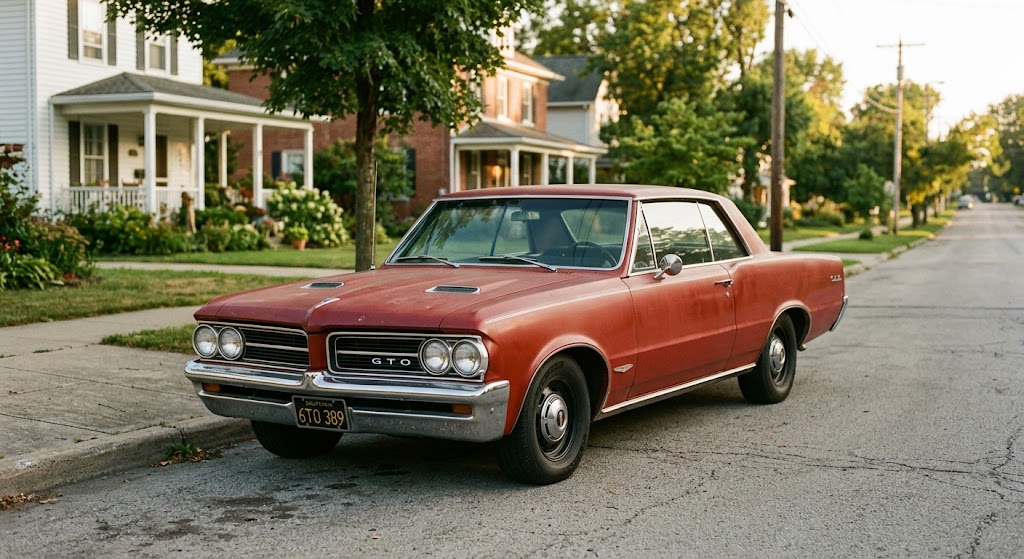
The classic formula manufacturers used was simple: take a mid-sized car, drop in a big V8, and price it so regular working people could afford it. That last part matters. Muscle cars weren’t exotic European sports cars for the wealthy. They were built for the kid with a good summer job and a need for speed.
Enthusiasts still argue about the exact definition (purists reserve the term for mid-sized cars, while “pony cars” like the Mustang and Camaro often get lumped in anyway), but nearly everyone agrees on where the story starts.
The Birth of the Muscle Car Era
Most car historians point to one model as the spark: the Pontiac GTO. Pontiac is often credited with lighting the tires on the muscle car era with the 1964 GTO, when the badge was first used on a special edition of the Tempest LeMans.
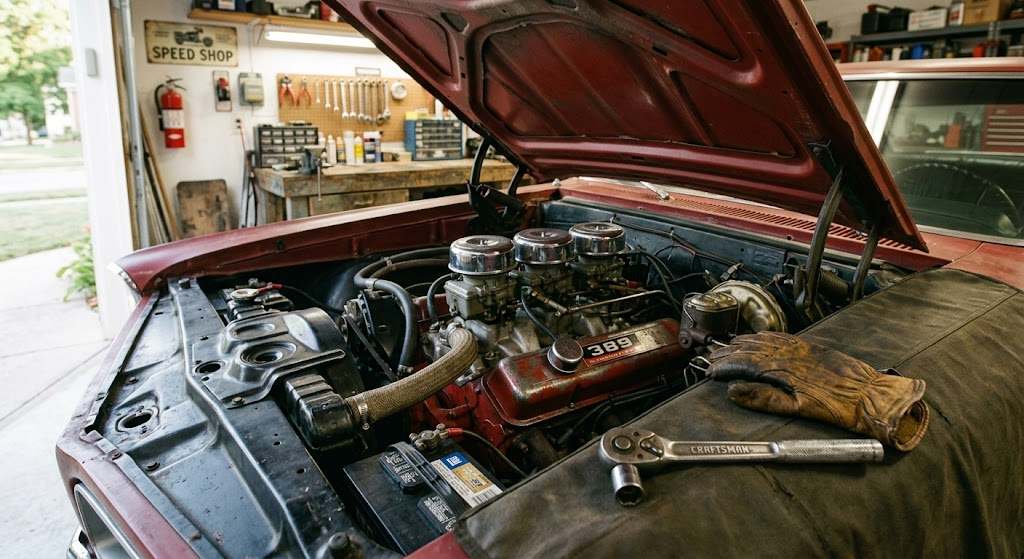
Engineer John DeLorean’s idea was to put a powerful 389-cubic-inch V8 into the lighter mid-sized body, and it was a hit. Pontiac looked to sell just 5,000 examples, but ended up shifting over 32,000 by the end of 1964.
Detroit noticed. Within months, rivals were scrambling to answer back, and the horsepower race was on.
The Golden Years: Mid-1960s to Early 1970s
Once the GTO proved there was a market, nearly every American automaker jumped in. A few of the legends from this stretch:
- Pontiac GTO: The car that started the craze, and still the benchmark for many collectors.
- Ford Mustang: Technically a pony car, but it inspired a whole class of imitators and put sporty styling within reach of everyday buyers.
- Chevrolet Camaro and Chevelle: Chevy’s answers to Ford and Pontiac, with the Chevelle SS delivering serious big-block power.
- Plymouth Road Runner: As muscle car prices climbed, Plymouth’s 1968 Road Runner proved a breath of fresh air by bringing the price back down.
- Dodge Charger: Bold styling and Hemi muscle made it an instant pop-culture favorite.
- Oldsmobile 4-4-2: Olds’s quick answer to the GTO, arriving just months after it.
By 1971, the muscle car era had peaked due to increasing pressure from both insurance companies and environmental agencies.
Why the Muscle Car Era Faded
The party didn’t last forever. Several things hit at once:
- Skyrocketing insurance premiums on high-performance cars
- Tighter emissions regulations that choked engine output
- The 1973 oil crisis, which sent fuel prices up and buyers toward smaller, thriftier cars
The power numbers tell the story. The 1973 Pontiac Trans Am SD455 featured a massive 7.5-litre V8 but produced only 290 bhp due to emissions regulations. By the middle of the decade, the original era was over.
The Comeback: Why Muscle Cars Matter Again
Here’s the good news: the story didn’t end in 1974. Collectors, restorers, and weekend cruisers kept these cars alive, and demand has stayed strong ever since. Values prove it. For example, a black 1964 GTO convertible recently sold for more than $107,000, as shown by slashgear.
Restored vs. Original: Which Muscle Car Is Right for You?
If you’re thinking about buying one, you’ll run into two main categories.
Restored muscle cars are examples that were rescued from barns, garages, and yards and brought back to life. Some are restored to factory-correct condition, while others are “restomods,” keeping the classic look but adding modern upgrades like better brakes, fuel injection, or air conditioning. Restomods are a great choice if you want to actually drive your car and not just show it.
Original (unrestored) cars still wear their factory engine, paint, interior, and sometimes even the tires. These survivors are rare, and collectors will pay a premium for them. Just remember that originality is a one-time thing. Once it’s gone, you can’t get it back.
A few tips before you buy:
- Check the VIN and any build documentation to verify the car is what the seller says it is
- Inspect for rust in floors, trunk, and lower body panels
- Ask whether the engine and transmission are original (“numbers-matching”)
- Get a pre-purchase inspection from someone who knows these cars
The Lasting Legacy of American Muscle Cars
Muscle cars are more than metal and horsepower. They’re rolling pieces of American history, from the optimism of the ’60s to the sudden reality check of the ’70s. Whether you want a pristine survivor or a restored cruiser with a few modern tweaks, owning one connects you to that story, and that’s what makes it such a pleasure.
Free Printable: American Muscle Cars Crossword Puzzle
Think you know your muscle car history? Test yourself with our free printable crossword puzzle, packed with clues about the GTO, the Road Runner, the oil crisis, and more. Everything you need is right here in this article, so it makes a fun challenge for a rainy afternoon, a car club meeting, or a game night with fellow enthusiasts.
Stuck, or want to check your work? Just reach out through the contact form and I’ll send you the answer key.