

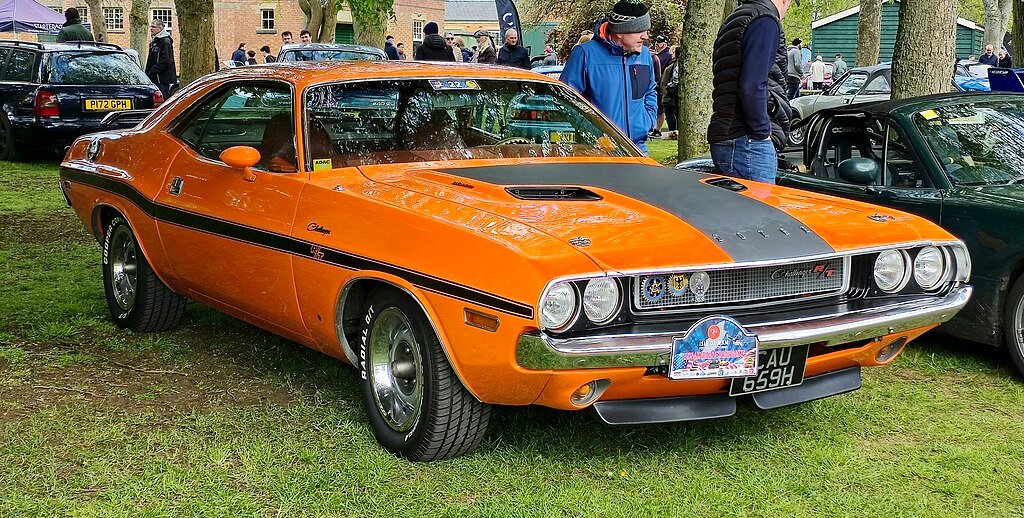
In the pantheon of American muscle cars, few names evoke as much raw excitement and nostalgic reverence as the Dodge Challenger. From its birth in the golden age of muscle cars to its modern incarnation as a tire-shredding powerhouse, the Challenger’s story spans over five decades of automotive history, marked by dramatic highs, extended absences, and a triumphant return that captured the hearts of enthusiasts worldwide.
The Original Muscle (1970-1974)
When Dodge unveiled the Challenger in the fall of 1969, they were fashionably late to the pony car wars. Ford’s Mustang had already been dominating the market for five years, while Chevrolet’s Camaro and Dodge’s corporate cousin, the Plymouth Barracuda, were well-established players. Yet Dodge’s timing proved fortuitous – they had carefully studied their competitors and developed a weapon perfectly tuned for the peak of the muscle car era.
The first-generation Challenger rode on a modified Plymouth B-body platform, sharing much of its architecture with the Plymouth Barracuda but featuring a slightly longer wheelbase for improved ride quality. What set the Challenger apart was its comprehensive range of powertrain options. Buyers could choose from:
- 225 cubic inch Slant Six (145 horsepower)
- 318 V8 (230 horsepower)
- 340 V8 (275 horsepower)
- 383 V8 (290-330 horsepower)
- 440 V8 (375 horsepower)
- 440 Six Pack (390 horsepower)
- 426 Hemi V8 (425 horsepower)
The R/T (Road/Track) performance package turned the Challenger into a genuine street warrior, while the ultra-rare T/A variant was purpose-built for Trans Am racing. Notable production variants included:
- R/T (Road/Track): Performance-oriented model with high-output engines
- T/A (Trans Am): Limited edition race homologation special (2,399 produced)
- SE (Special Edition): Luxury-oriented with vinyl roof and formal rear window
- Challenger Western Sport Special: Regional special edition for the West Coast market
Color options were equally impressive, with high-impact choices like:
- Plum Crazy Purple
- HEMI Orange
- Top Banana
- Panther Pink
- Go Mango
- Sublime Green
Production numbers tell an interesting story of the era:
- 1970: 83,032 units
- 1971: 29,883 units
- 1972: 26,658 units
- 1973: 32,596 units
- 1974: 16,437 units
However, this golden age wouldn’t last long. By 1972, increasing insurance rates, stricter emissions standards, and the looming fuel crisis began to take their toll. Production numbers declined, and the final first-generation Challenger rolled off the line in 1974, marking the end of an era.
The Silent Years (1974-1978)
As the muscle car market collapsed under the weight of economic pressures and changing consumer preferences, Dodge shifted its focus to more fuel-efficient offerings. The Challenger nameplate lay dormant during these years, while the automotive landscape underwent a dramatic transformation. The oil crisis had reshaped American car-buying habits, and manufacturers scrambled to adapt to a new reality where fuel economy trumped horsepower.
The Mitsubishi Era (1978-1983)
When the Challenger name returned in 1978, it appeared on a car that couldn’t have been more different from its muscle-bound predecessor. The new Challenger was actually a rebadged Mitsubishi Galant Lambda, featuring a four-cylinder engine and front-wheel drive. While this version offered respectable performance for its era and helped Dodge compete in the growing import sports car market, it shared little more than a name with the original.
This Challenger was more sophisticated and efficient than its predecessor, offering a choice of:
- 1.6L (77 hp) base engine
- 2.6L “Silent Shaft” (105 hp) optional engine
- Available 5-speed manual or 3-speed automatic transmission
- Independent front suspension with MacPherson struts
- Performance-oriented “AutoTemp” package with sportier suspension tuning
Production numbers for this generation were modest:
- 1978: 12,462 units
- 1979: 14,956 units
- 1980: 12,401 units
- 1981: 9,122 units
- 1982: 8,494 units
- 1983: 4,871 units
Available colors were more subdued than the high-impact options of the first generation:
- Sterling Silver Metallic
- Copper Metallic
- Dark Blue Metallic
- Barcelona Red
- Black Diamond
However, for muscle car purists, this internationalized Challenger represented everything that had gone wrong with the American auto industry during the malaise era. Production ended in 1983, sending the Challenger name back into hibernation.
The Long Wait (1983-2008)
For 25 years, the Challenger existed only in the memories of enthusiasts and the garages of collectors. During this period, the original Challengers became increasingly sought-after collectibles, particularly the rare Hemi and T/A models. The legend of the first-generation cars continued to grow, helped along by appearances in movies, television shows, and a burgeoning muscle car restoration scene.
While Ford’s Mustang continued in uninterrupted production and Chevrolet revived the Camaro in 1982, Dodge focused on other performance vehicles, including the Charger and the front-wheel-drive Daytona. However, the increasing values of original Challengers and the growing interest in retro-styled vehicles didn’t go unnoticed at Dodge headquarters.
Modern Renaissance (2008-Present)
When Dodge finally revived the Challenger in 2008, they did it right. The new Challenger rode on Chrysler’s LX platform, shared with the Charger sedan, but featured unique styling that perfectly captured the essence of the 1970 model. The retro-modern design proved an immediate hit with buyers, offering a perfect blend of classic muscle car aesthetics and modern technology.
The third-generation Challenger has evolved significantly since its introduction, offering an impressive range of performance options:
Launch Models (2008-2014):
- SE: 3.5L V6 (250 hp)
- R/T: 5.7L HEMI V8 (372 hp)
- SRT8: 6.1L HEMI V8 (425 hp)
Performance Evolution (2015-present):
- Hellcat (2015): 6.2L Supercharged V8 (707 hp)
- Demon (2018): 6.2L Supercharged V8 (808 hp street/840 hp race)
- Redeye (2019): 6.2L Supercharged V8 (797 hp)
- Super Stock (2020): 6.2L Supercharged V8 (807 hp)
Notable special editions include:
- T/A 392 (2017)
- 50th Anniversary Edition (2020)
- Jailbreak Edition (2022)
- Last Call Series (2023)
Modern color options pay homage to the original while adding new choices:
- Return of High Impact Colors:
- Plum Crazy
- Go Mango
- TorRed
- B5 Blue
- New Signature Colors:
- Destroyer Grey
- F8 Green
- Hellraisin
- Sinamon Stick
Annual production numbers remained strong through 2023 when the lined was again discontinued: 2008: 17,423 units 2009: 25,852 units 2010: 36,791 units …with recent years seeing over 50,000 units annually
As we approach the end of the internal combustion era, the current Challenger stands as perhaps the purest expression of the American muscle car formula. While its competitors have evolved into sophisticated sports cars, the Challenger has remained stubbornly faithful to its straight-line speed and visual drama roots.
The Challenger’s legacy is a testament to the enduring appeal of the American muscle car. Through multiple generations, market changes, and even a quarter-century absence, it has maintained its place in the hearts of enthusiasts. As we look to an electrified future, the Challenger’s story serves as a remarkable chronicle of American performance car evolution, from the heights of the muscle car era to the technical sophistication of modern high-performance vehicles.
Whether in its original muscle car form, its brief stint as an imported sports coupe, or its modern incarnation as a retro-styled powerhouse, the Challenger has always managed to capture the imagination of car enthusiasts. Its story continues to evolve, ensuring its place in automotive history as one of America’s most iconic performance cars.
Collectibility and Market Values as of December 2024
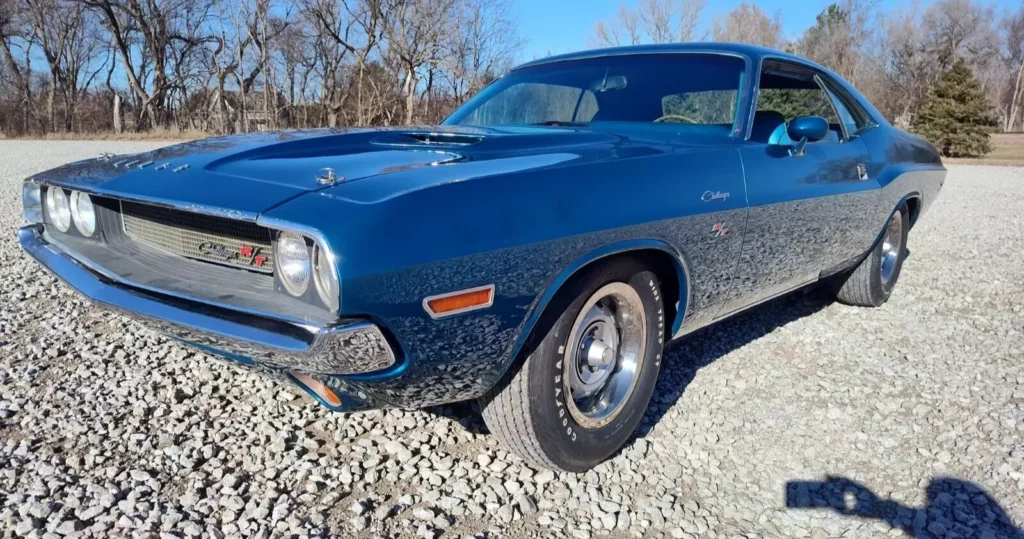
First Generation (1970-1974):
- HEMI R/T Convertibles: $250,000 – $1,500,000+
- HEMI R/T Coupes: $150,000 – $500,000
- 440 Six Pack R/T: $80,000 – $200,000
- T/A Models: $75,000 – $150,000
- Base V8 Models: $35,000 – $75,000
Mitsubishi Era (1978-1983):
- Preserved Examples: $8,000 – $15,000
- Project Cars: $2,000 – $5,000
Modern Era (2008-present):
- Demon Models: $150,000 – $200,000
- Hellcat Models: $45,000 – $85,000
- Early SRT8: $25,000 – $35,000
- Base Models: $15,000 – $30,000
*Note: Values are approximate and can vary significantly based on condition, originality, documentation, and market trends.
Enjoyed this overview of the Dodge Challenger? Classic Cars Online US has a wealth of information about iconic American muscle cars, restoration guides, and collecting tips. Browse through our other articles to discover in-depth features on specific Challenger generations, restoration projects, and market insights. Whether you’re a longtime Mopar enthusiast or just beginning your classic car journey, there’s always something new to discover in the world of American muscle cars.
By: Laure Justice