
Originally published April 7, 2016|Updated October 13, 2026
Some cars get you to work or the store. A sports car gets you to smile on the way there. These cars are built around the feeling of driving: quick response, sharp steering, and a body that sits low and hugs the road. If you have ever watched a vintage roadster rumble past and felt your head turn, you already understand the appeal.
This guide explains what a sports car really is, how the idea got started, which classics are worth a look, and how to shop for an older one without getting burned.
What Is a Sports Car?
A sports car is a car designed first for driving enjoyment, with speed, power, and tight handling coming before comfort or cargo room. Britannica describes the sports car in much the same way, and it is a good place to read more on the basics: Britannica: Sports Car.
Notice that this is about design goals, not just a big engine. A small, light car with great steering can be more of a sports car than a heavy car with loads of horsepower. That is why a modest roadster from the 1960s can feel more thrilling than a much faster modern sedan.
Key Features of a Sports Car
No single feature defines every sports car, but most of them share a handful of traits:
- Low, sleek body. A low roofline and smooth shape cut wind resistance and keep the car steady at speed.
- Light weight. Less weight means quicker acceleration, better braking, and sharper turns.
- Two seats. Most are two-seaters, though some “2+2” models add tiny back seats.
- Tight, responsive handling. A firm suspension and quick steering keep the car planted in corners.
- Strong brakes. Good stopping power matters as much as good go.
- Rear-wheel drive (often). Many classics send power to the back wheels for balanced handling. Some, like the Porsche 911, even put the engine back there too.
- Low center of gravity. Keeping the heavy parts low helps the car stay flat and steady through turns.
A Quick Look Back at Sports Car History
The sports car grew out of early European racing and touring cars, where drivers wanted something quick, nimble, and fun on winding roads. British roadsters from makers like MG and Triumph brought the idea to everyday buyers. After World War II, many American servicemen came home with a taste for these little cars, and U.S. interest took off.
America answered with its own take. Chevrolet introduced the Corvette in 1953 with a fiberglass body, and it became the country’s best-known sports car. Meanwhile, Europe kept raising the bar with cars like the Porsche 356, the first car sold under the Porsche name, and the Jaguar E-Type, which debuted in 1961.
Classic Sports Cars Worth a Look
Here are a few well-loved classics, with a note on why each one is a good starting point for a collector:
- Chevrolet Corvette (1953 and up): America’s sports car, with huge parts support and a big owner community.
- MGB (1962 to 1980): Simple, affordable, and easy to work on. A friendly first classic.
- Jaguar E-Type (1961 to 1975): Famous for its long, flowing shape. Gorgeous, but plan on a bigger repair budget.
- Porsche 356 (1948 to 1965): A compact, well-built classic with a loyal following.
- Datsun 240Z (1970 to 1973): Japan’s breakout sports car in the U.S., with good looks and a tough six-cylinder engine.
- Triumph TR6 (1969 to 1976): A muscular British roadster with a satisfying engine note.
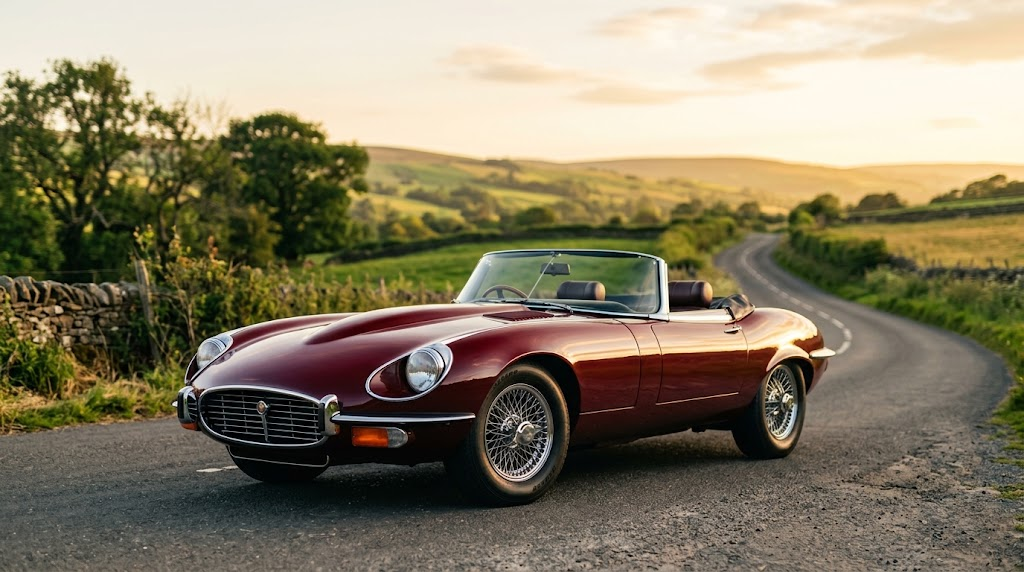
The car in the photo above is a Ferrari 500 Mondial, a small-engine 1950s Ferrari built with racing in mind. It is a good reminder that great sports cars do not have to be huge or loud to be special.
How to Buy a Classic Sports Car: A Practical Checklist
Older sports cars can be a joy, but they can also hide expensive problems. Bring this list with you when you go look at one:
- Check for rust first. Look at the floors, rocker panels, trunk, wheel wells, and frame. Rust repair is often the most costly fix of all.
- Look at the paperwork. A clean title, service records, and old receipts tell you how the car was treated.
- Match the numbers. Compare the VIN on the car to the title. Ask whether the engine and transmission are original to the car.
- Do a cold start. Ask the seller not to warm the car up before you arrive. Hard starting, smoke, or odd noises can show up when the engine is cold.
- Take a real test drive. Listen for clunks, watch for pulling under braking, and check that the gauges and lights work.
- Get an expert inspection. A mechanic who knows that exact make and model can spot trouble you might miss. It is cheap compared to a surprise rebuild.
- Check parts availability. Some models have huge parts catalogs. Others take months of searching.
- Compare prices. Use a classic car price guide, such as Hagerty’s, to see what similar cars in similar condition actually sell for.
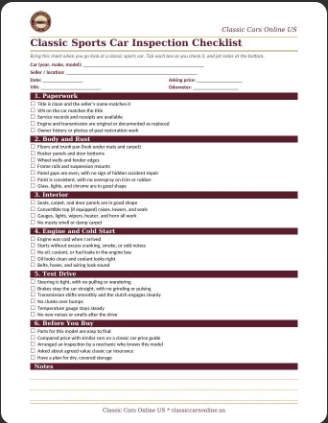
Take this checklist with you
Heading out to look at a classic sports car?
Download our free two-page Classic Sports Car Inspection Checklist and print it before you go. It walks you through paperwork, rust, the interior, a cold start, and the test drive, with room to write down the details for each car you see.
Print one copy for every car on your list, and you’ll be able to compare them side by side when it’s time to decide.
What to Know Before You Own One
Buying the car is only the start. A few things help new owners avoid headaches:
- Insurance: Ask about classic or “agreed value” coverage. It can protect what the car is really worth, and it is often cheaper than regular insurance.
- Storage: Dry, covered storage slows rust and keeps the paint and interior in better shape.
- Drive it: Cars that sit for months develop leaks, stuck brakes, and fuel problems. Regular short drives keep things healthy.
- Join a club: Owner clubs share repair tips, parts leads, and honest advice about quirks to watch for.
- Budget for upkeep: Set aside money each year for maintenance. Surprises are less painful when you planned for them.
Sports Car FAQ
Are all sports cars expensive?
No. Some are very costly, but many classics, like the MGB, are within reach for hobbyists. The key is buying the best-kept example you can afford.
Is a sports car the same as a muscle car?
Not quite. Muscle cars put big V8 power in a mid-size body and focus on straight-line speed. Sports cars focus on balance, handling, and light weight.
Are sports cars safe?
Modern sports cars have strong safety systems. Older classics were built before many of today’s standards, so drive them with extra care and keep the brakes, tires, and steering in top shape.
Is a classic sports car a good first classic?
It can be, especially a simple, well-supported model. Pick something with plenty of parts and a helpful owner community.
A sports car is really about the experience: the sound, the feel of the steering, and the way the road comes alive under you. Whether you are daydreaming or shopping, start with a model that fits your budget and skills, do your homework, and enjoy the ride.
Which classic sports car would you want to park in your garage? Tell us in the comments.