
Originally published April 10, 2016 | Updated November 3, 2026
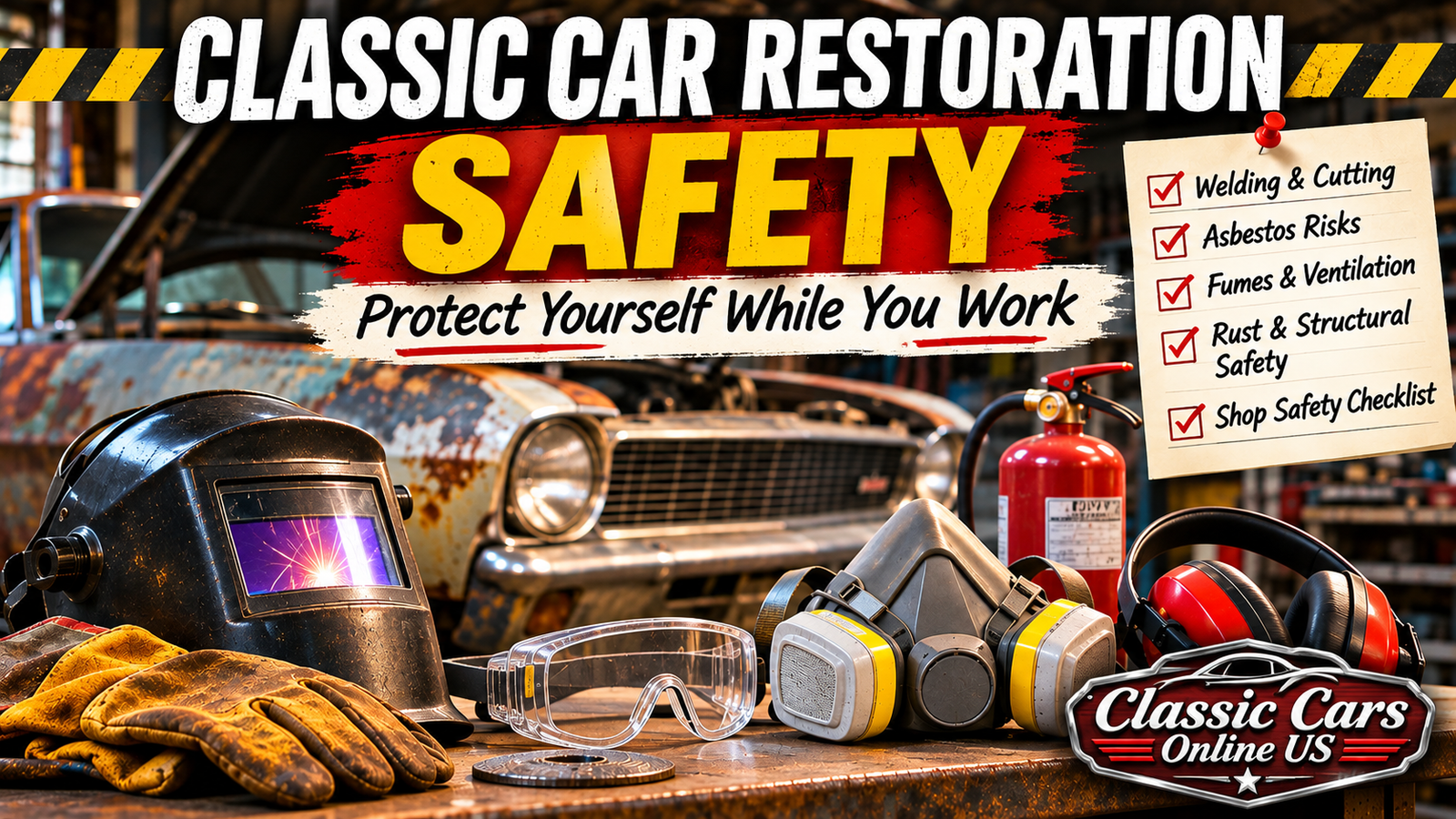
Restoring a classic is one of the most rewarding projects you can take on. It’s also one of the easiest ways to get hurt if you’re careless. Older cars have sharp edges, hazardous materials and few of the safety features we take for granted today. Add welding, cutting, grinding and chemicals, and the risks stack up fast.
Whether this is your first project or you’re buying a classic car, a few smart habits can protect both you and the car. Here’s where to start.
Function Before Finish
A gleaming body and a perfect paint job don’t count for much if the car can’t be driven safely. Looks may have sold you on the car, but the parts that keep you safe deserve your attention first.
That means structural integrity, rust repair, brakes, steering and the engine should come before shiny extras. A car that looks like a show winner but has a weakened frame or worn-out brakes can be dangerous on the road.
Welding and Cutting: Fire, Sparks and Fumes
Welding is a skill worth learning, and it deserves respect. Sparks and molten metal can travel farther than most beginners expect. Older cars also hide plenty of materials that can catch fire, including wiring insulation, carpet, fuel residue and sound-deadening material.
Before you strike an arc or cut metal:
- Wear the right gear. Use a properly rated welding helmet, gloves, eye protection and suitable protective clothing. Cover exposed skin to protect against burns and the ultraviolet radiation produced by arc welding.
- Clear the area. Move paper, rags, plastic, sawdust and other flammable materials away from your work. Check both sides of the panel and the surrounding area for wiring, upholstery, insulation and anything else that could ignite.
- Keep fire protection close. Have an appropriate, maintained fire extinguisher within reach. Watch for sparks that may travel into hidden spaces, and check the area for smoldering material after welding or cutting.
- Take the fuel system seriously. Never weld or cut on or near a fuel tank or fuel lines that have not been properly removed or made safe. An apparently empty tank can still contain flammable vapors. Have a qualified professional handle tank removal, cleaning and any work involving residual fuel.
- Disconnect electrical power appropriately. Follow the vehicle and equipment manufacturer’s procedures before electrical or welding work. Disconnecting the battery can help prevent electrical shorts, but it does not eliminate every fire or ignition hazard.
- Provide proper ventilation. Welding, cutting and grinding can produce hazardous fumes and gases. Coatings, paint and contaminated metal can add to the problem. Work in a properly ventilated area and avoid breathing the fumes.
OSHA identifies welding and cutting hazards that include fire, explosions, fumes, ultraviolet radiation, noise and skin injuries. Removing combustible materials, isolating fuel sources, using appropriate protective equipment and providing adequate ventilation are important precautions. OSHA welding and hot-work guidance.
Asbestos in Old Brakes, Clutches and Gaskets
Asbestos is a naturally occurring mineral that was used for years because of its heat resistance and durability. It was also used in automotive parts. Breathing airborne asbestos fibers can cause serious diseases, including mesothelioma and lung cancer.
The history of asbestos regulation in the United States is more complicated than a single nationwide ban date. On March 28, 2024, the EPA finalized a rule prohibiting ongoing uses of chrysotile asbestos, the only type still being manufactured or imported for use in the United States at that time.
The rule included aftermarket automotive brakes and linings, other vehicle friction products and certain gaskets. The consumer-use prohibitions for aftermarket automotive brakes and linings and certain gaskets took effect November 25, 2024. The rule did not remove asbestos from older parts already installed in classic cars.
That means older vehicles and replacement parts from previous decades may still contain asbestos. Areas of concern include:
- Brake shoes and linings
- Clutch friction materials
- Older gaskets
- Other components designed to withstand high heat or friction
You cannot reliably identify asbestos-containing brake or clutch parts just by looking at them. If you suspect a component contains asbestos, don’t dry-sand, scrape, brush or blow the dust away with compressed air. Ordinary household vacuums and wet/dry shop vacuums without appropriate HEPA filtration can also spread hazardous dust.
EPA recommends specific dust-control procedures, including specialized HEPA enclosure systems and wet-cleaning methods. If you cannot identify the material or use appropriate controls, have a qualified automotive shop handle the work. Don’t assume that a basic dust mask or an ordinary respirator makes asbestos work safe.
For more information, see the EPA’s 2024 chrysotile asbestos rule and its guide to preventing asbestos exposure during brake and clutch work.
Fumes in the Garage: Carbon Monoxide, Resins and Solvents
Fumes are some of the most easily overlooked hazards in a home garage. Some are irritating, some can cause longer-term health problems, and others can be deadly.
Carbon monoxide (CO) is an invisible, odorless gas produced by gasoline engines and other fuel-burning equipment. Exposure can cause headaches, dizziness, confusion, loss of consciousness and death.
Never run a vehicle in an attached garage, even with the garage door open. The safest practice during restoration work is to move the vehicle completely outdoors before starting the engine. Keep it away from doors, windows and building vents so exhaust cannot enter the house or workspace.
A carbon monoxide alarm can provide additional protection in the home, but it is not a substitute for safe engine operation. Follow the alarm manufacturer’s instructions, including approved placement. Not every household alarm is designed for garage conditions.
The CDC’s carbon monoxide guidance explains the dangers of vehicle exhaust and why an open garage door does not make running a car in an attached garage safe.
Fiberglass resins, solvents and other chemicals can also release vapors that irritate the eyes, skin and respiratory system. The specific hazards vary by product. Some fiberglass resins, for example, contain styrene, which can cause irritation and other effects when inhaled.
Read the product label and Safety Data Sheet before using resins, paint removers, solvents, adhesives or other chemicals. Follow the manufacturer’s instructions for ventilation, protective clothing, gloves and respiratory protection.
A respirator may be necessary for certain tasks, but choosing the right one matters. A basic dust mask or particulate filter does not protect against chemical vapors. Respirators and cartridges must be appropriate for the specific hazard, and tight-fitting models need to fit properly to provide their intended protection. When in doubt, consult the product manufacturer or a qualified safety professional.
See OSHA’s respirator selection guidance for more information.
Rust That Threatens Safety, Not Just Looks
A little surface rust on a fender is mostly a cosmetic problem. Rust in the frame, floor, suspension mounts or other structural areas is a different story.
Corrosion gradually removes metal and can weaken important structural sections, seams and mounting points. A badly deteriorated frame or suspension attachment point can fail under load or while driving. Holes in the floor or firewall can also create openings for exhaust fumes, water and road debris to enter the passenger compartment.
Take rust seriously from day one. Find out how far it extends, repair it properly and replace metal that is too deteriorated to save. Cutting out corroded sections and welding in replacement steel takes skill. If you’re not experienced with structural repairs, this is a good job for a qualified restoration professional.
A Quick Safety Checklist for Your Shop
Before starting your next job, run through this list:
- Safety glasses or appropriate eye protection for grinding, cutting, drilling and other tasks
- Gloves suited to the job, including mechanic’s, chemical-resistant or welding gloves as appropriate
- Properly rated jack stands on firm, level ground whenever you work beneath a raised vehicle
- Wheels secured with chocks where appropriate
- No working beneath a vehicle supported only by a hydraulic jack
- Fire extinguisher within reach
- Good lighting and a clear, uncluttered floor
- Adequate ventilation for the work being performed
- Hearing protection when using loud tools
- First aid kit that is easy to find
- Chemicals stored and handled according to their labels and Safety Data Sheets
Always use the vehicle manufacturer’s recommended lifting and support points. Check that your stands are in good condition and rated for the load. Never take a chance with an unstable vehicle.
Know When to Call a Professional
Some jobs are bigger than a home garage. Structural rust repair, major welding, suspected asbestos-containing materials and hazardous chemical work may require specialized equipment, training and experience.
Hiring a professional isn’t giving up. It’s a smart way to protect your safety and your car.
When looking for help, ask for references and photos of previous work. Choose shops with experience in classic cars, and be clear about what you want done. A good restoration shop should be willing to explain its process and discuss any safety concerns.
A Safer Restoration Is a Better Restoration
The best restoration is one you finish with your health, your fingers and your car intact. Take the time to set up your shop, wear the right protective equipment and respect the hazards that come with working on older vehicles.
A little preparation can prevent a serious accident and help you enjoy the project for years to come.
Keep the Classic Car Conversation Going
Follow Classic Cars Online US on YouTube for more classic-car features, performance stories and automotive history.
Join us on Facebook to share your favorite classics, compare notes with other enthusiasts and keep the conversation going.
There’s always another amazing car worth talking about. We’ll see you at the starting line!
Safety note: This article provides general information, not a substitute for professional training or product-specific safety instructions. Always follow equipment manufacturers’ instructions and applicable safety regulations.