
Originally published November 2017 | Updated November 2024
From breaking sales records to starring as ‘Baby’ in the hit TV show Supernatural, the fourth-generation Chevrolet Impala has left an indelible mark on American culture. While Dean Winchester’s beloved black 1967 model might be the most famous example today, it was the 1965 redesign that truly made history, selling over a million units in a single year – a record that remains unbroken after more than five decades.
The fourth-generation Impala perfectly captured the spirit of mid-1960s America, combining elegant styling with powerful performance options that would help define the muscle car era.

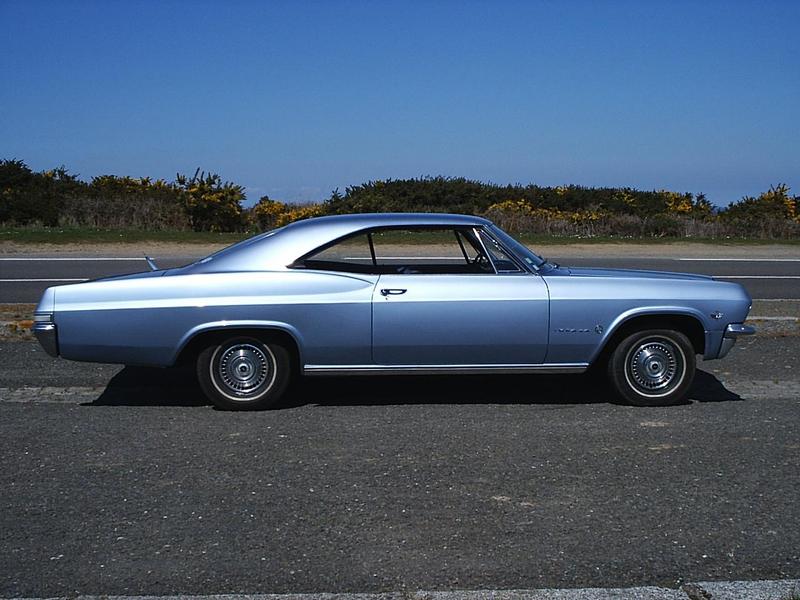
Distinctive 4th Gen Impala Styling
The fourth-generation Impala introduced a sleeker, more sophisticated design that departed from the previous generation’s more angular approach. Its signature fastback roofline and curved side glass created a flowing silhouette that influenced automotive design for years to come. The iconic triple taillights returned but were now integrated into a more dramatic full-width grille design. Chrome trim and sculptured side panels added to the car’s premium appearance, while the formal roof design of the Sport Sedan made it particularly popular with families.
The 1965 Caprice Impala
In 1965, Chevy introduced the Caprice as the top-line Impala model. That might sound a bit quirky, because today, the Caprice is its own model and has been for decades, but in its first year, it was simply an Impala package. It was the next year, 1966, when the Caprice broke off as its own model. So, if you hear someone saying 1965 Caprice Impala or using the terms interchangeably, that’s why.

The B-Body ’65 Impala
The ’65 Chevy Impala with its iconic bottle styling was not only a history-making, record-breaking seller for GM, it was built on the B-Body platform that’s the fourth place best selling automotive platform of all time, beat out only by the German VW Beetle, American Ford Model T, and the Russian Lada Riva.
.jpg)
1965 Chevrolet Impala Engine Choices
The 1965 Impala engine options included the base model 6-Cylinder with a 250 cubic-inch Turbo Thrift and 150hp, the Super Turbo Fire V-8 with 283 cubic-inch Turbo Fire and 195-horsepower 283-cubic-inch Turbo Fire, the Super Turbo Fire and Turbo Fire V-8 with 327 cid and 250hp to 300hp, the 396 Turbo-Jet V-8 with 396cid and 325hp to 425hp, and the 409 Turbo Fire V-8 with 409 cid and 340hp to 400 hp. According to Impala Classics, production of the 396 Turbo-Jet V8 began in February 15, 1965 and production of the 409 Turbo-Fire V8 ended mid-year in 1965.
Beyond the Fourth Generation Impala Engine Bay
While the Impala offered an impressive range of impressive base model inline six-cylinder and powerful V8 engines, its performance capabilities extended beyond raw power. The redesigned perimeter frame and refined suspension system provided better handling than previous generations.
The SS (Super Sport) models particularly showcased the Impala’s performance potential, offering upgraded suspension components and exclusive trim features that set them apart from standard models. Additionally, it’s sleek angled windshield and frameless side glass enhanced its aerodynamics.
Fourth Generation Chevy Impala Transmission Choices and Innovation
The fourth-generation Impala marked an important transition in transmission technology.
While a three-speed manual transmission remained standard initially, the introduction of the new three-range Turbo Hydra-Matic automatic transmission revolutionized the driving experience. This innovative automatic transmission was first offered as an option for models equipped with the powerful 396 cubic inch V8 engine, marking a significant advancement in powertrain technology.
The Turbo Hydra-Matic four-speed automatic transmission provided smoother shifts and better performance than previous automatic transmissions, making it particularly well-suited to the Impala’s combination of luxury and performance. Its popularity with buyers helped establish automatic transmissions as the preferred choice for full-size American cars, setting a trend that would continue for decades to come.
’65 Impala Color Options and Customization
Chevrolet offered an impressive palette of fifteen exterior colors for the 1965 Impala, ranging from classic choices to vibrant period-specific hues. The exterior color selection included sophisticated neutrals like Tuxedo Black and Ermine White, bold options like Evening Orchid and Regal Red, and an array of blues and greens that captured the essence of mid-1960s automotive styling.
This diverse range of exterior finishes allowed buyers to personalize their Impalas while maintaining the car’s elegant appearance. In ’65, the factory exterior color options for the Impala were:
- Tuxedo Black
- Ermine White
- Mist Blue
- Danube Blue
- Willow Green
- Cypress Green
- Artesian Turquoise
- Tahitian Turquoise
- Madeira Maroon
- Evening Orchid
- Regal Red
- Sierra Tan
- Cameo Beige
- Glacier Gray
- Goldwood Yellow
The interior color options were even more extensive, with eighteen distinct choices available in various finishes. Many colors were offered in both semi-gloss and flat finishes, providing additional customization options.
From classic black and white to rich fawns and saddles, and from bold reds to sophisticated slates, the interior palette was designed to complement the exterior colors while offering a luxurious, personalized cabin environment. These thoughtfully curated interior options helped establish the Impala’s reputation for upscale comfort.
Factory interior color options for the ’65 Impala were:
- White
- Dark Green
- Light Fawn
- Midnight Green
- Medium Fawn
- Medium Turquoise
- Medium Dark Fawn in both semi-gloss and flat finish
- Dark Turquoise in both semi-gloss and flat finish
- Medium Saddle
- Medium Blue
- Dark Saddle in both semi-gloss and flat finish
- Dark Blue in both semi-gloss and flat finish
- Medium Slate
- Red
- Dark Slate in both semi-gloss and flat finish
- Dark Red
- Gunmetal
- Black in both semi-gloss and flat finish
- Medium Green
Year-by-Year Evolution of the 4th-Gen Chevy Impala
While the 1965 Impala model set sales records, each subsequent year brought some notable refinements:
- 1966 Impala: Revised grille design and new rectangular taillights replaced the signature triple round lights
- 1967 Impala: Safety features added, including dual-circuit brake system and collapsible steering column
- 1968 Impala: New fastback Custom Coupe option introduced alongside fresh front-end styling
- 1969 Impala: Minor trim updates and revised front bumper design
- 1970 Impala: Final year brought new grille treatment and more angular body lines
The 4th Generation Chevrolet Impala SS Experience
The Super Sport (SS) package transformed the Impala from family cruiser to muscle car contender. Available with any V8 engine, the Impala SS package included:
- Special Impala SS badges and trim
- Upgraded suspension components
- Sport-styled wheels and Impala SS wheel covers
- Unique interior appointments including bucket seats
- Optional console-mounted shifter
- Special Impala SS instrumentation including tachometer
Notable Chevrolet Impala Features and Options
Beyond standard equipment, fourth-generation Impalas offered luxury and convenience features ahead of their time:
- Automatic level control
- Four-season air conditioning
- AM/FM stereo radio
- Tilt steering wheel
- Power windows and seats
- Cruise control
- Remote trunk release
- Positraction differential
Production Numbers and Rarity
The fourth-generation Impala’s production numbers tell a fascinating story:
- 1965: Over 1 million units (record-breaking year)
- Impala SS models became increasingly rare as the generation progressed
- Impala Convertibles and Impala SS models are now among the most sought-after variants
- Station wagons, while popular when new, survive in smaller numbers today
Collectability and Current Market
Today’s collector market (as of November 2024) particularly values:
- Impala SS models with big-block engines
- Original, numbers-matching examples
- Convertibles in any condition
- Sport Coupes with their distinctive roofline
- Well-documented, low-mileage survivors Prices vary significantly based on body style, engine, and condition, with rare Impala SS convertibles commanding premium prices.
Safety Features and Innovations
The fourth-generation Impala reflected the auto industry’s growing focus on safety during the mid-1960s, particularly as federal regulations began to shape automotive design with features like power steering and power brakes. In response to new federal safety standards, the 1967 model year brought significant safety improvements including a dual-circuit brake system, collapsible steering column, and four-way hazard flashers.
Additional 4th gen Impala safety features included padded dashboards, energy-absorbing steering column, side marker lights, and shoulder belts. The 1969-1970 models featured head restraints, which became mandatory for all cars manufactured after January 1, 1969.
These safety enhancements, combined with the Impala’s robust B-body construction, made it one of the safer full-size options of its era while setting new standards for passenger protection in American muscle automobiles.
Join the Conversation about the Classic and Iconic Chevy Impala
Join the conversation about classic cars by visiting my ClassicCarsOnline US Facebook page and share your thoughts on iconic muscle cars like the 4th-Generation Chevrolet Impala.