
Originally published April 11, 2016 | Updated November 12, 2026
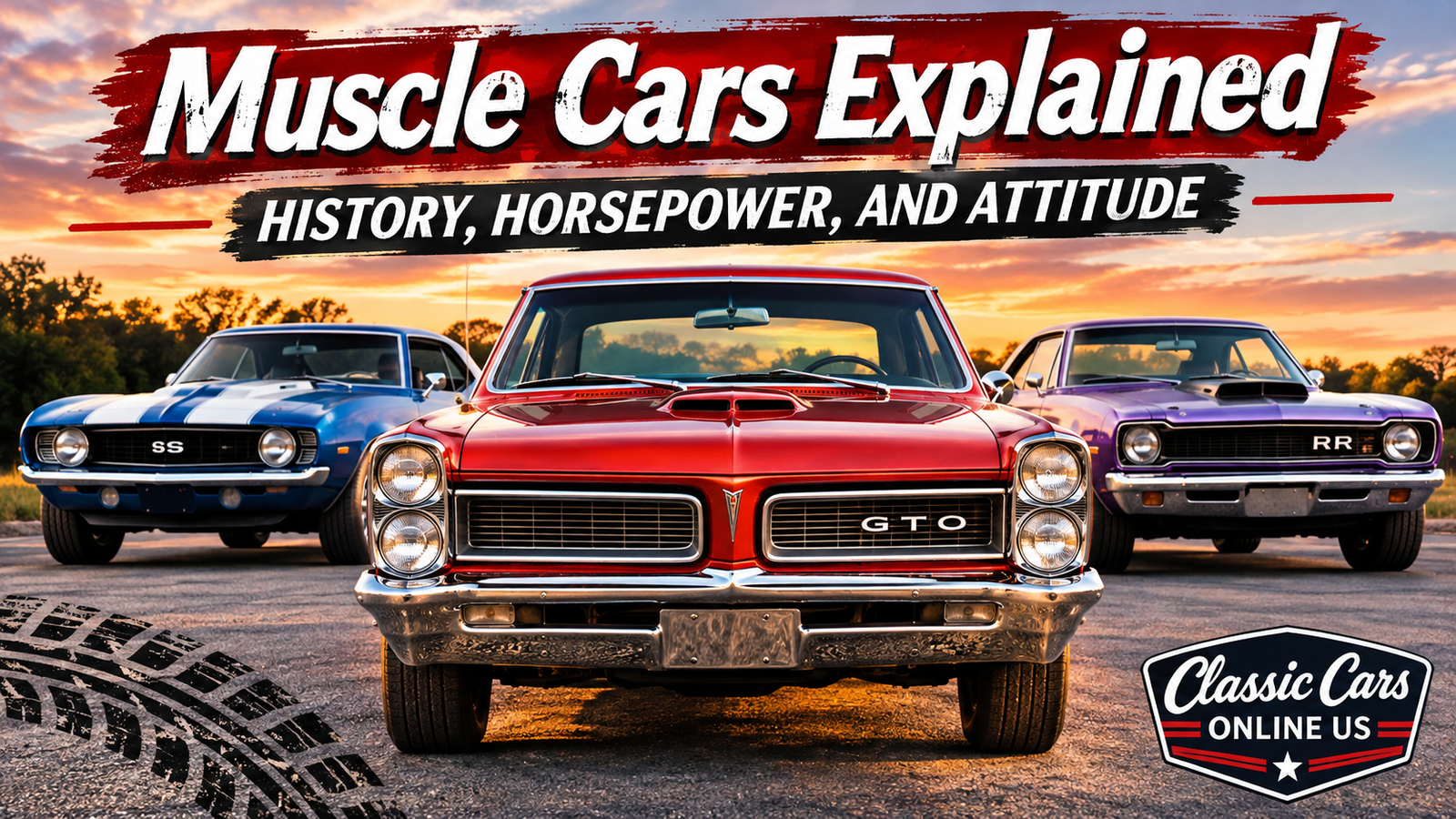
Picture a mid-size American coupe with a big V8 under the hood, a rumbling exhaust, and a stance that says it came to race. That is a classic muscle car. These cars put straight-line speed first. They were fast, loud, relatively affordable, and they changed American car culture.
If you are new to the hobby, this Muscle Cars Explained guide covers what counts as a muscle car, where the idea began, and how to tell muscle cars from other fast cars. It also looks at why the golden age ended, which cars are worth knowing, and how to enjoy them today. For a closer look at specific brands, browse our pages on Ford muscle cars, GM muscle cars, and Chrysler muscle cars.
Muscle Cars Explained: What Makes a Car a Muscle Car?
There is no official rulebook, and fans still debate the edges. The traditional American muscle car followed a familiar formula:
- American-built. Detroit’s Big Three and American Motors led the way.
- A big V8 engine. Power mattered more than anything else.
- A mid-size body. The classic recipe was a regular family-sized car with a much larger engine added.
- Rear-wheel drive. This layout helped deliver power to the rear wheels for hard launches.
- A relatively affordable price. Muscle cars were meant to appeal to everyday buyers, not just the wealthy.
Some people also call the Mustang, Camaro, and Barracuda muscle cars. Strictly speaking, these are pony cars, a related category known for smaller, sportier bodies. Many fans lump them together anyway, especially when they carry powerful V8 engines.
How the Pontiac GTO Started the Muscle Car Era
Most historians credit the 1964 Pontiac GTO with launching the modern muscle car era. General Motors had an internal policy limiting the engines available in its smaller intermediate cars. Pontiac engineers found a way to offer more power by making the GTO an option package on the Tempest LeMans. It included a 389-cubic-inch V8. Hagerty tells that story in detail.
GM Heritage lists the 1964 GTO’s standard engine at 325 horsepower, with a 348-horsepower Tri-Power version available. Pontiac sold 32,450 Tempests with the GTO package during the 1964 model year. The formula worked, and rivals rushed to create their own high-performance cars.
Fans do argue about this. Some point to earlier cars, such as the 1949 Oldsmobile Rocket 88, as important predecessors to the muscle car. The GTO is widely credited with turning the mid-size, big-engine formula into a national trend.
Muscle Cars vs. Sports Cars
The original article claimed muscle cars would beat sports cars every time. That oversimplifies things. Here is a fairer comparison:
| Muscle Car | Sports Car | |
|---|---|---|
| Strength | Straight-line power | Handling and balance |
| Engine | Traditionally a large V8 | Often smaller, lighter engines |
| Feel | Loud and brawny | Nimble and precise |
| Interior | Often basic and sporty | Varies widely |
A muscle car is generally better suited to a drag race. A sports car is often better suited to a twisty road. Neither is automatically better. They were built for different kinds of fun.
Muscle Cars Worth Knowing
The 1960s and early 1970s produced a long list of muscle cars and closely related performance machines. A few favorites include:
- Pontiac GTO (1964 and up). The car widely credited with launching the modern muscle car era.
- Plymouth Road Runner. A low-priced, no-frills performance car named after the Warner Bros. cartoon character.
- Plymouth Superbird (1970). Famous for its pointed nose and towering rear wing, this NASCAR-inspired car is one of the most recognizable special editions of the era.
- Shelby GT500 (1967 and up). A high-performance Mustang developed by Carroll Shelby’s team. The Mustang belongs to the pony car category, but the GT500 is an important part of the broader American performance-car story.
- Plymouth Barracuda. A pony car available with powerful V8 engines, including big-block options and convertible body styles.
You may also see the 1967 Mustang “Eleanor” from the movie Gone in 60 Seconds. Eleanor is a movie car based on a modified Mustang, not a factory model. It shows how deeply these performance cars have worked their way into pop culture.
Why the Golden Age Faded
By the early 1970s, several things hit muscle cars at once. Insurance costs rose sharply for powerful cars, especially for younger drivers. New emissions requirements pushed automakers to make changes to engine designs and tuning. The 1973 oil crisis also made fuel-hungry V8s less appealing to many buyers.
Hagerty explains how emissions regulations changed engine performance and automaker priorities. Other factors included the move from gross to net horsepower ratings, changing fuel requirements, and rising costs.
The original muscle car era is generally considered to have faded by the mid-1970s. That does not mean performance cars disappeared. Automakers continued building fast cars, but the original combination of relatively affordable mid-size bodies and big, powerful V8 engines became less common.
Muscle Cars Today
Original muscle cars are now collector items, and prices for highly desirable models can be very high. Still, many are out there. Clubs, restoration shops, and private owners keep them running and on display.
Car shows, cruise-ins, and drag events let fans see these cars in action. Social media and video channels have also helped a new generation fall in love with them.
If you are thinking about buying one, start with a realistic budget. Look for a solid car with good paperwork. Research the specific model and year, since available options, engines, and production numbers varied widely. Our guide to the most collectible cars from the 1960s can help you get a feel for values.
Keep the Muscle Car Spirit Rolling
Muscle cars earned their attitude honestly. They were built to be fast, relatively simple, and accessible to everyday buyers. Decades later, they still stir up strong feelings. Whether you want to restore one, collect one, or just admire them at a show, there is a place for you in this hobby.
Join the conversation!
Follow Classic Cars Online US on YouTube for more classic-car features, performance stories, and automotive history.
Join us on Facebook to share your favorite muscle cars, compare notes with other enthusiasts, and keep the conversation going.
There’s always another amazing car worth talking about. We’ll see you at the starting line!