
Originally published April 9, 2016 | Updated October 30, 2026
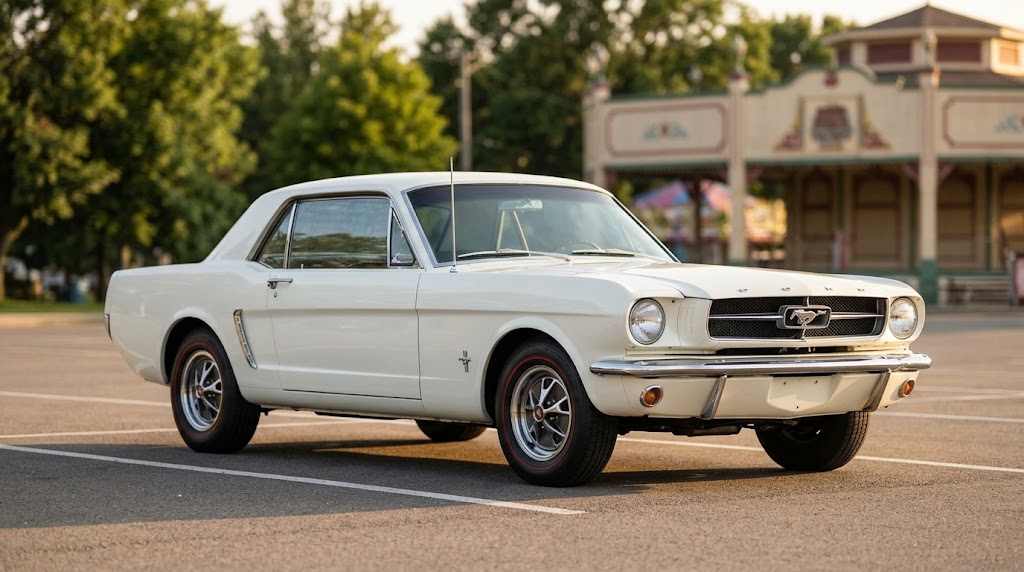
Few cars have had a debut as big as the Ford Mustang’s. The first-generation Ford Mustang went from a quirky concept to a national sensation in just a couple of years. It also started a whole new kind of car.
Let’s look at how it happened, what was under the hood and what made those early Mustangs so special.
From Two-Seat Experiment to Four-Seat Family Favorite
The Mustang story starts in 1962, when Ford showed a concept car called the Mustang I. It was a small, two-seat sports car with the engine sitting behind the driver, which is called a mid-engine layout. It looked fun, but it wasn’t practical for most buyers.
Ford went back to the drawing board. In 1963, it showed a second concept called the Mustang II, with four seats and the engine up front, where most Americans expected it to be. That design was much closer to the car people would soon line up to buy.
One quick note: the 1963 Mustang II was a concept car, not the production Mustang II that Ford introduced in 1974. The two shared a name, but they were very different cars.
Launch Day at the 1964 World’s Fair
Ford introduced the production Mustang to the public on April 17, 1964, at the New York World’s Fair. It was the start of a massive publicity push that included newspaper ads, magazine coverage and television spots.
It worked. According to The Henry Ford museum, the launch was carefully planned to grab as much press attention as possible. Ford reported more than 22,000 orders during the initial launch period, and roughly 419,000 Mustangs sold in the first year.
Collectors often call these earliest cars “1964½” Mustangs. They were early-production 1965 models, built before Ford made several changes for the regular 1965 production run. The 1964½ designation is an enthusiast nickname, not an official Ford model year.
Built Smart: How Ford Kept Costs Down
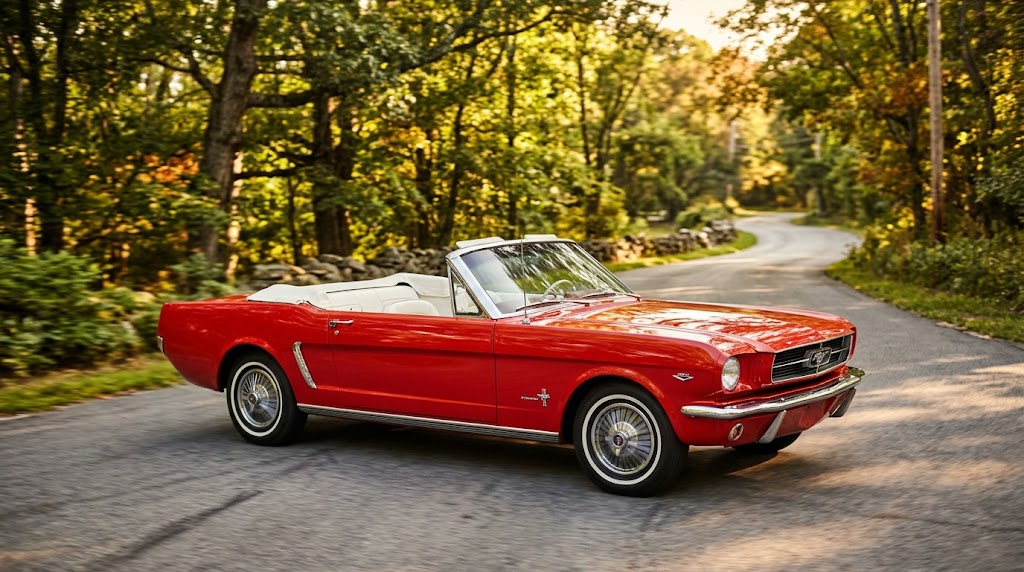
The first Mustang was affordable by design, with a base price just under $2,400. Ford did that by borrowing parts from the Ford Falcon, a plain compact car. Underneath the stylish body, the Mustang shared pieces like suspension parts and other basic components.
The look is what made it special. Designers stretched the hood long and kept the roof low and the rear short. Add the running horse badge on the grille and the sculpted scoop along each side, and you had a car that looked far more expensive than it was.
Here are the basic numbers for an early Mustang:
- Body style: Unibody construction, meaning the body and frame are one piece
- Wheelbase: 108 inches
- Length: About 181.6 inches
- Base engine: A 170-cubic-inch (2.8-liter) inline six-cylinder making 101 horsepower
- Step-up engines: A 260 V8 (about 4.3 liters) at launch, followed by several 289 V8 options for the 1965 model year
- Top power in the early years: Up to 271 horsepower from the High Performance 289
- Body styles at launch: Hardtop coupe and convertible; the fastback joined the lineup for the 1965 model year
That’s a big jump from the base six to the top V8. It meant buyers could get a calm commuter or a car with real bite, depending on what they ordered.
Pony Car or Muscle Car?
Here’s a detail that trips up a lot of people. The first Mustangs are usually called pony cars, not muscle cars. A pony car is a sporty, compact, affordable coupe or convertible with a long hood and short rear deck. A true muscle car, in the classic sense, is a mid-size car with a big V8 stuffed under the hood.
Early Mustangs sat right on that line. Plenty were mild, but with the right V8 they could run with the muscle crowd. That flexibility is a big reason the Mustang took off so fast, and why it was never really a direct rival to the Corvette. The Corvette was a two-seat sports car at a much higher price.
The First Generation Mustang Today
Early Mustangs are still among the friendliest classics for newcomers. Parts are easy to find, the mechanics are simple and clubs and online groups are full of people happy to help.
If you’re thinking about buying or restoring one, keep a few things in mind:
- Check the floor pans, rocker panels and trunk area for rust.
- Ask what engine the car came with and whether it’s still in the car.
- If originality matters, check the VIN, engine code, casting numbers and date codes against the car’s factory specifications.
- Expect a “1964½” to cost more, and to need more paperwork, than a typical 1965.
A good restoration guide or factory-style shop manual* can save you real time and money here. It will help you decode what’s original and what’s been changed.
(*Disclosure: Some links in this article are affiliate links. If you click one and make a purchase, Classic Cars Online US may earn a small commission at no extra cost to you. As an Amazon Associate, I earn from qualifying purchases.)
The Original Pony Car Still Turns Heads
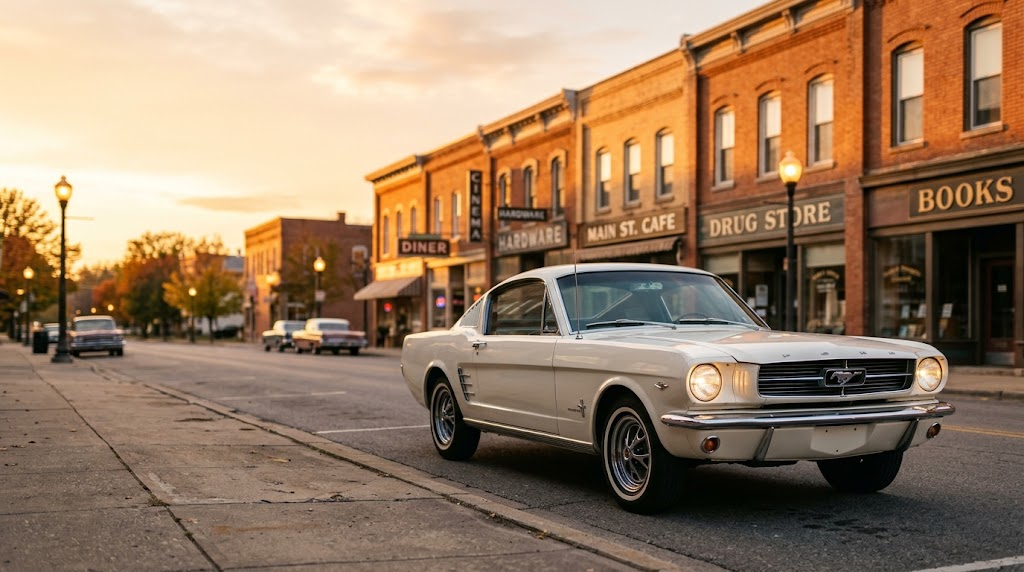
The first generation Ford Mustang worked because it gave people something new: a good-looking, fun and affordable car with room for four. More than 60 years later, it still draws a crowd at every car show.
Join the conversation!
Follow Classic Cars Online US on YouTube for more classic-car features, performance stories and automotive history.
Join us on Facebook to share your favorite classic Mustangs, compare notes with other enthusiasts and keep the conversation going.
There’s always another amazing car worth talking about. We’ll see you at the starting line!